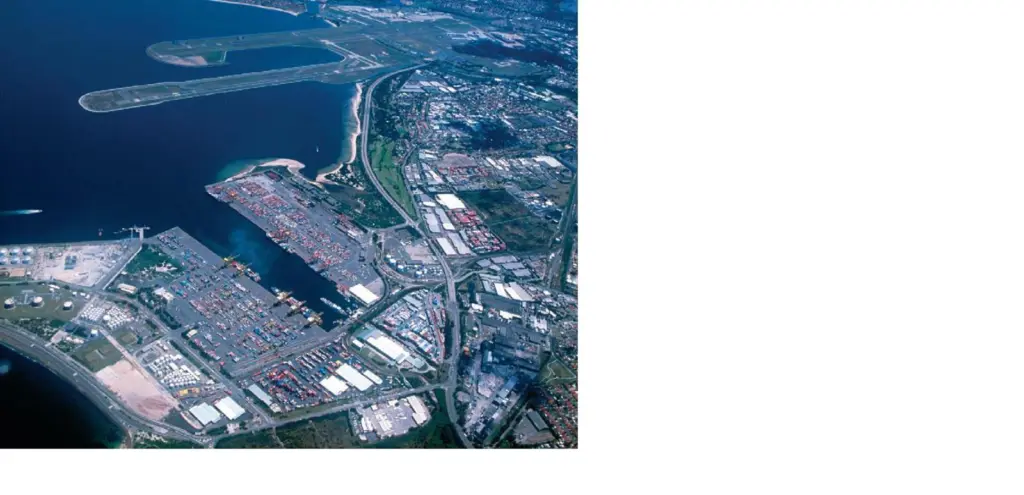
It is a bold decision by the government with ports minister Joe Tripodi laying down a clear mandate for a new player to enter the stevedoring mix.
“We believe the logistics chain, particularly in Sydney, should be subject to more aggressive competition, so final consumers can benefit from that,” Mr Tripodi said. “We’re concerned about the nature of the duopoly that operates at the port. As a matter of good public policy we believe that good competition is virtuous.”
In taking such a clear line to increase competition, the government is moving away from the previous position expounded by the Sydney Ports Corporation, which had taken the view that the existing incumbents should not necessarily be excluded from the third terminal.
How the competitive balance between the two could have been maintained was always going to be an issue, as giving full control to one or the other would have created a dominant position. Bringing in a new entrant solves that particular issue. However, views on the merit of the move are mixed.
Mr Tripodi has said that port users are in favour of increased competition. However, the existing stevedores are known to feel that a third player will simply dilute the market, reducing economies of scale and therefore creating inefficiencies for the overall supply chain rather than assisting it.
They point out that a new entrant won’t bring any more trade. Existing volumes will simply be split up between three players instead of two. That viewpoint has been steadfastly argued over the years by P&O Ports’ Tim Blood.
Indeed, there is a fear that rather than competition reducing costs, existing infrastructure could become under-utilised, leading to increased costs for users across the board.
Toll/Patrick managing director Paul Little’s response was to point out that capacity growth had already been catered for by capital expenditure by the existing stevedores. In recent years, he said, Patrick has spent over A$150m on the redevelopment of the Port Botany terminal, including two new ZPMC cranes, five RMGs, increasing the straddle fleet to 33 and resurfacing and reconfiguring the entire terminal to significantly increase container capacity.
“Therefore it is our view that there is no need to further increase capacity to accommodate a third stevedore,” he said.
Surprisingly, the Maritime Union of Australia agrees with this argument.
It thinks a third stevedoring company will undo the gains made in waterfront efficiency and labour relations in recent years.
Warren Smith, MUA assistant Sydney Branch secretary, commented: “It will lead to uncertainty and casualisation of the workforce. It will also mean stevedoring operators will be unwilling to invest in new and improved technology that would make our ports more efficient.” Mr Smith added that this would affect job security.
Given however that the dye has been cast, and a new entrant has been invited in, who might be the new kid on the block?
One major contender would be the ICTSI/Anglo Ports partnership. However, behind the scenes there are murmurings that some of the major shipping lines see Australia as a natural extension of their policy of direct investment in terminals, in order to protect their own logistics operations.
In that regard MSC and CMA CGM are thought to be possibles, plus AP Moller Terminals.
MSC has shown previous interest in getting a foothold in the Australian market, while APM Terminals, after the emergence of the new, expanded Maersk Line with major trade shares in Australasian markets, would have a guaranteed cornerstone customer to underpin its entry in Sydney.