Risk analysis, environmental management systems and a Port Environmental Review – these are some of the projects being undertaken by the EcoPorts Foundation Seaports are key components of integrated transport and logistics systems. They pursue their commercial objectives and implement environmental programmes in highly dynamic and sensitive environments. Port areas are hazardous areas of intense intermodal consideration as all the transport modes coalesce there. In most cases port areas are situated next to urban areas and/or other areas of special environmental attention due to the presence of protected species or even due to recreational purposes.
Risk analysis
While examining the factor of risk, it may be suggested that the probability of occurrence and magnitude of consequence is exacerbated and indeed compounded in the port area because of the intensity of use, diversity of activities, inherently dangerous nature of certain cargoes and operations, and the natural dynamics of processes at the land-sea-atmosphere interface that constitutes the port system. The multiple types of cargo and related operations in combination with the specific characteristics of the port area highlight the challenging nature of port environmental management. Within European governance, the volume of environmental legislation has been steadily increasing during the last 15 years and is influencing the patterns of marine conservation and port development and operation. Nowadays, Ports have to implement about 40 European directives. Compliance with legislation is an imperative and a precondition for obtaining or maintaining alicence to operate. In order to achieve implementation and compliance, personnel and investment budget need to be assigned. The risk of liability for environmental damage has also increased for seaports. In the interpretation of some environmental legislation (e.g. Environmental Liability Directive) port authorities may reasonably be expected to bring some influence to bear on the environmental performance of their tenants and operators. The dilemma for the port authority is that the port may not necessarily be directly, legally, responsible for the activities, products and services of the components of the logistic chain. But its overarching administrative role, ownership of the estate (land and sea) and permanency of operational presence, means that the port is the obvious point of contact and readily identifiable player for any environment related issues in the whole port area. Insuring companies require higher quality regimes in order to offer acceptable risk premiums. They require similar actions as are required by some of the environmental laws, such as the implementation of a basic environmental management system that also includes a risk analysis. They see it as important from the point of view of running the risk of payment of damages, that a company or a port does a regular environmental self diagnosis to have an overview of its risk and to prepare already in advance (”know and be prepared”). Ports need to know what the impact is on the environment of the activities in the port area, not only of its own organisation but also of industries that lease the land.
Environmental management systems
In order to increase efficiency within the integrated concept of port area management, the establishment of an environmental management system emerges as a necessity. Many ports see the preparation for it as a bureaucratic exercise and don’t see a positive balance between the costs of assigning personnel on these preparations, the costs of investments in environmental measures and their income from port activities and shipping. There are different Environmental Management Systems. ISO 14001 is a worldwide well-known standard system and requires a high quality of analysis and documentation in order to be certified. Ecoports has developed a basic Environmental Management System specifically for ports that can also be used by companies. The system is designed to facilitate environmental certification and is specifically adapted to the needs of the ports. It integrates the contribution of companies within the port area on the accumulative environmental impact. It is built from elements of the ISO 14001 system and it can be introduced in three steps:
1. Port environmental Self Diagnosis Method (SDM)
2. Port Environmental Review System (PERS)
3. Ecoports PERS Certificate If ports want to further establish for more sophisticated environmental management systems such as ISO and EMAS, they can build on their PERS elements and experience. The Ecoports phased approach to port environmental management is used by several ports of different sizes around Europe and is strongly supported by the European SeaPorts Organisation (ESPO). For more information please contact the ECOPORTS Secretariat via www.ecoports.com.
Port Environmental Review
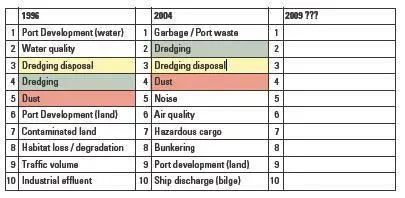
In parallel, the Ecoports Foundation continues its commitment to research and development initiatives and projects in order to develop specific tools addressing significant environmental aspects of port operations. A recent example is a tool for Noise Management in Port City areas. Port users found that the tool assists in optimising land use in port areas while keeping noise within the legal limits. The starting point of the Ecoports projects are the environmental priorities of the European port sector. In order to redefine those and to update the European Benchmark of environmental performance, ESPO in collaboration with Ecoports launched the Port Environmental Review 2009 during the Greenport Conference in Naples (24-25 February 2009). The review will be ongoing until the 1 July 2009 and aims at establishing a European benchmark of performance. Several ports from all over Europe have already completed the review. All ports are however stimulated to contribute in order to achieve an outcome that is fully representative of the European port sector. The review can be accessed and completed online at www.ecoports.com.