
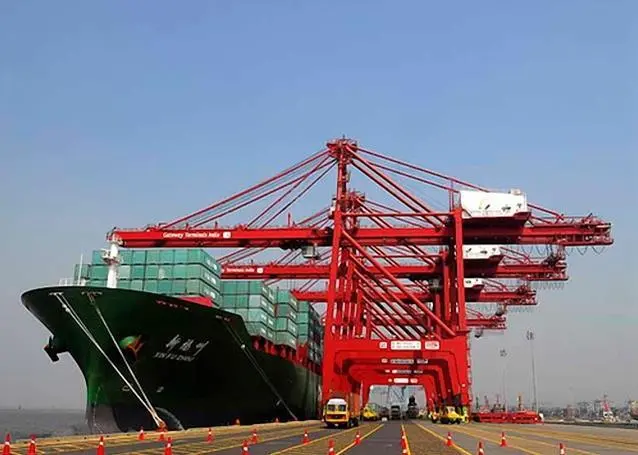
Under the proposed policy (which has now been sent to the Ministry of Law for approval), a private player would not be allowed to bid for consecutive berths for the same cargo. It would also not be allowed to bid for a terminal within the 100-km radius of an existing one. The policy will address issues like the quay length limit beyond which one player cannot have a berth. It also aims to put a cap on overall capacity and the number of terminals one can have at a port.
Chris Runckel of Runckel Associates said that the measure is a backward one. “India needs to rely more on the market and less on legislation and government involvement,” he said. “We believe the China and Southeast Asia model in which China and SE Asia countries encouraged major investment in ports by allowing developers greater freedom to plan larger investments and larger pier sizes and berths would have been a much smarter way for India to further develop its lagging port system and to potentially lower shipping costs. The new regulation will ultimately be a further negative for India’s development.”
He added: “India continues to be at a disadvantage to China and elsewhere in Southeast Asia in terms of higher shipping costs and the new regulation will perpetuate and may even further increase costs.”
However, it isn’t necessarily black and white. Satish Anand of Henderson International suggested: “There needs to be a strict criteria for selection of operators and a capability matrix to select the operators. It is true that when experience is cited as a criteria then the new players are dissuaded or rejected and the experienced ones then monopolise.” He went on to say since there are about 200 small ports, it is possible the entrant operators could be given a trial in this arena and performance noted.