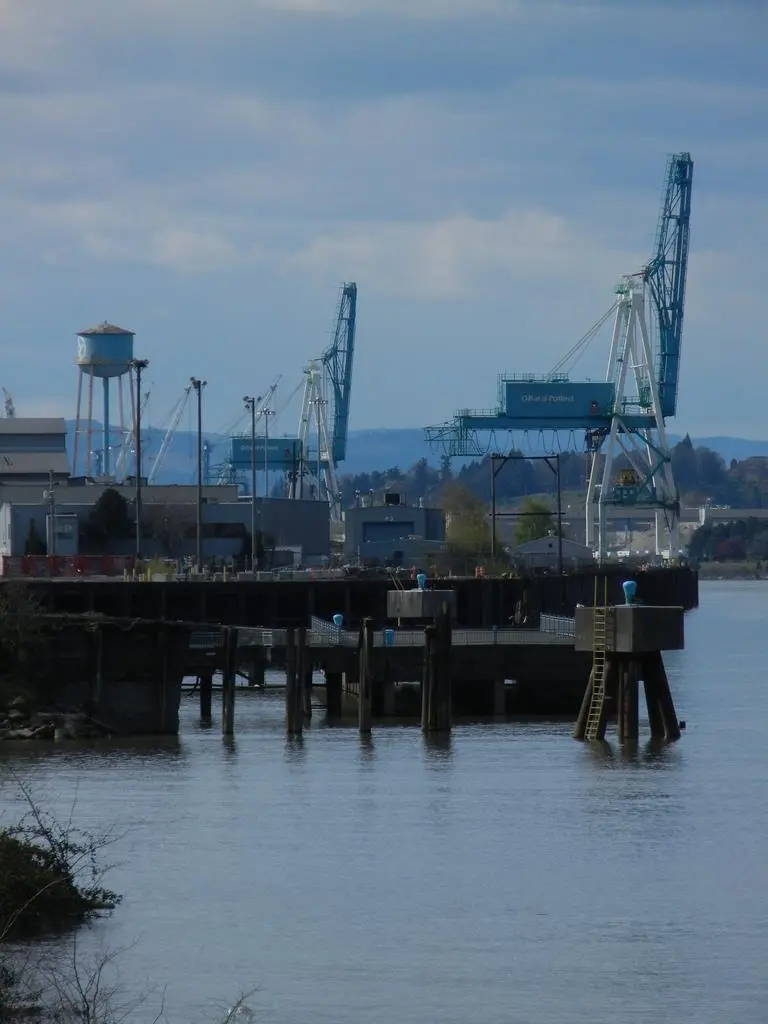
The West Coast has become split into two sections: California and the rest. Most obviously, California is sticking with its dominant position in container traffic, while other ports are prepared to look more at a mix of breakbulk and containers.
But the California Association of Port Authorities (CAPA) is also adopting a new policy of joint and automatic annual rate and lease increases from July this year for terminal operators and commercial tenants. The 11 port members (essentially all the main commercial ports) say the increases are index-linked to the regional inflation rate of about 1.5% a year and are necessary to keep up with rising costs. CAPA says it’s following a similar policy set by northwest Pacific ports.
Terminal operators have a very different opinion, voiced through the Pacific Merchant Shipping Association, and are indignant. John McLaurin, president of the PMSA, accuses CAPA of “changing the former the port-tenant partnership from one that is currently customer focused to one in which the tenants and customers are simply viewed as ATM machines”.
Mr McLaurin says the proposal will “increases rates without regard to the economy, state of the industry, impact on competitiveness or financial standing or needs of a port authority”, and “comes at a time when California ports are losing market share. CAPA members are facing increasing competition from Canada, Mexico and US ports in the Gulf and East Coasts via the Panama and/or Suez Canals.
“Both Los Angeles and Long Beach have been active participants in the ‘Beat the Canal’ campaign. It is counterintuitive to respond to competitive pressures by automatically increasing the cost of doing business at your facilities. Port leases are typically structured in a way that requires a review every five years – allowing for upward lease adjustments.
Cost burden
“The annual general rate increase is an additional increase on top of this process,” says Mr McLaurin. “California lease rates are among the highest in the nation. In addition, port customers and tenants face $5bn in California only state imposed environmental costs (as estimated by the California Air Resources Board).
“An automatic annual general rate increase increases the burden of doing business in California. The annual increase is poor public policy by substituting legitimate and open public review and debate for a mindless exercise that automatically goes into effect, regardless of need or impact on customers. The only time public debate would take place on a rate increase under this proposal would be when a port took action to either delay or eliminate the automatic increase. The likelihood of a port authority taking affirmative action in not increasing their rates under this policy is nil.
“Ports can take independent action at any time to adjust their rates. They can do so without the need for any collective policy adoption by CAPA.”
State maritime agencies are also not letting up in environmental restrictions. On January 1, 2014, at least 50% of an ocean carrier’s fleet of container, reefer and cruise ships calling at six ports (Long Beach, Los Angeles, San Diego, Oakland, San Francisco and Hueneme) must plug into shore power at berth. The carriers must also reduce their emissions by 50%.
Up north
For Washington and Oregon ports the main focus of attention is more on breakbulk and, most recently, crude oil. However, difficulties with union dockworkers have led to upheavals and delays in plans. The Port of Portland has been one of the most affected, with lockouts and arrests at its new grain terminal.
A spokesman is frank about the situation. “Continuing a theme from 2012, we expect 2013 will be a year in which waterfront labour will take center stage. With an unresolved jurisdictional issue at the container terminal and contract negotiations involving labour at the grain terminal, these simmering issues could bubble to the surface.
“While these issues are not unique to Portland, the reality is that labour and contract negotiations can very much affect the environment in which we operate, touching upon everything we do.”
Environmental and state/federal regulations also take up much of the planning work. GRAYS Harbor wants to develop an export terminal for crude oil, brought in by rail, and will need 14 permits from national and local agencies.
Cutting through the swath of environmental and eco-activist hurdles is often no different to the more publicised projects in California.
Coos Bay is having to rethink its plans because the last of three possible investors in a coal terminal has pulled out. Metro Ports signed a tentative agreement just under two years ago. Conservationists campaigned heavily against the project and see this as a major victory that will give them greater impetus in opposing similar developments.
“It is hard to imagine that anyone would want to risk getting in bed with a risky and desperate coal industry,” said David Petrie, director of Coos Waterkeeper.
Eco-activists are taking an equally strong line against three other coal terminals proposed for the Columbia River – two by US companies and one by an Australian group.
Pastures new
Meanwhile, Portland is moving into new ventures. Says a spokesman: “The port is exploring opportunities as a transload center, moving 20- or 40-foot containers from the ships to warehouses and distribution centres.” Goods will be loaded on to 53-foot domestic containers to be transported by truck or train.
“Recent investments in channel deepening, terminal improvements and rail and road infrastructure have been paying off,” says the spokesman, “as private investment in facility expansions is now planned and underway, along with new and growing business.” Among the projects are expansion of Columbia Grain and Auto Warehousing Company; new ship loaders at mineral bulk export facilities; new Ford export business, Hamburg Sud liner service, new Subaru center and a new ADM Sweetner Plant.
“We are working to develop expertise in niche breakbulk and large project cargo, such as generators, transformers, turbines, specialised equipment and machinery.”
Niche cargo is also a focus of San Diego, which is forecasting a 5.5% increase in cargo this year. The port specialises in the handling of windmill parts, grain, lumber, cement and other bulk products. “We have the potential to serve as the nation’s specialty cargo gateway to Latin America and Asia,” says an official.
“We processed 328,723 automobiles last year and we have the most efficient auto processing facility on the West Coast.
“The port is working to fully utilise existing terminal real estate while identifying areas where future marine industrial development could occur. We acquired and redeveloped two industrial parks in the past five years, totaling nearly 1,000 acres. In the process, it won the top national award for brownfield redevelopment projects. We are looking to attract traded sector firms that sell products or services internationally, and that ideally will use port facilities in close proximity,” says the official.
Planning ahead
LA, for its part, has come up with a new proposed master plan, which overhauls the original document of 1980. Several hundred pages long, its main focus is on Terminal Island, which has been neglected and a source of controversy for many years because of ageing facilities and environmental/pollution problems.
Says the plan: “The port should continue its commitment to accommodating a variety of water-dependent cargo handling facilities, including container, breakbulk, dry bulk, and liquid bulk uses. While revenues generated from each land use vary, overall plans for the port should allow for some capacity for different modes of cargo to serve the larger economic and public interest of the State.”
“Ancillary uses, such as ship and boat repair, harbour craft, and barge and tug operations, are vital support industries and are also important customers that should be prioritised, based on need. Additionally, existing commercial fishing and recreational boating facilities will be protected.
“Development and the land uses designated on port land should be compatible with surrounding land uses in order to maximise efficient utilisation of land and minimise conflicts. Individual terminals within the port should be compatible with neighbouring port tenants. When incompatible, port areas should be deliberately redeveloped or relocated to eliminate the conflict.
“Cargo handling facilities should be primarily focused on Terminal Island and other properties that are buffered from the neighbouring residential communities of San Pedro and Wilmington. Non-water dependent use facilities should be eliminated from port cargo-designated waterfront properties. Land use decisions should also take into consideration opportunities for Port tenants to grow and expand their businesses.”
In the mix
A crucial question still to be answered is the split between breakbulk and containers. Harbour commission president Cindy Miscikowski says that the port wants to have a balanced cargo operation “but what you want and what is reality can be very different. The market dictates what is happening. Terminal Island is central to the future but it’s a delicate balance, including the need to preserve historic facilities.”
Another point of debate is the urgent need to increase port efficiency. Ms Miscikowski says an automated terminal is definitely being discussed. “But at the same time, it’s not a case of one size fits all. It doesn’t mean that they are always the answer.”
In contrast to the LA-Long Beach dispute, Kalama, Vancouver, Longview, and Portland ports on the Columbia River have agreed to jointly share the $1.3m cost of buying Howard Island on the river for use as a common storage site for dredging soil.