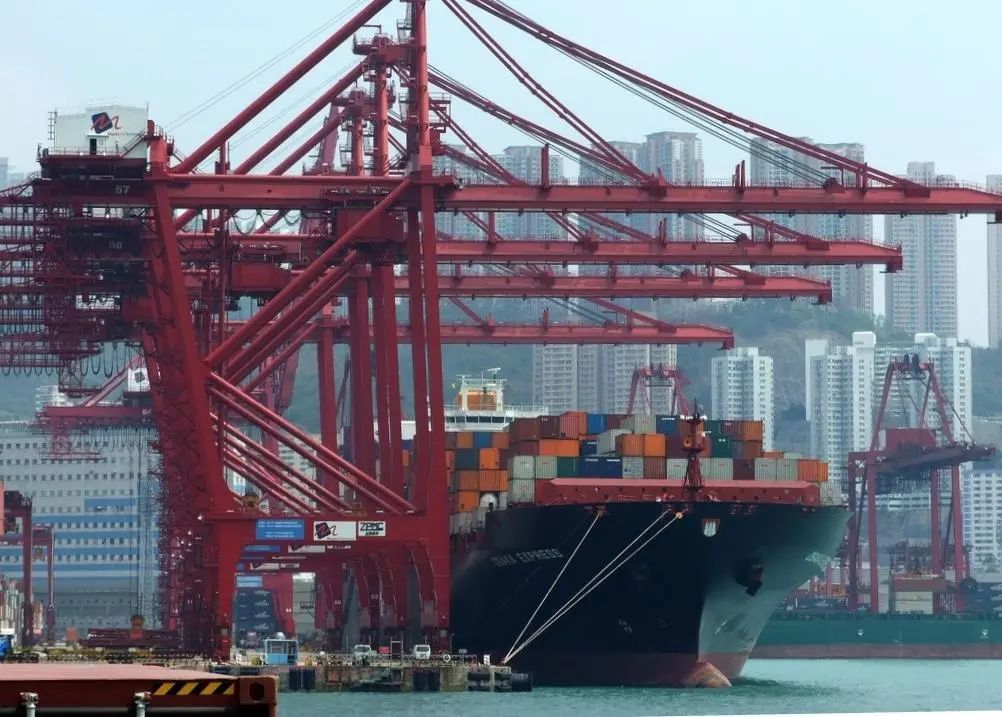
It has been suggested that Hong Kong may lose traffic to nearby Shenzhen Port as a result of the new law which will require vessels to use extra-low sulphur diesel upon arriving at berths at Kwai Chung Container Terminal from January 2015.
A spokesperson for the Hong Kong Shipowners Association, told GreenPort: “Hong Kong port is already uncompetitive compared to Shenzhen ports and other Pearl River Delta (PRD) ports, but it is still growing in throughput (barring the effects of the strike earlier this year) because, for various reasons, it remains an attractive port.”
Under the new law, all Ocean Going Vessels (OGVs) must initiate fuel switch upon arrival at berth and complete the switch to low sulphur fuel within one hour. The OGVs shall then use low sulphur fuel throughout the berthing period until one hourbefore departure.
It has been estimated that the switch could add between US$600,000 and US$1.5m to a shipping line’s annual fuel bill.
“There might be an impact on Hong Kong’s cost competitiveness, but this is likely to be short-lived because it is now clear that Shenzhen is rapidly moving towards similar legislation, and there is already an intention to work towards an Emission Control Area for the Pearl River Delta,” added the spokesperson.
Apparently, shipowners have asked the government to consider extending a scheme that subsidises shipping lines for the extra cost of the clean fuel.
In September 2012, Hong Kong launched a three-year incentive scheme to halve port facilities and light dues charged on vessels using fuel with sulphur content not more than 0.5% when at berth in the port.
Ships accounted for 54% of total sulphur dioxide (SO2) emissions in the country in 2011.
If all OGVs switch to low-sulphur fuel while at berth in Hong Kong, SO2 and NO2 emissions are expected to be reduced by 14% and 0.2% compared to 2011 levels.