We are in the era of big data, the cloud, and the ‘Internet of Things’ (IoT). But while we increasingly hear the phrases, do we actually know what they mean?
The IoT concept refers to wirelessly connecting remote devices or equipment to the internet by means of tiny low-cost sensors. These sensors are able to collect all kinds of information: movement, speed, time, temperature and much more. The main objectives of connecting these devices are to enhance existing services, improve user experience and minimise turnover.
Projections indicate that the number of sensors devoted to IoT will increase dramatically in the next five years, and that the impact of IoT will be felt across the supply chain, and in operations, marketing and customer service. It’s an exciting technology that can help to put ports at the technological vanguard, once we understand where it fits.
Sensors can register rich, real time data all over a port and provide data that was previously unimaginable. Current data collection in ports is not exploited to optimise the entire terminal, but through IoT not only would the sensors collect data on the movement of the gates, yard cranes and quay cranes but also on the wider infrastructure and the environment.
Where IoT really begins to shine is through the possibility of having radiography of the port in real time, with real-time data on operations productivity, infrastructure status, and weather conditions. This ‘big picture’ of terminal operations will ultimately aid improved decision-making.
IoT can also be seen as the next step in automation. Nowadays, exceptions in automation are typically handled manually, one by one, but what if there was a tool that learned from these exceptions, trends or mechanical failures and predicted them? Artificial Intelligence can do that.
The great power of IoT is that it is an enabler for the success of Artificial Intelligence systems because they need high-resolution sets of information to ‘learn’, which can be collected by IoT. The combination of IoT and AI is a revolution as machines will no longer be constricted to ‘obeying’ a sequence of commands, but instead they will learn from events and the system will automatically modify the upcoming actions in order to reach an overall target.
Life cycle
The main stages of a terminal’s lifetime can be summarised as construction, operations, and maintenance and surveillance. Two out of three of these stages can directly benefit from IoT. In operations, sensors can, for example, identify bottlenecks and exceptions, the system can learn from them and preventive measures can be implemented in the spots where errors tend to happen or where productivity has been lowered. This will lead to an efficient and proactive operation of a terminal.
At the moment, ports are reliant on employees’ understanding of operations for smooth running. But current developments and proposals on IoT mean that it will not only be a network of connected sensors and programs, but it will also improve information display for those end users.
Moreover, the IoT’s low cost sensor network will collect data from as many points as needed in order to create a map of information and therefore will provide operators with quality and comprehensive resources which will ultimately lead to improved operations performance.
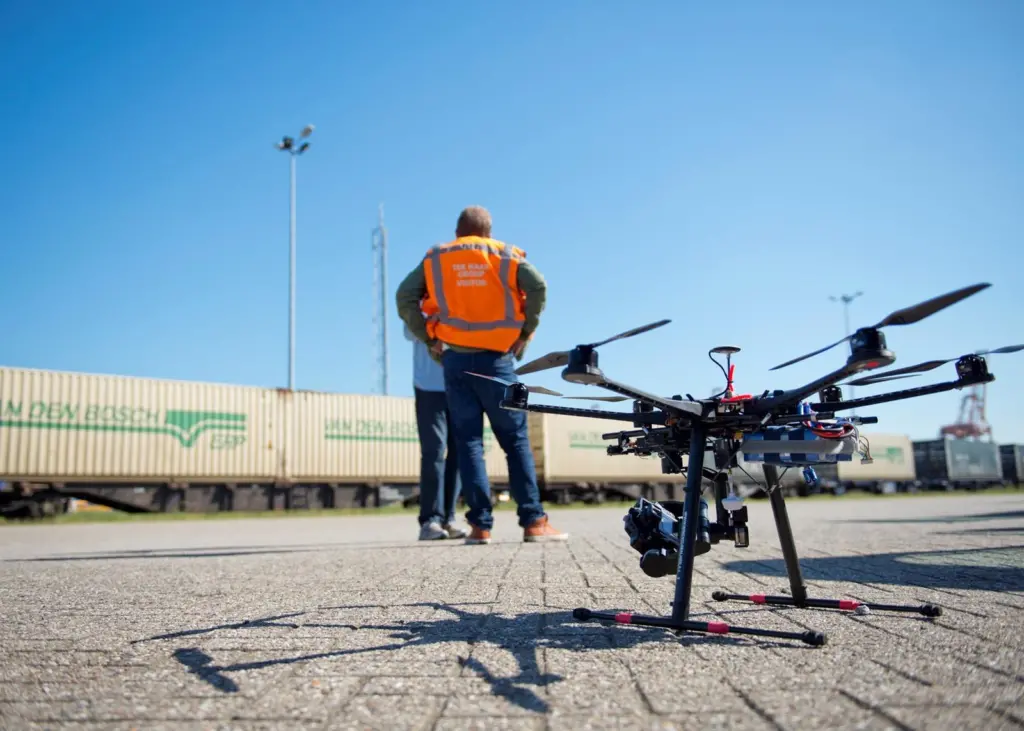
Regarding infrastructure or machinery maintenance, low cost devices such as drones could be used to give valuable information of the state of the breakwaters after a storm, or quay damage after a vessel collision. Equipment parts could also be ordered before they failed, thus decreasing operating expenses.
For environmental surveillance, the IoT sensor network will be able to identify spills, collect relevant information on environmental problems and propose corrective actions to management. Moreover, the climatic information gathered across the port will make it possible to know and predict with a high level of precision (and now in high resolution) the meteorological conditions on the port, a key influencer in operability performance.
IoT is a new technology, and as such, the impacts and payoffs will vary by industry, but what seems to be clear is that IoT offers a strong opportunity for competitive differentiation for ports and terminals.
Rebeca Gómez is a port and coastal engineer at COWI-NA in the US. She is also a PhD candidate for the Polytechnic University of Madrid in Spain. Her main topics of research are reliability and risk in port facilities and development of tools to ease decision making in container terminals by means of Artificial Intelligence techniques.