That is according to the business daily Világgazdaság which said that the shipper Mahart Zrt wants to create a terminal, backed by EU funding under the Connecting Europe Facility (CEF) funding programme, that will be accessible to trains and trucks, as well as ships, by the end of 2019.
Apparently, the new Csepel LNG terminal will be 85% paid for by EU funds, as part of the HUF 1 trillion total available to Hungary under the CEF programme, the rest will be paid for by the state.
LNG first
Világgazdaság said that this is the first time that an LNG terminal project of this nature will be constructed in Hungary, although similar projects are in progress on the Danube stretch at Vienna and in Germany.
Mahart Zrt wants to build two large LNG containers housed on a floating platform by which ships at the port will be able to refuel with LNG. This will be linked to two more containers on land, allowing trucks to tank up with either LNG or compressed natural gas (CNG).
A similar terminal already operates at Ruse in Bulgaria and in Constanța, Romania, future parallel sea and river LNG terminals are also planned, which will also largely be funded by the EU.
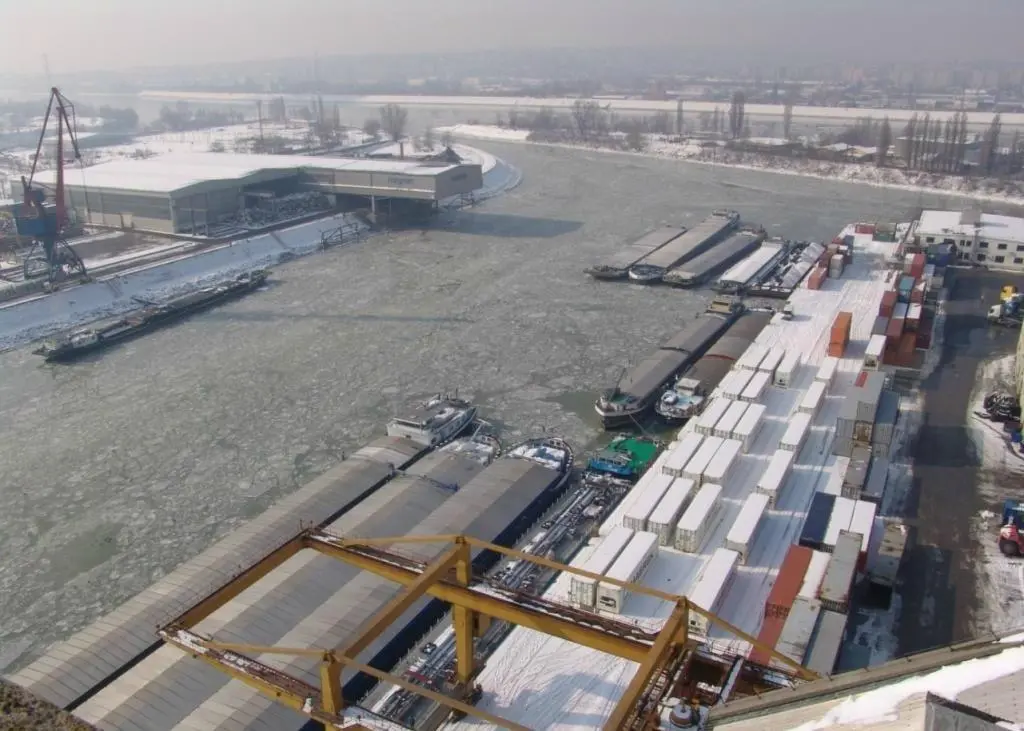
Back in October 2015, the Hungarian state-owned Csepel Freeport was upgraded as part of a joint port development programme with MAHART-Szabadkikötő and Budapesti Szabadkikötő Logisztikai (BLSZ).
The HUF 3.5bn development included intermodal transport refurbishments, capacity expansion and construction of new warehouses and was also supported with a EU grant of HUF 2m, according to the MTI news agency.