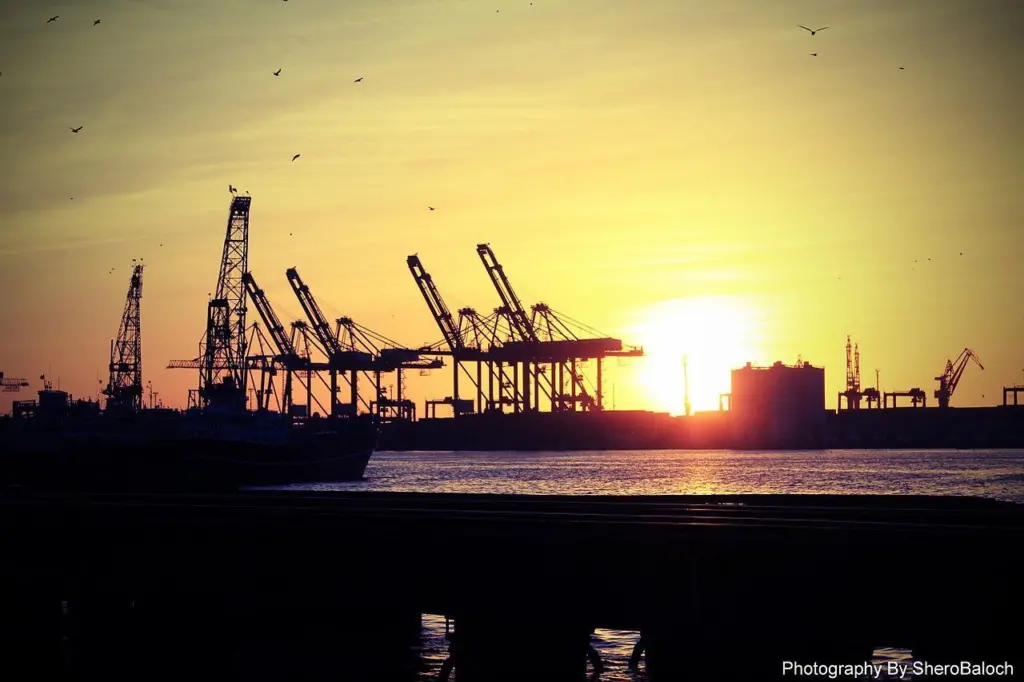
Pakistan International Container Terminal (PICT) wants to build on its successes to date, chief executive Khurram Aziz Khan has told Port Strategy – despite big changes in the industry and in Pakistan.
PICT is one of two container terminal operators at the port of Karachi, a city with a certain reputation in a country where political turbulence is always just around the corner.
With trade wars between the US and China, and the US and the EU challenging the trading picture ports have to be different in future, with Karachi being no exception.
Mr Khan is aware of this but is still cautiously optimistic.
“The volumes are improving slightly owing to CPEC and global economy progression. However, at the same time vessel upsizing and global consolidation of shipping lines are also playing their due role in shaping the business environment,” Mr Khan told Port Strategy.
“The remaining half of the year will more or less be impacted by the above-mentioned factors coupled with the level of confidence of the business owners which will depend on the outcome of the general elections of Pakistan,” Mr Khan added.
That said, PICT expects no real let up in the coming years which it expects to be competitive although it “remains committed to driving the business forward in line with its historical achievements.”
Going forward means taking on fresh and possibly large challenges rather than fine-tuning an existing business.
“In the past couple of years, our government realised the importance of an improved rail network and has taken several initiatives including joint ventures with the private sector. PICT being the only container terminal at Karachi Port with a working rail/road link is aggressively working with the railway authorities for unlocking this hidden potential at Karachi Port and expect to get a major share of container volumes due to this added facility,” said Khan.
Currently almost 40% of the container volumes being handled at Karachi port are destined for up-country, which means sending them up to 1,100 kilometres more on land, Mr Khan pointed out. As they are moved by trucks inland transportation is neither efficient nor cheap.
More and better use of the rail network will enable Pakistan to more efficiently meet increased demand for containerised goods and so let it join global supply chains. Potentially it is, as Mr Khan says, “a game changer.”
Country opportunities
This provides an opportunity for PICT’s parent company ICTSI who is looking for long term investment in Pakistan in order to keep on driving efficiencies at Karachi.
“ICTSI remains open for opportunities that may arise in the emerging Pakistan’s container terminal market in the near future,” says Mr Khan.
However, Karachi has the advantage of geography being at the head of a national trade corridor linking it to Peshawar which accounts for 95% of external trade and 85% of GDP.
One opportunity is CPEC or China Pakistan Economic Co-operation, a controversial bundle of projects set to build connectivity between the two countries. The new port at Gwadar is its headline port and it is already adding to Karachi’s work load.
“Due to increasing trade driven from CPEC, fast-paced development of appropriate infrastructure is required to provide backup support to the terminals so that the terminals are not severely congested resulting in increased dwell time of containers,” says Mr Khan.
PICT is also, along with Port Authority of Karachi, taking initiatives for improvements in infrastructure to enable all the terminals in Karachi to handle the emerging larger vessels. To date its maximum is a vessel of 310 metres.
Offsetting this is Karachi’s reputation for violence. Already home to refugees from India, other refugees headed there as a result of the Afghan war bringing with them more guns and conflicts. However, as Mr Khan points out, the last two governments ended without coups or bloodshed and the army is interested in peace.
“Post 2013, commitment and actions by security and armed forces have greatly helped in restoring the confidence of business circles, resulting in increased volume handling at Karachi port with decreasing dwell time, indicating revival of economic activities in Karachi,” he says.