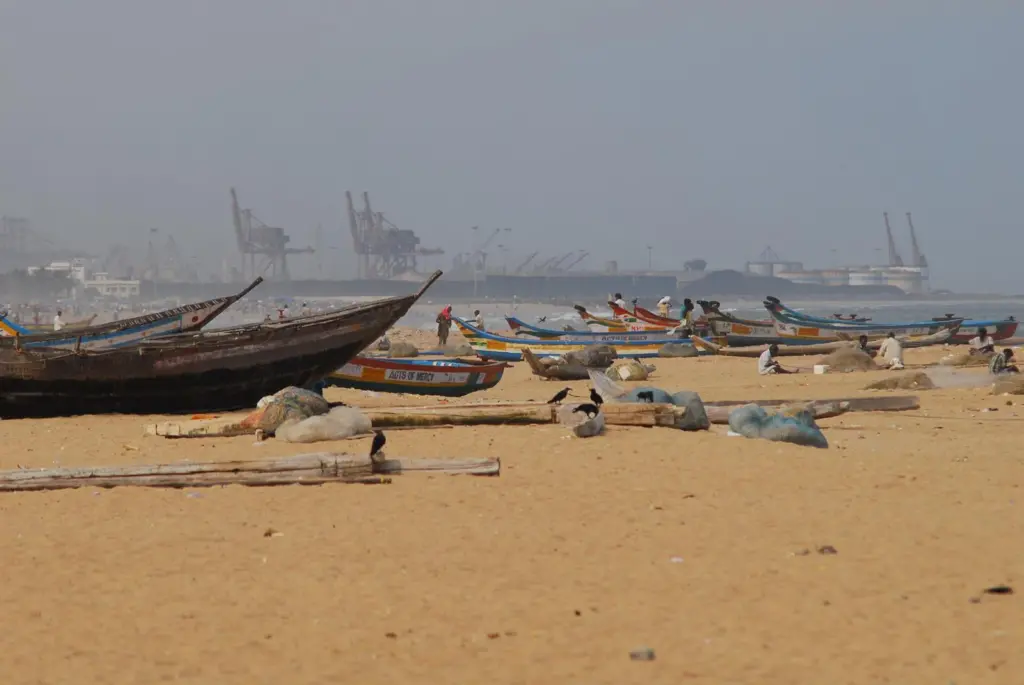
India’s improving infrastructure is being matched by ongoing legal and policy reforms which are moving the South Asian country towards transhipment hub status – a significant watershed.
Topping the legislative agenda is the Major Ports Authorities Bill, which seeks to provide greater autonomy and flexibility to major ports. The Bill repeals the Major Port Trusts Act.
The move is based on Government thinking that the central regulation of tariff in the major ports has hindered growth and development. It put forward the Major Port Authorities Bill which aims to give greater autonomy and flexibility to India’s larger ports.
The Bill will apply to the major ports of Chennai, Cochin, Jawaharlal Nehru Port, Kandla, Kolkata, Mumbai, New Mangalore, Mormugao, Paradip, V.O. Chidambaranar, and Vishakhapatnam,” said PRS India. “The central government may notify more major ports,” it added.
The Bill provides for the creation of a Board of Major Port Authority for each facility. The Boards can use property, assets and funds as they see fit to develop the port and can fix the rates charged for services as well as determine access and usage – effectively freeing the ports from central control.
They can also raise some funds without the permission of the Central Government –in itself a significant change.
The Board can also make rules on declaring availability of port assets for port-related activities and services; developing and providing infrastructure facilities such as setting up new ports and jetties; and providing exemption or remission from payment of any charges on any goods or vessels.
Currently the bill is “pending” in the Indian Parliament according to PRSIndia.org, having been introduced into the Lok Sabha, one of the two houses in the Indian Parliament. While no one is foreseeing an attempt to filibuster, there is a democratic process to go through which will mean changes could be slow in coming and then in being implemented.
Faith in change
“I have no doubt it will be passed,” Julian Bevis, senior director group relations for Maersk in South Asia tells Port Strategy. However its scope will be limited because it is prospective, meaning it does not apply to existing terminals and ports and will only apply to those built from now on.
“TAMP will go away for the new terminals” said Mr Bevis, acknowledging that some major ports will “remain under the jurisdiction of TAMP for the foreseeable future”. One way around this would be a re-tender – another possibly lengthy process. However, the point long term is clear: TAMP’s days are numbered.
Where there has been decisive movement forward is in cabotage which is very much a rolling process and one with some serious momentum in it.
Most recently it was fertilisers that were given a waiver. More significantly in May the Indian government relaxed the rules about both the coastal movement of export/import transhipment containers and empty containers as well as agriculture, horticulture, fisheries and animal husbandry products.
“This relaxation allows Indian entities to charter foreign flagships and foreign-flagged ships owned by shipping lines to ply the coastal routes without the hassle of getting a license with conditionalities,” said the Ministry of Shipping of both trades.
What the Ministry went on to say about containers makes it plain these strictly commercial decisions have a clear goal in mind.
Transhipment aims
The change is to promote the shift of transhipment of cargo from foreign to Indian ports, increase competition, reduce freight rates, increase logistics efficiency, promote coastal transportation of containers, establish an ecosystem in India for consolidation and retain foreign exchange, the ministry said.
Currently almost a third of lndia’s container cargo is transhipped at foreign ports, up from 26% in 2007-08 according to the Indian Ports Association – taking that business back puts India on the way to becoming its own transhipment hub.
“We and others are moving empty boxes and some loaded boxes. It’s a very constructive step,” said Maersk’s Mr Bevis. His basic view is that transhipment hubs will happen, but not overnight. Good as that is for India’s port industry it also raises the possibility of regional competition with Sri Lanka.
Against these positive steps there are some drags and disruptors to be considered. Mr Bevis pointed out that labour markets reforms are not particularly deep. One flagged by Jason Chiang, director at Ocean Shipping Consultants, is that India’s ports are often provincial in their outlook. “They all want to be the terminal to be transhipped from,” he told Port Strategy.
Land connections
The other problem is not so much the ports themselves but the still vexed issue of on-land connections. “The bottleneck now is not within the port – now its outside the gate,” said Chiang.
Here though different sorts of help are coming into play. The government is big on trade facilitation with the ministry issuing an Order “to ensure the smooth flow of sea-trade among the maritime community stakeholders.”
This makes the “issuance of e-invoice, e-payment and e-do mandatory irrespective of the portal providing these services,” the Order said. There is a caveat or two but as the industry notes the intention is there.
“Shipping lines may continue to use their present systems/portals, and third party solutions for carrying out e-invoice and e-payment until their facilities are fully ready in PCS,” the Order added. “However, e-Do is to be submitted through PCS mandatorily.”
And it is pushing to improve connectivity by “implementing rail projects worth Rupees18,795 crores (ten million) to provide rail connectivity to various ports through the Indian Port Rail Corporation. This will bring down the logistics costs significantly and will give a boost to port-led development of our coastal areas,” the shipping ministry said in a recent tweet.
More specifically there is a West Coast Freight Corridor in the offing which will “make a difference,” according to Bevis although he acknowledges they are needed elsewhere too. It’s probably a fitting conclusion: interesting things, big and significant things are happening but there is still more to do.
Add to all this what India is doing outside its borders in Iran. “India is all set to begin interim operations at strategically-located Chabahar Port soon. Chabahar Port on the south-eastern coast in Iran is of great strategic importance to India, will provide an alternative reliable access route into Afghanistan and resource rich Central Asia,” the Indian shipping minister tweeted.
It also allows India to circumvent its neighbour (and rival) Pakistan and is, as one source pointed out, a copy of the Chinese Belt and Road Initiative, which India is resolutely keeping out of.
Indian anger started with Chinese involvement in the Sri Lankan port of Hanbamtota and hasn’t stopped. It is trying to mimic the Chinese strategy of ‘a string of pearls’ with Chabahar being one and Sittwe Port in Myanmar’s troubled Rakhine State being another, although India is limited by its lesser spending power.
SIDE
Looking inside for port improvements
India has extensive plans for port infrastructure inside India. Leading the way are plans by the Ministry of Shipping for six new ports, four on the east and two on the west coast. On India’s west coast are Wadhwan in Maharashtra and Belekeri in Karnataka.
However, it is the four ports on the east coast, Enayam and Sirkazhi in Tamil Nadu, Tajpur in West Bengal and Paradip Outer Harbour in Odisha, that have stirred interest. No investment totals have been published and there is no official timeframe yet – suggesting that this is a long term-project.
Existing east coast ports are river ports, restricted to 1,100 teu because in large part the cost of dredging makes their development difficult, Ocean Shipping Consultants’ Jason Chiang pointed out to Port Strategy – meaning there is a need for something new and hopefully big.
“They can resolve it either by locating further out to sea or by dredging all the way in. It remains to be seen how this problem can be solved,” Chiang added.
On top of this the Ministry has also identified other ports for extensive upgrading. “More than 150 projects have been identified for modernisation of existing ports including construction of new berths and terminals for major ports,” said Minister of State for Shipping Mansukh L Mandaviya.
One of these is Jawaharlal Nehru Port Trust where the first phase of the fourth container terminal was recently inaugurated. Work on the second phase is likely to commence by the end of 2019.