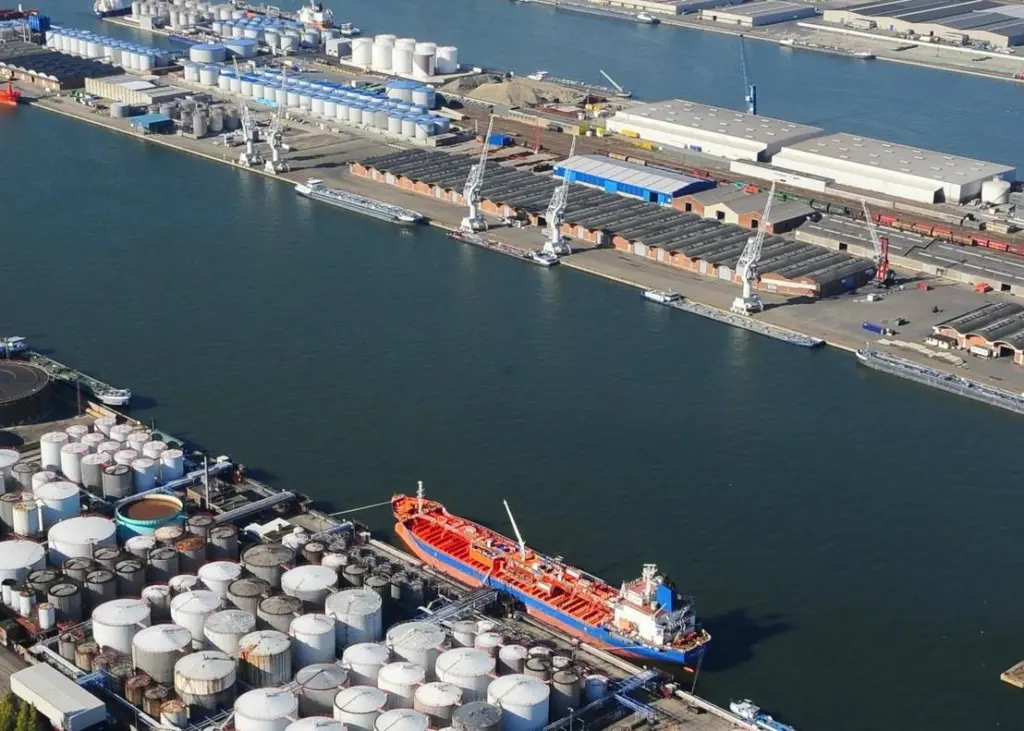
The consortium, comprising Air Liquide, BASF, Borealis, INEOS, ExxonMobil, Fluxys, Port of Antwerp and Total, will conduct a study into the economic and technical feasibility of such ‘open access’ facilities which can contribute towards achieving climate goals.
Port of Antwerp chief executive, Jacques Vandermeiren, said, “In addition to making use of sustainable energy sources and raising the energy efficiency of production companies, CCUS can make an important contribution in the transition to a sustainable, lower emissions, circular economy in the port.”
Capturing carbon and using it as a raw material for industrial applications is seen as an important avenue in the transition to a lower emissions port. The consortium believes that both storing and using carbon can make a useful contribution to achieving the energy and climate objectives at Flemish, Belgian and European level and lead to reductions in CO2 emissions in the run-up to 2030.
The first phase of the project will see detailed studies conducted of the technical and economic feasibility of CO2 facilities to support CCUS. This analysis is expected to take around one year to complete.
The study will also investigate the possibilities for CO2 storage. Belgium does not have suitable geological formations for storing CO2 underground, and so international collaboration will be necessary. To support this Port of Antwerp and a number of other partners have submitted two applications to the European Commission. A decision is expected by the end of this year.