SSA Marine’s ‘free flow’ model for distributing inbound cargo from ships to trucks works by aggregating containers and using an coordinated notification system to enable quick and efficient pick up by trucks. It has recently been implemented across Long Beach and Oakland in California and Seattle in Washington.
“Free flow reduces emissions by minimizing the time and frequency of trucks idling at terminals, both as they wait to enter the terminal and throughout the facility as they are securing their containers,” explained Sal Ferrigno, vice president of US-based SSA Marine.
“By leveraging free flow, truckers are directed to a pile of containers, instead of waiting for a specific assigned container. This approach to container handling can reduce carbon emissions by at least 60%.”
The free flow model allows pre-cleared vehicles to aggregate containers from participating beneficial cargo owners (BCOs). Inbound containers are then taken from the vessel and are collected into one area in the facility.
Once a critical mass is reached, notifications are sent to vehicles and drivers are dispatched to the terminal where containers are loaded onto trucks. Each pre-cleared truck enters the facility, proceeds directly to the set pile, and receives the container from the top of the stack rather than having to wait for a specific or assigned container.
“Free flow is by far the most efficient way of moving cargo. With this process average turn time is 20 minutes versus 60 minutes,” said Mr Ferrigno.
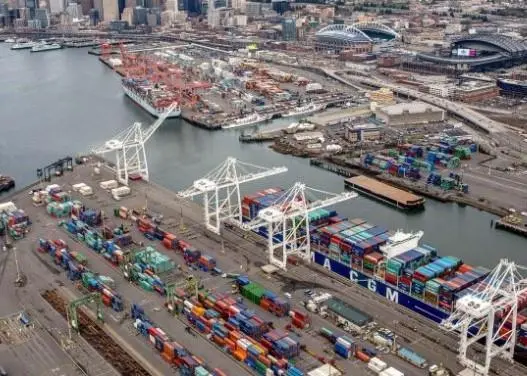
Notable results have been seen at the Port of Seattle’s T18 terminal, where, Mr Ferrigno says, on average there has been a 60% reduction in turn time for free-flow single transactions and an approximately 30% reduction in free-flow dual transactions.