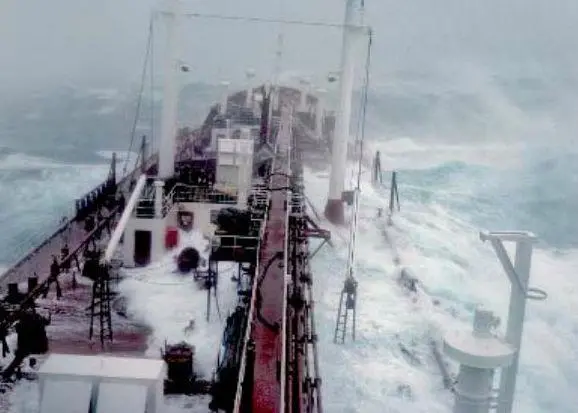
A tricky approach channel, challenging crosswinds, a high number of collisions, more groundings, issues with pilotage, or diffi culties with cargo? Take your pick. But how much is anecdotal and how much is reality? Seafarers will no doubt offer up their own stories of ports to be worried about.
However, the Swedish Club has taken the statistical, factual approach, drawing on decades of claims records to draw up a specific list – a collection of 30 port claims ‘hotspots’ around the world. This list is now being used to issue direct advice to its members, if an insured ship is approaching one of the high-risk destinations.
WHAT IS TELP?
The Gothenburg-based P&I club’s ‘Trade Enabling Loss Prevention’ (TELP) system uses automatic identification system (AIS) technology to track members’ vessels and provide highly targeted alerts to those moving towards an area of particular risk, a ‘hotspot’.
Then, about five days before arrival, tailored advice is automatically generated and sent out to the ship’s owner or manager – explaining any particular challenges or pitfalls they should be prepared for. An added dimension is that any new alert or information from local correspondents is added in where appropriate.
And to prevent information overload, the system is designed so that it will not resend the same information to the same ship within three months, unless there is new or changed information.
With COVID-19, of course, guidance and regulations can change every day. “TELP is up and running and performing very well,” says Peter Stälberg, senior technical advisor in the Swedish Club’s loss prevention team. “We are working on the interface to make it even smoother and efficient for us to use.”
AIS A STUMBLING BLOCK
In fact, he reveals, one of the stumbling blocks has been around AIS usage. “The AIS information we receive from the vessel is given manually by the ships, so if they don’t provide the correct information, or if the ship doesn’t update its AIS information, they will not get our information in a timely manner.”
Ships do not have to punch into GPS that they are heading for a specific port or destination, says Stälberg, and sometimes they may not want the world to know, as he explains.
“A lot of ships may want to hide where they are going because they might still be negotiating a contract – they might be given instructions to set course for a destination before the contract is closed. And they don’t want to give away where they are heading, because other ships in the area might be trying to get that cargo too.”
However, he says, at least 80 per cent of ships provide good AIS information “and possibly this is a carrot to do so, because it will result in better information for them”.
The club is not about to release its list to the world – the TELP service is freely provided to its members only – but ports are welcome to contact the club to see if they are on the list for being claims intensive, confirms Stälberg. They might even be surprised.
BASED ON INSURANCE CLAIMS
The list has been based on years of insurance claims, as he explains. “We handle about 2,000 claims per year. They are all profiled – what happened, where and why.” That isn’t the whole answer, however – the information is then combined with the trading frequency of the insured fleet.
“Of course, we have a lot of claims in Antwerp – but it is one of the biggest ports in the world, so that is not surprising. But a number of places clearly stood out in our statistics where the risk was high. It could be navigation or cargo based, or because of tricky restrictions. Ships that go into these places regularly probably know this already – although even they might not have the full picture. But shipping is a global business, and medium and smaller size cargo ships particularly can be heading to places where they have never been before.”
The important factor is that the club is ‘not speculating but working with dry facts’, he emphasises. “For example, the risk of running aground might be ten times higher in one port than in another, or the risk of a cargo claim may be much higher in one country than in another, for the same cargo. It is important that we do not let exceptions steer this – we know we have good quality in our statistics, and we have been looking into this for many years.”
The list of hotspots will be subject to constant review and regularly updated, says Stälberg. “We will continue to look into our statistics, to identify the top claims intensive places around the world and see if any new ones come up. However, a port doesn’t – in my view – go from a nice place to a risky place overnight. It takes time.”
FOREWARNING OF SPECIFIC RISKS
TELP is clearly aimed at improving safety for Swedish Club insured ships by forewarning them of specific risks ahead – with the overall goal a reduction in claims and, therefore, costs for the club and its members. Does he expect the hotspots themselves to improve matters as a result?
There is not a straightforward answer to that. “There may be nothing that can be done about a difficult-tonavigate approach to a port – for example, the Mississippi River has strong currents and sandbanks, and is a risky area. It is also possible that a port has a tricky approach and does not realise that – I don’t know if they compare themselves with other ports. Maybe they would be surprised.”
However, he emphasises, TELP is much more about its members’ ships than the hotspot itself. “Take cargo damage, theft, difficult jurisdictions – as an insurance company, it is not our responsibility or capacity to change the behaviour of a country or mindsets when it comes to bribery. We can only inform our members that they are facing these challenges.”
In some cases, the club found there were two different criteria for the same hotspot – for example, navigational hazard and cargo problems. On the other hand, there were cases where it had the perception of somewhere being a difficult place, but the statistical analysis based on trading patterns showed something different.
“Also, we are re-evaluating all the time – there are always new trades and cargoes to consider. The 30 hotspots are the places that stood out in the ‘first round’,” Stälberg confirmed.
There will also be continuing follow-up to see how effective TELP is. Suppose the club provided information that an approach channel was challenging – but the ship ran aground anywhere. “Then we can always ask if they actually saw and/or acted on the advice.”
Correspondents and COVID-19
When TELP was trialled with a handful of ships last year, there was positive feedback. The addition of local correspondents’ advice to the information was particularly welcomed and that led to a decision to integrate all local correspondents’ advice into the system, even if it does not relate to a hotspot.
And then came COVID-19. “The system has proved to be extremely valuable in that respect,” says Peter Stälberg. “There is a tremendous amount of information flowing around – every correspondent is sending us information all the time and telling us what the local rules are, what happens if a ship comes in, whether there needs to be quarantine, whether personnel can go on board, and so on.
“We knew the correspondent information was appreciated last year – it is coincidence that the system is perfectly designed to handle all this COVID-19 information. There is an absolute overflow of information from authorities, countries and websites. Through TELP, we provide the relevant information only to the ship going to that particular place. So, we are not sending out information to all our members about the COVID-19 requirements in Gothenburg, but only to the ships actually heading to the port.”
For the local correspondents, there’s another spin-off from the system. “It’s a bit of PR for our correspondents, who can assist the ship outside the claims handling area, too – for example, with pre-cargo inspection and tallying.”
The Swedish Club, founded by shipowners in 1872, has branch offices in Hong Kong, London, Oslo, Piraeus and Tokyo. It provides protection & indemnity, freight, demurrage & defence, hull & machinery, hull interests, loss of hire, war risks, and other insurances, with more than 6,000 vessels entered with the club across all classes of insurance.