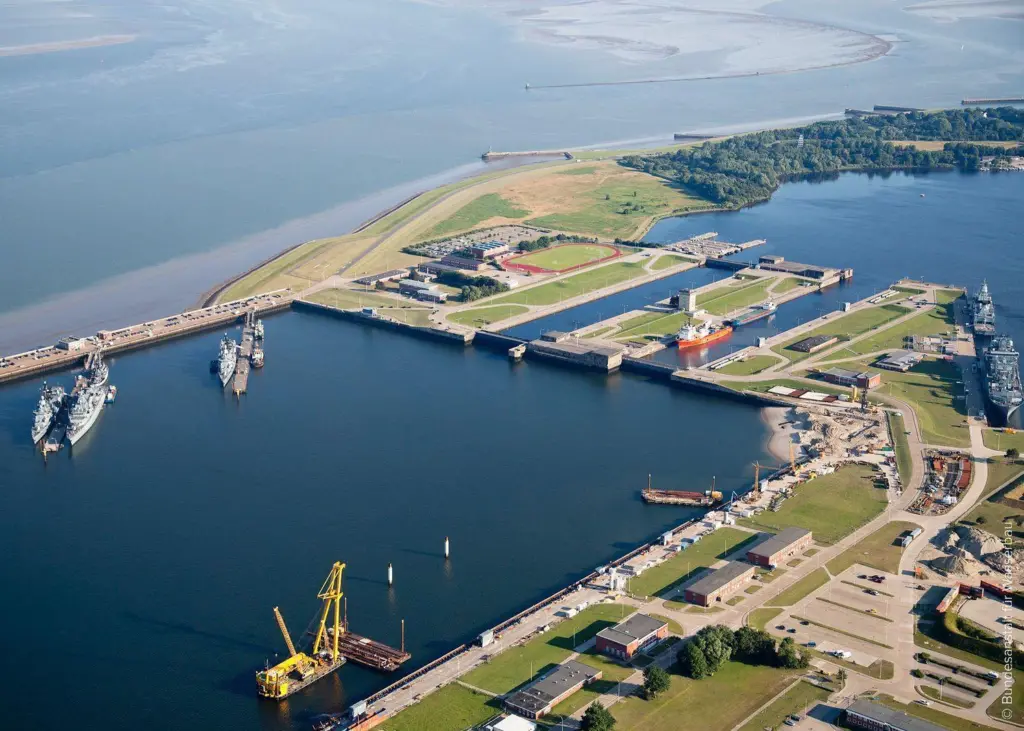
Uniper and Ørsted have signed a memorandum of understanding (MoU) to jointly develop offshore wind with hydrogen on a large scale. Hydrogen production will be achieved from offshore wind power at the Port of Wilhelmshaven. Transmission system operator TenneT will support this work as a partner.
In April, GreenPort reported that Uniper had announced plans to establish a German national hub for hydrogen at the Port of Wilhelmshaven, shelving its former plans for an LNG terminal.
Axel Wietfeld, CEO of Uniper Hydrogen, said: “Germany and Europe must remain strong industrial locations – and at the same time achieve the ambitious climate protection targets. For this, we need “green electrons” and “green molecules”. Through the strategic partnership with Ørsted, we have exactly the right setup to combine economic and ecological goals directly on site in Wilhelmshaven. By integrating offshore wind and hydrogen, we can significantly support industries such as the chemical, steel or transport sectors in their decarbonization.“
Uniper began developing the “Wilhelmshaven Green Hydrogen” project in 2020. It is expected that an electrolysis plant with a capacity of 70MW will be installed from 2025, to be expanded to 410MW by 2030. The renewable electricity required for the electrolysis will prospectively come from Ørsted offshore wind turbines.
Thanks to the existing substations and its proximity to the coast, the Uniper site in Wilhelmshaven has all the necessary prerequisites to play a key role in the local energy transition, said Uniper. In addition, the direct conversion of renewable electricity into green hydrogen means that any power grid bottlenecks can be avoided.
Wilhelmshaven could develop into a hydrogen center for Lower Saxony and serve as an example for similar projects, said Uniper.
In addition, Uniper and Orsted are investigating CO2-free alternatives for stabilizing power grids, as well as green solutions for industrial customers with a high level of supply security.