The main objective of the iTerminals4.0 project was to develop and test – in real operations – a standard digital language that allows for two-way communication between port equipment and the operations management systems of container terminals participating in the project.
While it would be easy to get entangled in the technicalities, the message that emerged loud and clear from the project’s final conference was that of tangible results in real places. Case studies were presented by Terminal Link’s Malta Freeport and Thessaloniki container terminal and by PSA Antwerp, with the focus on the application of standardised equipment telemetry and digitalisation of port terminal operations.
The overall project, co-funded by the Connecting Europe Facility (CEF), provided the opportunity to demonstrate that the standards of TIC4.0 work and are useful as expected, said Boris Wenzel, Chairman of Terminal Industry Committee (TIC) 4.0. “The iTerminals project demonstrated that TIC4.0 is not just theory, but it actually works,” he underlined.
Francisco Blanquer, Senior Innovation and Development Senior Manager at Terminal Link (CMA CGM), said: “Thanks to iTerminals4.0, we were able to really move forward with standards with a very high speed.”
He noted that operational processes in the container terminal sector can be very inefficient. “Capex has to be kept low because the time the equipment is working is really low. We don’t have a continuous process where we are operating 24/7 – we only work when we have cargo. And even when the machine is working, it is also idling, so the percentage [of utilisation] is very low. How do you improve this number?”
The options to optimise equipment utilisation included a disruptive new process and automation, or the use of data to optimise the process, he said.
“It is not easy to get data – in the past we have failed, using only a small percentage of data. The reality is that it could be machine, process, person, terminal; whatever the process you want to express, it is complex, with a lot of actions happening every millisecond.”
Meanwhile, information about what happens ‘between events’ has been missing. “We need the high-resolution data between events – now, thanks to the data, we can do this. We can have the events and the time in between.”
Why is this important? The main goal is to represent the reality, which means being able, via an IoT and Big Data platform, to compare TOS events and the status of every single process with CHE (Container Handling Equipment) reality, said Blanquer. “You can detect when something doesn’t go as it should; you can compare ‘What should be versus What it is’.”
For example, he said, you could pinpoint when a terminal tractor should be going to the yard to collect a container, but in reality it is idling. “Thanks to the IoT and Big Data, we can identify non-conformities in the last week, month or year.”
However, he emphasised, this is dependent on a language which can represent any reality – present, past or future, performed, actual or scheduled, planned, requested, proposed or estimated.
The iTerminals4.0 project showed that TIC4.0 ‘can express any reality in a digital format’, including subject, concept, observed property, point of measurement and value.
MALTA FREEPORT: A CLEAR PICTURE
“In theory, there is no difference between practice and theory – but as all of us know, in reality there is,” said Angel Martinez, Head of Projects, Maritime and Terminal Solutions at Prodevelop.
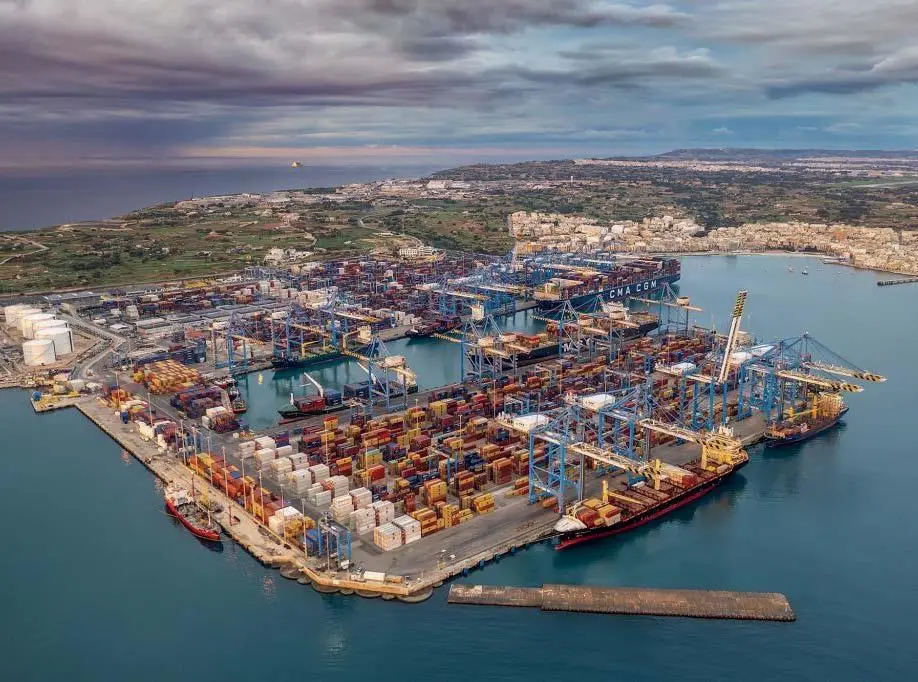
He outlined the project in which numerous IoT devices were installed in the Malta Freeport yard to give a clear picture of what was happening in the terminal, pinpointing idling and providing a live view tool for process improvement and data analysis.
Hein Chetcuti, Operations Development Manager at Malta Freeport Terminals, said: “There is quite a learning curve and learning process for us to absorb this information and these technologies and start using them at a technical level. After all the infrastructure, which was a huge challenge, we sat down and started to digest all the wealth of information that was presented to us from the Big Data platform.”
Data visualisation gives you the power, a different perspective, he said. He described the pilot project at Malta, a system demonstrating in real time all the operations and all the assets that are working together on one screen, as a huge breakthrough that could not be done before with other technologies.
“Then we started looking at how to add operational value to this information and we started with horizontal transport – terminal tractors manually driven. We wanted to understand where the weak points of operations are.”
Data can be used to detect anomalies; in this instance, human supervisors might have a feeling there were deviations but it was difficult for them to understand the reasons for this and/or visualise what was going on, said Chetcuti.
“With the strength of all this data, we can also try to understand a number of operational issues we used to have, for example, drivers driving too slow, stopping in areas where they shouldn’t be stopping, taking wrong directions.”
He concluded: “For us, this is only the tip of the iceberg. You start deploying the technology and when you start using it in the mainstream process, there is no going back, only the way forward.”
Terminal Link and RBS (Realtime Business Solutions) worked together to develop a pilot supporting the project, with digital twin/3D visualisation.
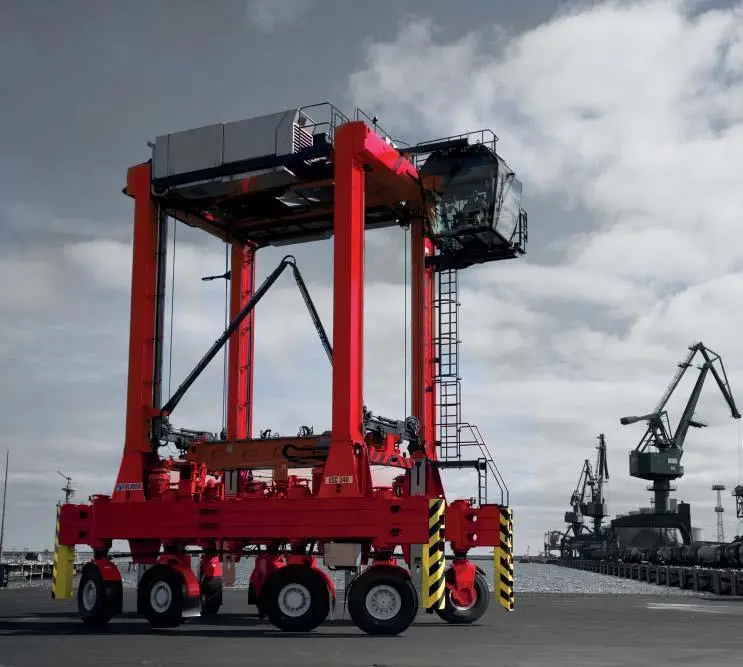
PSA ANTWERP: DATA EXCHANGE WITH STRADS
The PSA Antwerp project focused on application of TIC4.0 standards for telemetry data exchange with yard operations equipment – in this case, straddle carriers.
Dany Akkary, Digital Transformation Manager at the PSA Antwerp container terminal, said: “This was like an opportunity to take a leap into the future and apply a new industry standard. We found that data is key and that standardisation is crucial. Standards such as 4.0 unlock actionable data with ease.”
One of the biggest challenges continues to be harnessing and processing data, said Akkary. At Antwerp, straddle carriers were chosen for testing software, with initial datasets such as spreader hoist and power source monitored. This was later expanded to include other datasets, to cover operational efficiency, safety and maintenance. The platform allows real-time information on equipment status, he said.
THESSALONIKI: INTEROPERABILITY
The iTerminals4.0 project at Thessaloniki focused on the application of TIC4.0 standards for operational interoperability with the TOS. The terminal worked with software specialist TBA (Konecranes). The data value chain starts with collection, moving on to development and usage – but it cannot be utilised without proper data management, said Ida Lundmark, Business Line Director at TBA. “There is a need for a digital platform that uses standardised messages. In this iTerminal4.0 project, we demonstrated the value of data.”
ROUND TABLE: SECURITY AND ACCURACY
In a round table discussion, the question was asked: what lessons have you learned from the pilots?
From PSA Antwerp’s point of view, there was the huge security operation required. Patrick Snelders, Enterprise Architect at PSA Antwerp, noted that data has value, so it matters who can make connections to which devices. “That is something in general in the industry – you have the Internet of Things and throwing it to the Cloud is one idea, but that is something my company will never do. So, we have to think further – to have it in a private environment to collect all that data.”
Francisco Blanquer highlighted the need for data quality: “A lot of the data from the TOS was wrong and no one realised until we did the analysis. You think everything is running fine – and absolutely not. And when the data is wrong, automatic decisions are also wrong,” he said.
While it was hard to discover that some data quality was a ‘disaster’, it was also positive in that the situation could be improved, said Blanquer. But there was also the potential for conflict; if the data informs you that your equipment is idling 60 per cent of the time when you thought it was doing a fantastic job, it is hard to tell a super professional operator the reality.