
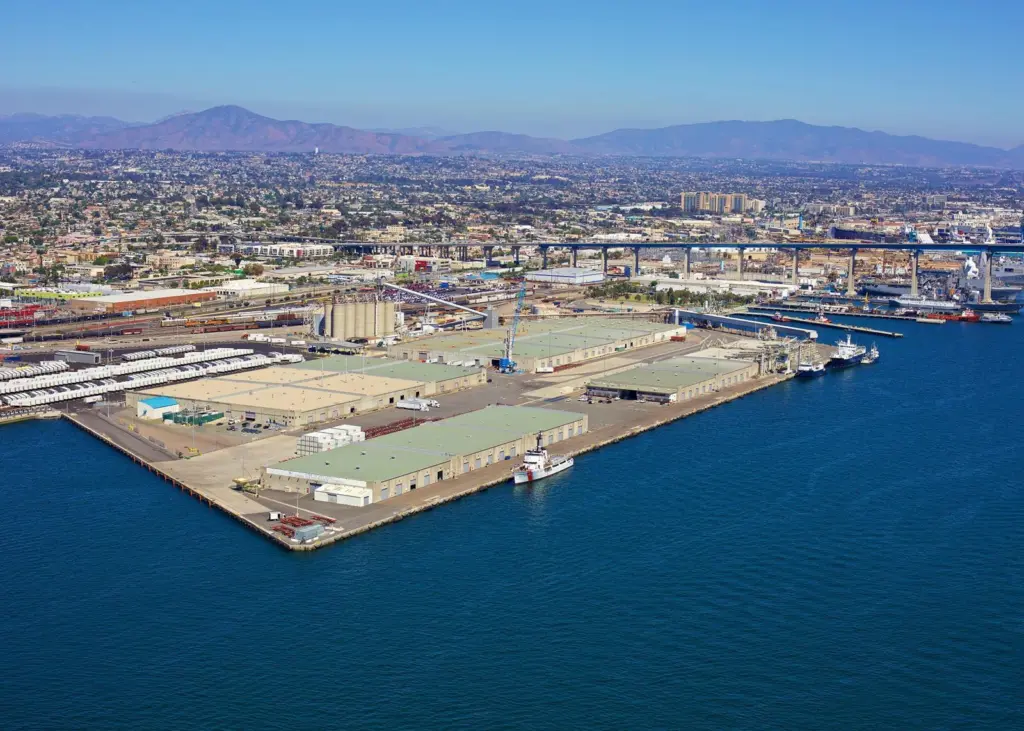
The solar microport grid project at the Port of San Diego’s Tenth Avenue Marine Terminal is expected to cut the port’s energy costs significantly, while demonstrating integration of distributed energy resources — including solar, storage electric vehicles and demand response.
“The Port of San Diego believes in the safekeeping and environmental care of our dynamic waterfront and surrounding communities,” Renee Yarmy, program manager for energy and sustainability at the Port of San Diego, told GreenPort.
“This is a cornerstone project which will provide renewable, reliable, and resilient power to meet both operational and sustainability goals of the port. By adding a microgrid to our terminal we will be able to improve air quality and reduce greenhouse gas emissions.”
Self-sufficient
The aim of the project, Ms Yarmy said, is to achieve approximately 360 metric tonnes of carbon dioxide equivalent from baseline port electric energy consumption.
This project is supported with a US$4.9 million grant from the California Energy Commission (CEC). About US$4.4 million in matching funds will be provided by the port for the microgrid, which is expected to have 700 kW of solar and 700 kW of energy storage when completed.
San Diego is now seeking bids from companies to build the infrastructure for the grid.
Any winning contractor will need to coordinate with a solar contractor that will be installing a photovoltaic array on a warehouse at the terminal being interconnected with the storage project.
Proposals are due no later than 18 June 2020. The Request for Proposal (RFP) is available on Planet Bids