They are pan-regional, cover areas of up to 45km in diameter and must include either a seaport or airport. They can contain up to three tax sites adding up to a maximum total of 300ha. In addition, they could off er a number of Customs zones located at ports, airports, rail terminals and other locations. Plus, some parts of the concept are along the lines of the ‘old’ Freeport model that ran from 1984 through to 2012 in the UK.
FREEPORTS – THE RIGHT NAME?
We can start by asking this: Is ‘Freeport’ really the right name? For a start, there are no discernible benefits from a Customs perspective – Customs has moved on, and the same level of benefits can likely be accessed via established Customs warehousing or Inward Processing Relief.
Secondly, the earlier Freeports were distinct fenced sites, located either next to ports (with the exception of Liverpool Freeport within the Port of Liverpool) or airports and operated mostly by the asset owner. The new model is led by regional public sector bodies, with the key asset owners participating; the port is just one part of the larger picture.
Frank Robotham, who managed the highly successful Liverpool Freeport in the 1980s and 1990s, says: “The new Freeports are not necessarily about attracting business to ports but are about recognising the active and supporting role that ports can play in this regional Freeport policy to attract inward investment and especially create jobs, and complement the government’s industrial strategy and green agenda. What is interesting is that the port is being seen as a place for innovation in transport, technology and alternative fuels.”
As an advisor for the successful Liverpool City Region Freeport bid, Robotham says that in discussions with industry, it was easier to focus on the value of the policy if the word ‘Freeport’ was not used regularly, because otherwise people tended to assume the focus was on ports rather than on the potential and value of the tax site benefits in particular.
“Also, the accountability to Government on the development and success of each Freeport will be through the respective regional Freeport Governing Bodies (FGB) now to be set up by the public sector,” he says.
INNOVATION AND TECHNOLOGY
Freeports are seen as places where innovation can take place for different technologies which can either be portrelated or transport-related, to support projects being developed within the region, says Robotham. “This is clearly evident with the number and range of energy-related companies associated with the bids building upon existing strategies and it will BE interesting to see if wider collaboration is secured to use ports as centres of innovation directly.”
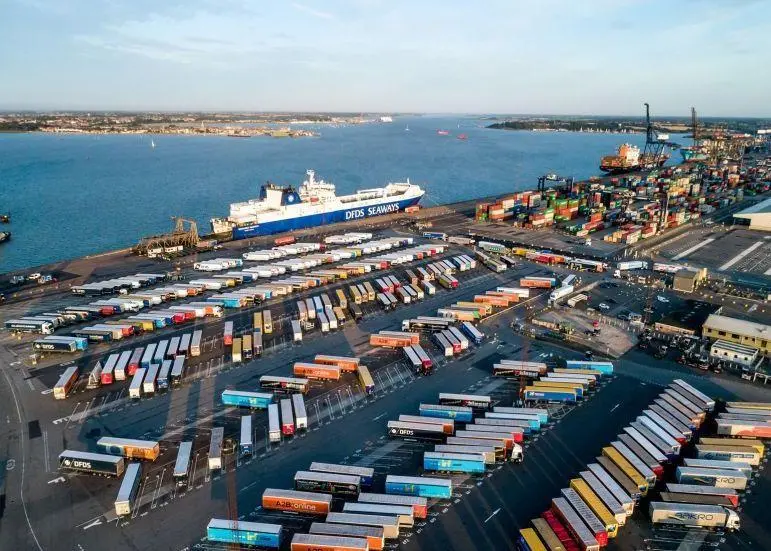
For example, Freeport East includes the ports of Felixstowe and Harwich and is also working with Ryse-Hydrogen and EDF, operators and developers of the nearby Sizewell nuclear power station, to develop a Hydrogen Hub.
Jo Bamford, executive chairman of Ryse-Hydrogen has said: “The Freeport East Hydrogen Hub will support the creation of thousands of green jobs and feature innovative uses of hydrogen for zero emissions buses, construction equipment, marine and agriculture. Crucially, these UKmade Net Zero technologies can be in use within 12 months and will place East Anglia at the forefront of the global hydrogen economy.”
The Thames Freeport sees the Port of Tilbury and DP World London Gateway working together – and also features Ford’s Dagenham site. Graham Hoare, Chairman and Executive Director, Business Transformation, Ford of Britain has said: “The Thames Freeport will be a new centre of excellence for the country as we electrify, automate and digitise our future. The Freeport provides Ford with a great opportunity as a testbed for a variety of customer-focused mobility technologies and other business opportunities at Ford Dagenham in the future.”
While there must be a port or airport within the Freeport schemes and there is a requirement to have one location designated a ‘Primary Customs Zone’, that zone does not have to be located at a port or airport.
Robotham says it is still early days in terms of understanding the potential of the Freeport policy: “The devil is in the detail. The interpretation and implementation of the tax and Customs rules need to be set out in order for the FGBs and the stakeholders to fully understand the offering to investors and users.”
The benefits on offer range from suspension of employers’ National Insurance contributions and capital tax allowances on investment, to relief from business rates and Stamp Duty. Many of the tax benefits run to 2026 and could be extended, depending on the success of the policy in the first four years. Clearly, the new FGBs will need to mobilise very quickly to deliver meaningful operations in that timeframe.
The rolling out of the Freeports policy is timely for a ports industry facing challenging trading conditions, says Robotham. “Whether these Freeports are just a rebranding of enhanced Enterprise Zones or not, the policy does give the port companies an opportunity to be more involved in shaping the economic success of their region with potentially direct commercial opportunities to both strengthen and diversify their port assets. Time will tell how successful it will be – but for the port companies involved, it’s a win already.”