During TOC Europe, Jan-Willem van den Brand, director big truck product strategy & solutions for the company, explained that the first options available will be powered by lithium-ion battery only. Then, in the future, once fuel cell technology is fully developed, Hyster plans to offer a choice of three options: powered by lithium-ion battery only; a combination of a small battery plus a fuel cell engine; or a medium battery with a fuel cell engine.
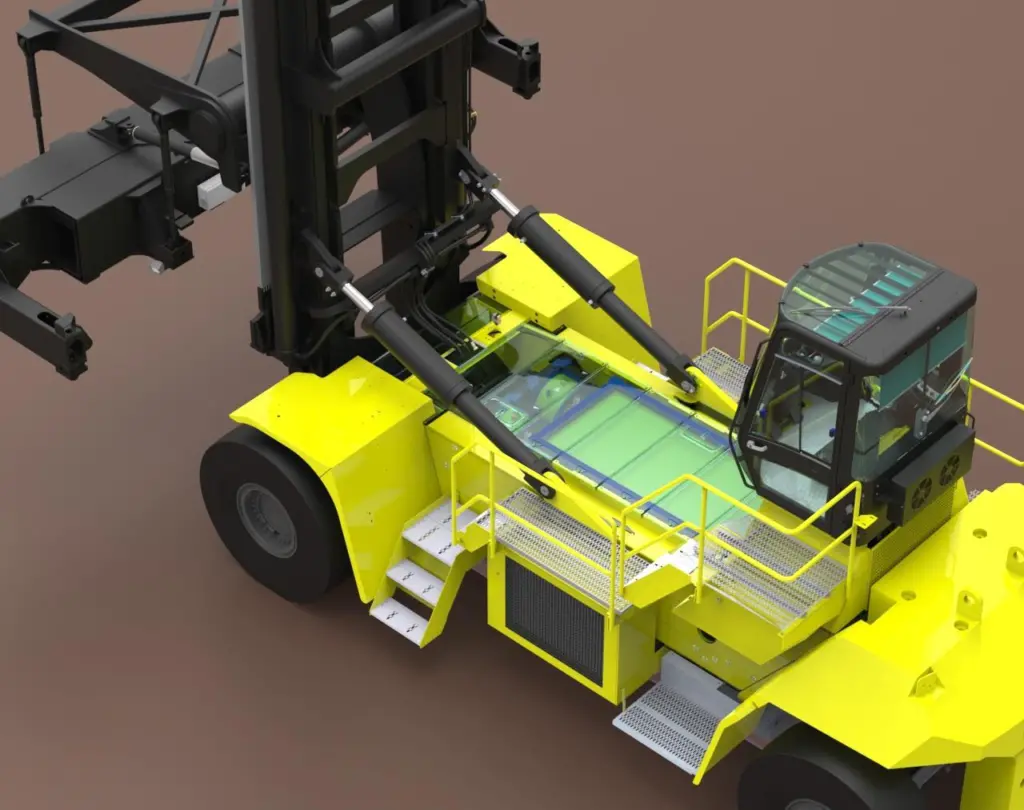
The first truck in development is a 52-tonne capacity laden container handling unit powered by lithium-ion battery, which is expected to achieve similar full shift performance to the manufacturer’s diesel-powered, container-handling trucks.
“Lithium-ion battery capacity is not likely to be sufficient as a long-term solution for very intense applications without opportunities to re-charge during the shift,” said Mr van den Brand. “This is where a fuel cell powered engine can come in.”
Combining a battery with a fuel cell engine that acts as an on-board generator will allow units to support continuous operation while providing zero emissions.
Hyster sees a near future where ports and heavy industry will be able to electrify their entire big truck fleets.
Hyster has also launched its new H11XM-ECD8 empty container handler primarily for inland terminal operations. With a capacity of up to 11 tonnes, it can double handle empty containers.
Hyster also showcased its new, updated mast design for all its 8-16-tonne truck at TOC Europe, promising to optimise visibility through the mast and carriage.