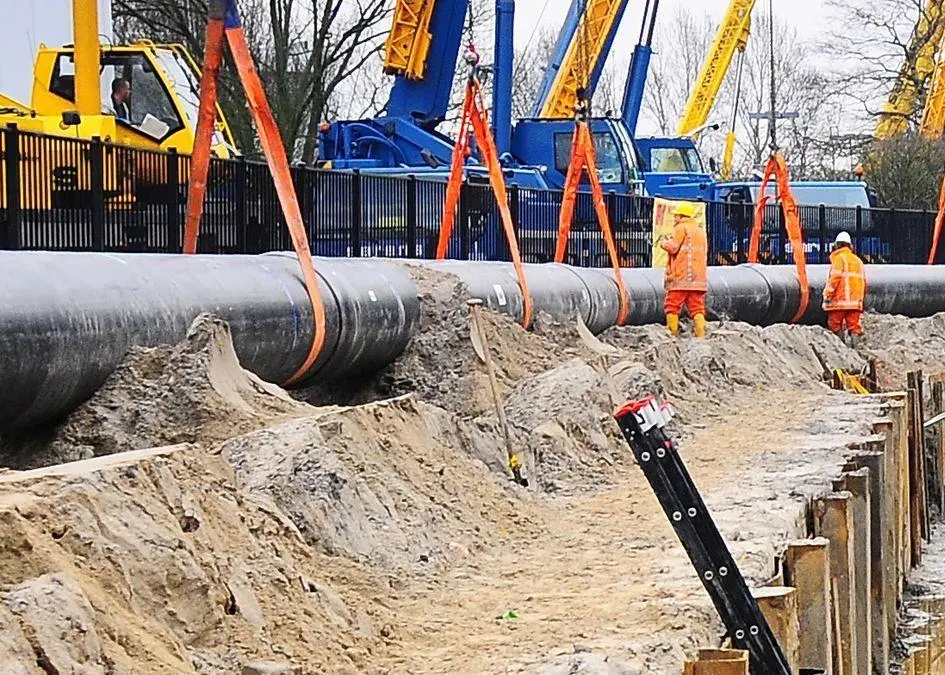
Constructing four pipelines between the Port of Rotterdam and Chemelot chemical industrial park in Limburg for the transport of C4-LPG, propylene, hydrogen and CO2 will yield economy, energy transition and safety benefits, a feasibility study has concluded.
Speaking about the study commissioned by the Ministry of Infrastructure and Water Management, the port authority and Chemelot, Minister Cora van Nieuwenhuizen said: The plan will help bring about a safe means of transportation. As it will run underground, accessibility will also benefit.”
Delta Corridor
The project plans will now proceed under the title ‘Delta Corridor’. Pipelines for hydrogen and CO2 will hand industry opportunities to make production processes more sustainable. Pipelines for C4-LPG and propylene will also support the transition. Construction of the pipelines is key to the port of Rotterdam developing into a sustainable energy port.
Allard Castelein, CEO Port of Rotterdam Authority: “The ‘Delta Corridor’ project will be crucial in helping industry in Chemelot and North Rhine-Westphalia become more sustainable, and consequently for the port of Rotterdam to continue playing a key role in the energy system of the future.”
The pipelines will mean fewer trains carrying hazardous materials along the Brabant route. Industry at Chemelot will also benefit from safe and sustainable connections to other industry clusters.
The pipelines are expected to create opportunities for connecting chemical clusters in the Netherlands, Belgium and Germany.
The simultaneous construction of the four pipelines between Rotterdam and Chemelot will cost over €1bn. The study shows that for the Dutch section alone, a pipeline bundle would be economically unfeasible. Extending the pipelines to North Rhine-Westphalia and Antwerp will mean they could be significantly better utilised.