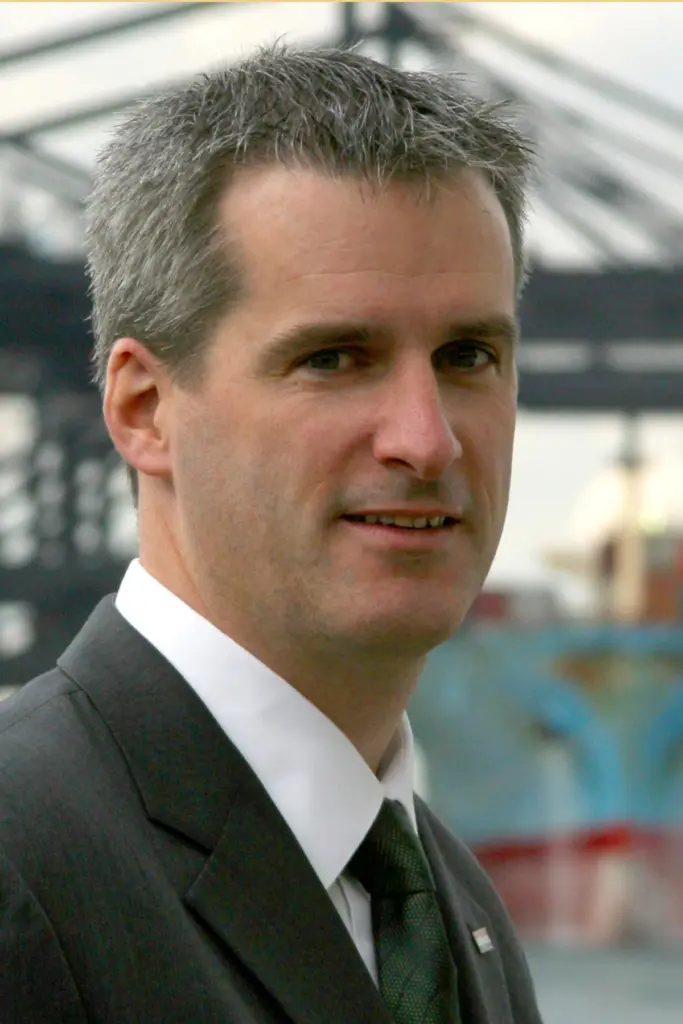
“There is a lot of focus on Southern California and you can’t argue with the size of the population there – they must be served. But for cargo moving to inland destinations like Chicago, with Tacoma having on-dock rail on every terminal, we are the obvious alternative,” says the port’s executive director, Tim Farrell. More than 70% of containers moving through the port go by rail.
This year, Tacoma has announced plans to build a $300m, 68-hectare, 1.7m teu container terminal for NYK Line; it has recently built a new terminal for Evergreen, and has also expanded the terminals used by Yang Ming, K Line and HMM.
“What we are seeing is very strong interest on the part of ocean carriers to secure terminal assets on the West Coast of North America,” says Mr Farrell. “They recognise that transpacific cargo will continue to grow and they are looking to the future – knowing that current terminal assets will not be sufficient.
“The Evergreen and NYK terminals are good examples of carriers recognising that Tacoma will be a good access point to inland markets, while Southern California will provide access to the local Southern Californian markets. These companies are thinking ahead and securing their gateway so that tomorrow they can continue to compete for the inland markets.”
Tacoma currently moves around 2m teu of containers but has capacity to move at least 3.5m and possibly up to 4m teu with its present facilities, says Mr Farrell. “But we have the ability to expand to 10m in the future. We can build two more terminals after NYK – and each one of our present terminals has the ability to expand.”
He says Tacoma’s biggest challenge is the need to raise its profile. “I don’t think the world completely understands our capabilities and I don’t think the port is very well known.
“We are serving markets like Chicago and the east – distances that are conducive to high use of rail. All of our terminals have rail facilities on dock and rail itself has significant available capacity not being used. So for us, trucking and the associated environmental issues isn’t a major concern.
“In terms of community support, we have 84% support for any expansion – because so much of the cargo moves by rail, the community benefits from the port’s economic contribution without the detriment that might come from roadway congestion.”