The highly demanding post of SOSREP is virtually unique in the maritime world and not a job for the faint- hearted. The post was established as part of the Government’s response to Lord Donaldson’s review of salvage, intervention and command and control, following the serious pollution threats posed by the BRAER and SEA EMPRESS groundings off Sumburgh Head, Shetland and Milford Haven in 1993 and 1996 respectively; and the position carries with it awesome powers.
At the heart of Lord Donaldson’s recommendation was the perceived need for a single representative to oversee, control and if necessary intervene and exercise “ultimate command and control” – acting in the over-riding interest of the UK in salvage operations within UK waters involving vessels or offshore installations where there is significant risk of pollution.
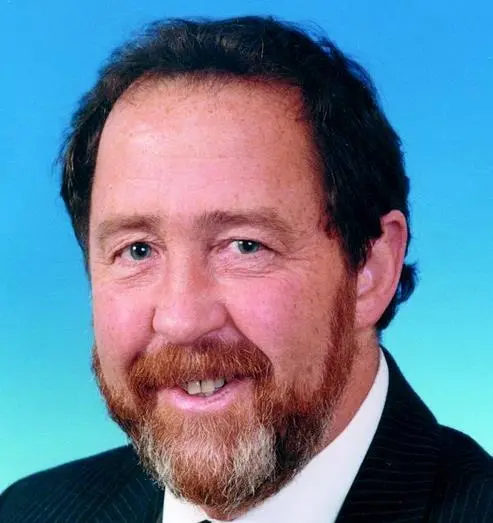
The present SOSREP, Robin Middleton, reports directly to the Secretary of State for Transport, Alistair Darling, but exercises command and control without recourse to Government, a situation without direct precedent internationally.
In his five-year tenure he has been directly involved in over 430 incidents, has served 34 Notices of Direction and established 23 Salvage Control Units. Since he was appointed in October 1999 the procedures for dealing with maritime incidents affecting the UK coastline, including the National Contingency Plan, have been kept under constant review and revised where necessary.
SOSREP maintains a high degree of independence. For practical and administrative purposes he is based at the Maritime and Coastguard Agency (MCA) Headquarters in Southampton, and relies upon the resources provided by the agency. His powers of intervention and to issue directions in the event of a maritime incident are considerable and include the power to:
intervene and issue Directions to take any action of any kind whatsoever including the destruction of a vessel require ships to be moved establish temporary exclusion zones issue directions to persons in control of land or premises.
These powers are effective up to 12 nautical miles offshore with regard to safety and in the event of pollution, or risk of it, up to 200 miles from the UK coast or international median line.
Intervention is initiated in any deteriorating situation at a time when SOSREP, on behalf of the UK Government, feels he is entitled to step-in. In this role Robin Middleton cannot abdicate his responsibility.
From the point of intervention the British Government has a continuing and inescapable responsibility to monitor events closely and, if necessary, control the whole salvage operation. Officers from the MCA play an important part in the response and have the ability to take rapid steps to ensure that salvage and counter-pollution assistance is available.
Interviewed for PS, Middleton was asked about his background and what particular skills he was able to bring to the unique appointment as SOSREP. “I think the wisest words came from John Astbury (MCA Chief Coastguard), commenting on my appointment, ” reflects Middleton. “He said the task was not to put one more expert into a pool of experts, it was to get someone with sufficient background and with a track record of bringing together multi-disciplinary responses to know what is going on. This requires someone who can actually listen to people and take decisions based on the available information.” He adds: “I suppose what I have brought to the party is a knowledge and background in diving, with some salvage experience, a certain amount of knowledge of law enforcement and how that works, and how notices are compiled and served. A track record of bringing together large organisational events and running multidisciplinary teams in local government has also helped.”
WORKING AND LEARNING TOGETHER Middleton refers to the importance of the National Contingency Plan as a living document, continually under review and establishing the procedures that should then automatically fall into place. “The SOSREP, with all his powers, is now being seen more as a pragmatic working partner rather than a source of interference. SOSREP is there to keep the state’s hand on the tiller and to enable the best response, in terms of safety and environmental protection, to be formulated and enacted with the minimum of delay or external complication. Fears that such a role would lead to unwarranted involvement in the affairs of harbour masters, salvors and others are now being dispelled as we work and learn together.” Describing his interface with his ultimate boss, the Secretary of State, he comments that his role is largely autonomous but the Minister’s door is always open for political advice.
The position of SOSREP is now well known and respected in most sectors and when asked for his views on the way forward Middleton replies: “We have now established the role of SOSREP in the maritime and offshore industries and have since increased the powers to include safety as the driver for direction in UK waters and put in the power to actually direct the owners of coastal land and port facilities.
What I’m doing now is reviewing the systems and procedures behind that to coincide with the new National Contingency Plan.
“For the MCA’s part it’s now looking into its stance from a prevention point of view and indeed our emphasis seems to be heading in that direction. So my own inclination would be towards an accurate analysis of preventative measures and the concentration on the ‘front-end’, instead of response. But in terms of response I think we need to re-evaluate the relationship between salvors and shipowners and whether that means looking at the American model I don’t know.
But certainly a great concern to me is the decline of the salvage industry and in those terms it is nice to see the introduction of training systems by major salvors.”
In his present role Robin Middleton provides vital input to the National Contingency Plan for Marine Pollution from Shipping and Offshore Installations, a plan that is kept constantly under review in the light of practical experience. Salvage and prevention activities are the direct responsibility of SOSREP who, during major incidents, is supported by a Salvage Control Unit (SCU) comprising a small group of specified persons who alone can represent key interests such as the salvor, the casualty owners, a harbour or port authority or an involved coastal state. It also includes any specialist advisors that are felt necessary e. g. a specialist independent salvage advisor or a chemical cargo specialist. The SCU however is not a committee – at all times the final decisions will be the sole responsibility of the SOSREP.
When challenged on his seemingly small team Middleton outlined the advantages and the expertise that has been gained: “With such a small team dealing with the whole coastline we are constantly being called and I personally have handled 430 incidents and influenced the outcome. To say nothing of the ones where we have had to invoke the National Contingency Plan. So if you like we have become battlehardened.”
Robin Middleton is an imposing figure with a varied background that includes law enforcement, salvage and diving, emergency planning and local government. Following a reported maritime incident he is involved at every stage using his not inconsiderable presence and experience to good effect when necessary. Throughout his varied career, connections with marine matters and law enforcement have been prevailing features. At an early stage he became involved in diving, originally as an amateur and later as a fully qualified commercial diver with active involvement in marine construction, salvage and with the film industry. Those activities included underwater search and recovery, vessel inspection, diver training and consultancy, and work as a freelance underwater stuntman, rigger and stunt arranger. For much of this period he was a member of the RNLI at New Brighton and was awarded the RNLI Silver Medal for Bravery in 1974.
After considerable experience in Trading Standards, he held the position of Chief Trading Standards Officer and was later appointed Director. In that role he had wide departmental responsibilities for a multidisciplinary team covering a wide range of diverse activities from Environmental Health, Road and Home Safety, Consumer Advice, through to the H.M. Coroners Court Service.
Whilst working in Trading Standards he gained experience of law enforcement and direction, and emergency response.