Towage in the UK is dominated by two big players. The precise percentage controlled by Adsteam and Svitzer depends on who you ask – estimates range from 80 to 95%. And of course, they are complemented by other smaller operators.
But there is another way. Keeping towage in-house is a minority sport but one that gives a port or terminal operator much more control and Captain Nigel Mills, director of harbours for Orkney Islands Council, describes himself as a big fan.
“As a port authority you can either have contracted-out towage offering services to the ships or you can have a dedicated towage company working for the port and supplying services to the ships on your behalf, ” he says. “From my point of view, the benefit is that I have direct control over the operations and specifications of what is provided to ships – such as the requirements for passive or active escort tugs depending on the size of tanker.”
Orkney Towage Company was originally formed in 1976 as a joint venture between the council, which is the harbour authority, and JP Knights of Invergordon. However, the council has owned the company entirely since buying out JP Knights’ shares in January 2005.
“When the towage company was partly owned by an independent company, we had input from a third party. Previous to that we were operating on a charter basis – the port authority chartered in a third party to provide towage to ships that came into Orkney Harbours, ” says Mills. “So we have had one extreme, and the hybrid, and now the other extreme, in-house. Having worked with all the permutations, I am convinced that this is the best one.”
There are advantages in engaging an independent operator, he acknowledges, “because obviously we could specify a cost and all the problems associated with that cost are someone else’s problem.
“But you don’t know exactly where they cut down on maintenance or whether they are reducing manning to a very low level or if they don’t change the tow lines on a regular basis. You can write a service specification for the provider, but the contract is between the shipowner and the tug, and the harbour authority has very little to do with it. So even though they are operating in our harbour, we would not have direct control over what is going on.”
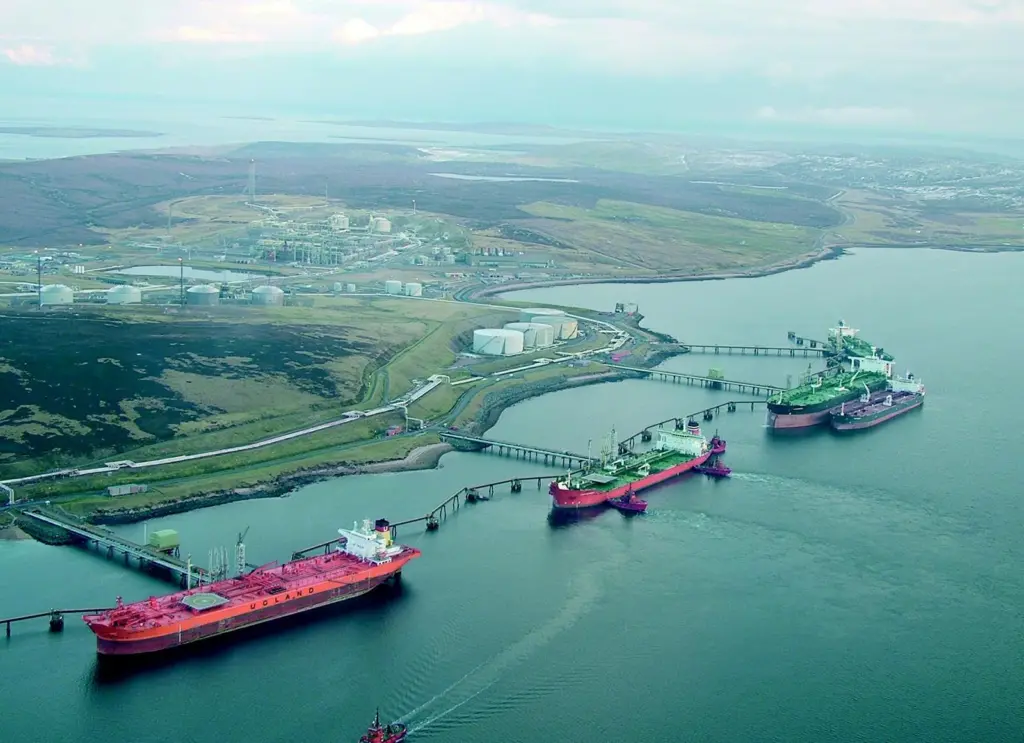
Orkney Towage has three 55-ton bp Z-drive tugs dedicated to Scapa Flow and the Flotta oil terminal, and while operations involve the movement of millions of tonnes of crude, and many thousands of cruise passengers a year, Capt Mills says in-house towage only works because it is a relatively small operation.
“We do a very specific job in a remote location and we haven’t really had any great competition, ” he says.
The in-house arrangement means that towage is incorporated into the port authority’s overall offering. Capt Mills can have direct talks with the towage company’s managers to ensure that all requirements with regard to number of tugs, ISM and service are met.
“Outside operators are going to operate very much on a commercial basis – they will be profit-oriented as company law dictates, ” he says.
“Our company is dedicated to providing a service for the harbour authority. Therefore we can afford to be a little bit more concerned about service provision and less so in balancing-book terms. The spin-off is that I am very much more in touch with towage provisions.”
This year Shetland Islands Council has moved the same way, bringing Shetland Towage Ltd in-house.
Previously the company was owned by a charitable trust. “That worked fine but with the decline of throughput at Sullom Voe as the fields east of Shetland are declining, the council made the decision that it would purchase Shetland Towage. So on February 10 we became the owner of five tugs, ” says Jim Dickson, ports and harbours operations general manager.
“The operation has been brought in-house to achieve economies of scale.
They are in our office and using our stores and we are trying to achieve cost savings through synergies and sharing back-office operations.”
One of the first things Shetland did was to reduce crews from five to four, following a risk assessment, consultation with the MCA and trade unions, and the fitting of additional safety kit on the tugs. Now it is considering whether to enhance the performance of two of its tugs, or replace them altogether.
Further south, the story is a mixed one in the jurisdiction of Forth Ports, which owns Forth Estuary Towage and also has two independent tug operators on the river.
Forth Estuary Towage owns four tugs based at Leith, covering Leith and Rosyth and the gas terminal at Braefoot.
Towage at Grangemouth is provided by Svitzer, with two tugs. And at Hound Point, BP has its own three tugs serving its terminal – a model it has recently followed on the Thames, with the introduction of three new tugs dedicated to the Coryton Refinery.
“There are three towage operators on the river. At the end of the day, there is enough work to warrant that number of tugs, ” says Bob Baker, Forth Ports’ chief harbour master. “BP took a strategic decision that they wanted to have their own tugs on their own terminal, to give them control.
“Then we have the split between Grangemouth and our own tugs.
Because of the length of the river, it makes sense to have tugs at both ends.”
As to the benefits of in-house versus outside towage, Capt Baker says: “I am not sure whether there is an actual operational benefit. We have had our own tug company for more than 30 years and we will continue to operate it if it works and is a profitable part of the business.
“Having more than one tug operator obviously is a commercial benefit and allows business to be more competitive. The other plus is that you do end up with more tugs. We have enough tugs for our average needs but if we have a peak of activities, we can charter in support from BP or Svitzer.”