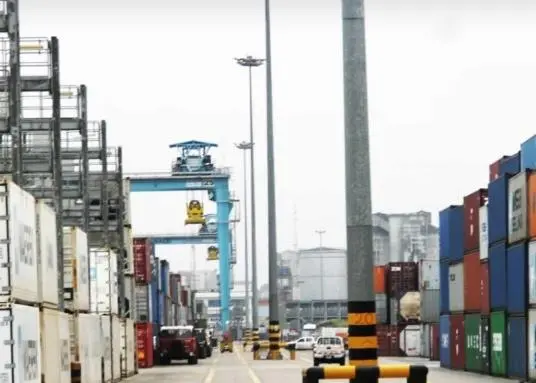
The Nigerian economy is currently losing about N600bn in customs revenue, an estimated $10bn for non-oil export and about N2.5 trillion corporate revenue in the ports industry on an annual basis, shows the ‘Costs of Maritime Port Challenges in Nigeria’ by the Lagos Chamber of Commerce and Industry (LCCI) and other members of the Organised Private Sector (OPS).
Capacity utilisation stands at 38-40% and approximately 40% of businesses located around the ports communities have either relocated to other areas, scaled down operations or completely closed down.
The report noted that significant efforts were made in reforming the Nigeria’s maritime sector through the partial privatisation of the ports in the mid-2000s and other subsequent interventions, however these initiatives have not been as successful as hoped.
Potential solutions
To reduce port congestion the report suggested following the Port of Rotterdam’s example in allocating different terminals to the ships arriving based on their size and number of containers carried, deploying efficient cranes to unload vessels with high capacity and expanding the use of inland port facilities. The report also noted that Singapore created the Maritime Innovation and Technology (MINT) to address congestion and other port issues.
Looking at faster and convenient port clearance processes and procedures for efficiency, the report pointed out the Vessel Traffic Information System (VTIS) used by the Singapore Maritime Port Authority and pinpointing the ports of Singapore and Shanghai, noted the benefits of government and private sector participation in providing needed infrastructure and maintenance, including road networks.
To tackle excess government agencies and charges, the report acknowledged Nigeria’s need to investigate “illegal excesses” to encourage ease of business, as it currently has more than 12 agencies.
Technology and innovations can be used to cut down on corruption and other forms of illegality, said the report. “The implementation of the Nigerian Single Window trade is very crucial at this point is enhancing service deliveries across various port activities.” The Single Window provides access to all resources and standardised services from the different Government agencies. “This would further eradicate the unlawful charges and hitches associated with these agencies,” added the report.
The Creation of a National Trade Data Centre also remains critical in integrating the various processes and value chain management within the ports to achieve increased efficiency and adopt global business practice, said the report.