Ask anyone for their first impressions of Mauritius, and the response is likely to feature white sand, azure seas and palm trees.
All are accurate, but present the African region nation as mono-dimensional; a place that is allowing the world to pass it by as it drifts from dawn to dusk on a cloud of hibiscus flowers; where times doesn’t matter, and where the locals don’t have much, but are happy with it.
That so many hold such an impression is a tribute to the writers of travel brochures, but it is nevertheless no more accurate than the assertion that Mickey Mouse is a real rodent who used to live in Walt Disney’s skirting board.
The reality is that this Indian Ocean paradise is very firmly switched on to business, looking far beyond the blue horizon to scout out global business opportunities. It not only has the most business-supportive outlook of the African region, but also performs better than many European countries, according to the World Bank’s ‘Doing Business Index’ for 2010, in which it ranks 17th out of 183 nations.
That ranking puts it above Belgium, Germany, the Netherlands, France, and all Scandinavian countries except Denmark. It’s also streets ahead of the world’s most rapidly-growing countries; mainland China slipped back to 89th from its 2009 ranking, and India is 133rd this year. The UK changed places with Denmark, this year, and holds fifth spot.
That Mauritius was able to climb up the rankings from 24th last year, with a firm eye of being in the top ten, is a tribute to sustained economic effort, according to World Bank representative Constantine Chikosi. He says Mauritius has been a consistent reformer since it started to take part in the survey in 2005. He says: “It is now looked upon as a benchmark not only in the Africa region but across the world. It is well poised to achieve its objective of breaking into the Survey’s top ten economies in the world. The challenge for Mauritius now is to keep up the momentum and remain committed to implementing its reforms as there is no room for complacency.”
He adds that the World Bank has commended its government for pursuing and deepening bold, market-oriented reforms. “These reforms have cushioned the Mauritian economy from the worst effects of the current recession, and positions it in good stead for a quick rebound when the recovery begins.”
With a population of just 1.25m, the island has created a climate that fosters manufacturing and exporting. It has about 800 manufacturing companies, and 500 of those are keen exporters.
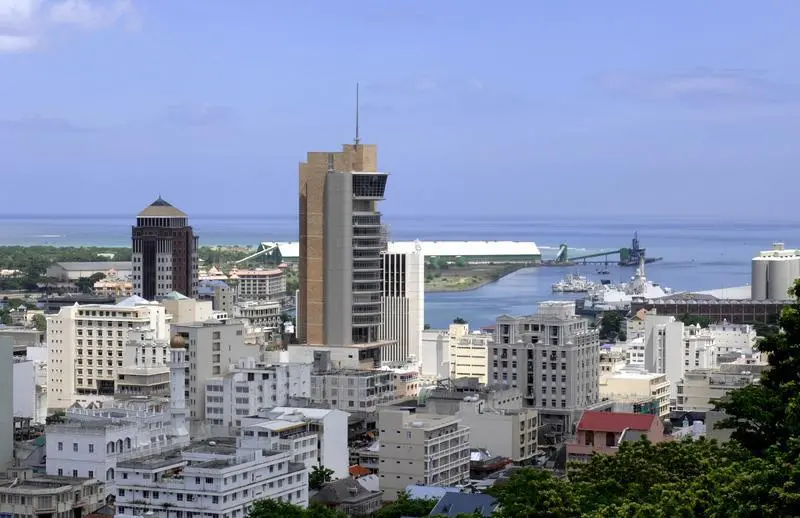
All of which puts pressure on the port infrastructure, according to Mauritius Port Authority director general Shekur Suntah, a firm believer that ports are critical links in the supply chain, and as such the development of container terminals in emerging economies helps to promote economic growth and stimulate further investment.
That’s why the island is excited about its port master plan, which charts development of the port and land use for two decades. Says Mr Suntah: “Consultants have forecast that container traffic will double by 2015, and reach over a million teu by 2030.”
To cater for such exponential growth, the MPA plans to extend its Port Louis container berth and deepen the channel for vessels with up to at least 8,000 teu, increasing capacity at the terminal to 750,000 teu from the current 500,000, with a completion date of 2012 in mind.
Like the rest of the world, Port Louis has felt the economic squeeze, but in the face of the unprecedented downturn has enjoyed an increase of more than 17% in the volumes of transhipment containers; a key statistic for the island’s transport hub ambitions.
Mr Suntah also has his eye on the bigger picture. Writing in the latest Mauritius Port Authority annual report he acknowledges that shipping lines are becoming more and more demanding, requiring better services and competitive pricing. “At the same time, regional port competition has intensified.
“With the increasing demand for total logistics solutions, the Port (Port Louis) is a key node in the logistics chain and has to offer greater value for money and more value-added services. To achieve this goal, we will continue to work closely with our strategic partners to develop Port Louis Harbour into the transport and logistics gateway for Africa.”
In the Seychelles too, ranked 111th in the Doing Business Index, the government aspires to double its gross domestic product by 2017 through development in a number of areas, including a renewed focus on port development at Port Victoria.
Already the deepest port in the Indian Ocean, and close to major shipping routes between Africa, Asia and Europe, the island nation seeks expansion of container traffic.