Sustainability was one of the major themes at the 11th Asia/Oceania Regional Forum of the IAPH hosted by Ports of Auckland in New Zealand in February.
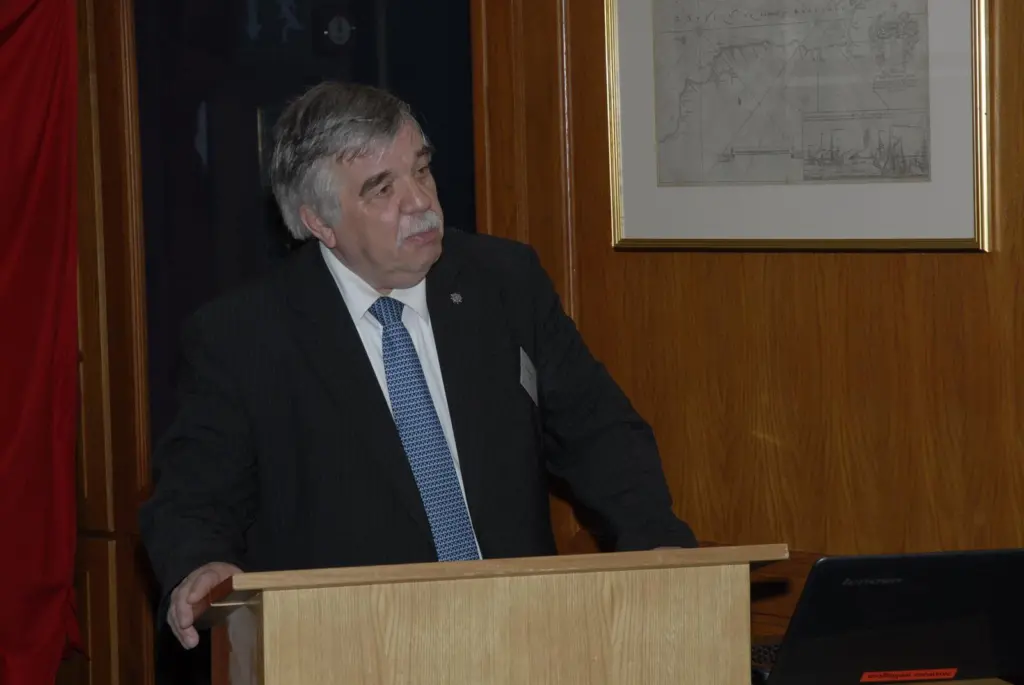
The spotlight was turned to the WPCI by Fer van de Laar, managing director of IAPH’s Europe office and chair of the IAPH’s Committee on Port Safety, Environment and Marine Operations, who said new targets have been set to increase the number of ports adopting WPCI goals from the original 55.
Under the initiative, signatory ports contribute to studies, strategies and actions to reduce greenhouse gas emissions and improve air quality. It also provides a platform for ports to exchange information about the effects of climate change and measures that can be adopted for its mitigation.
Current projects concentrate on carbon footprint, onshore power supply (OPS), the Environmental Ship Index (ESI), intermodal transport initiatives to move more freight off roads and on to rail or short-sea shipping feeders, research into low-emission yard equipment, and sustainability clauses in lease agreements.
Proposed new initiatives include research into low-carbon fuels and alternative power sources for port operations (wind, solar etc).
Mr van de Laar said that the IAPH was looking to maximise the number of ports engaged in footprint inventory and management, and also maximise support for the ESI, which identifies ships performing above the emission standards of the International Maritime Organisation.
It is based on the amount of nitrogen oxide (NOx) coming from the main and auxiliary engines, sulphur oxide (SOx) coming from the fuel and CO2 gas that is released by the ship. A simple and transparent rating is obtained from this, and the first ESI “scores” were advertised last year. A database has been available since then.
This is intended to be used by ports to reward clean ships through discounts on charges. Amsterdam for example offers 6% discounts, Rotterdam 10% and Oslo 30% (for tankers only). Each has its own targets that ships have to attain on the ESI ratings, but the principles are the same.
The concept is spreading, with Hamburg, Bremen and Gothenburg among those due to implement ESI-based discount schemes.
The onshore power supply (OPS) project is another of the strategies recommended by the WPCI. It has been partly driven by a European Commission recommendation to member states that they should “consider the installation of shore-side electricity for use by ships at berth in ports; particularly in ports where air quality limit values are exceeded or where public concern is expressed about high levels of noise nuisance, and especially in berths situated near residential areas”.
The EU has gone further, calling for the development of harmonised international standards for shore-side electrical connections.
As an alternative to onboard power generation, vessels can be hooked up to an onshore power supply so operations can proceed uninterrupted, while eliminating negative side-effects. Unfortunately, ports are not normally equipped to supply vessels with electricity from the wharf side, nor are vessels usually equipped to receive power in this way.
The main hurdles appear to be cost and frequency conversion. Supplying high-voltage power can vary significantly if investment in transformer stations is required, along with frequency converters, cable conduits and the like ashore, plus transformers and electrical distribution systems on board.
Estimates range from $1m to $4m per berth at the Port of Long Beach to €4m ($5.4m) per berth at the Port of Rotterdam, while at the Port of Gothenburg the figure was only a fraction of this (€255,000 for two berths), because of the already available high-voltage power supply, the lack of a need for a frequency converter and the limited power requirements of ro-ro vessels.
In addition to sustainability, the IAPH meeting focused on supply chain issue, capacity and protection/risk/security in ports.
The IAPH represents 230 ports in 90 countries. Member ports handle more than 60% of the world’s seaborne trade and nearly 80% of container traffic. It operates several technical committees to work on issues facing ports such as safety, security, environment, legal and operations.