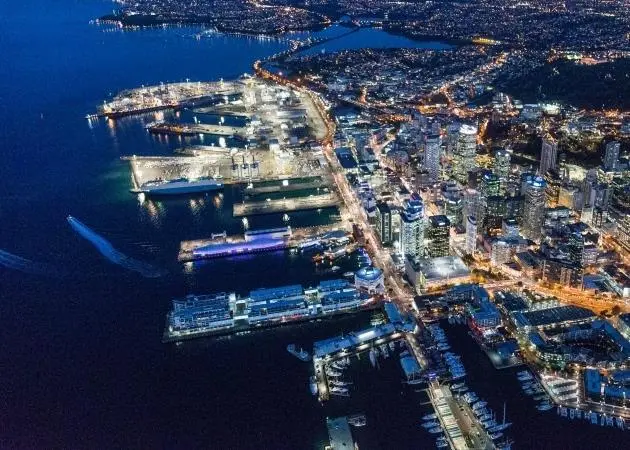
POAL will fund construction of the facility, which will produce hydrogen from tap water, enabling demonstration vehicles to be able to fill up with the gas. Project partners Auckland Council, Auckland Transport and KiwiRail, will provide technical support and invest in hydrogen fuel cell vehicles including port equipment, buses and cars.
Chief executive of POAL, Tony Gibson, said: “We have an ambitious target to be a zero emission port by 2040. In order to meet that target we need a new renewable and resilient power source for heavy equipment like tugs and straddle carriers, which are difficult to power with batteries. Hydrogen could be the solution for us as it can be produced and stored on site, allows rapid refuelling, and provides greater range than batteries.”
The production process involves using electrolysis to split water into hydrogen to be stored for later use, and oxygen, which is released into the air.
Hydrogen can then be used in fuel cells to create electricity to power cars. The only by-product of the process is water.
“If this trial is successful,” said Mr Gibson, “the technology would have a very wide application.” He noted that trucks, trains and ferries could also run on hydrogen.
Engineering company Arup are also helping support the project through the development, design and delivery phases.
The facility is planned to be operational by the end of 2019.