With around 95% (by volume) of global trade moving by sea, ensuring that ports remain secure is of paramount importance to the world’s economy.
Ports face a wide range of potential dangers but there is no set pattern to the nature of risks that they are exposed to across the world. Therefore the type of security solutions needed across different global regions – and the ports which serve them – can be markedly different.
From countries with political instability and regions facing environmental problems, strikes or logistical difficulties, to areas subject to terrorist threats, there is no universal approach that can be taken for security. This is where a combination of risk information, intelligence and technology can prove essential in defining appropriate risk mitigation measures and subsequent security solutions. It is hugely important to provide a flexible strategic overview of risk to port operators, enabling them and their security providers to tailor security measures to meet their own specific risks.
Efficient and effective security measures are essential for port operators to maintain a balance between adequte security and trade facilitation. These would generally consist of an array of key elements, including the need for a skilled, experienced and disciplined workforce; a resilient security infrastructure; and stringent safety/security compliance processes.
But beyond these practical factors, the use of security risk intelligence systems is increasingly important and can have major benefits for port operators, helping them to protect their commercial operations and supporting their quality management systems to more effectively mitigate risk.
Threefold benefits
Security risk intelligence systems benefits port operators in three key areas.
Firstly, they can greatly aid the understanding of location-specific risks before you are exposed to them. This is important both for business development and in establishing a core security foundation, as it will help drive the definition and subsequent effectiveness of tailored security solutions.
Secondly, once established, a risk intelligence solution can fuel risk management systems – crucial for port operators to deliver their comprehensive duty of care for people both working within and passing through ports.
Finally, risk intelligence can also help port operators to mitigate risk in a timely manner, enabling them to protect businesses on a day-to-day basis and to ensure business resilience and continuity. From a financial perspective, this is invaluable as advanced risk intelligence helps ports to resource plan more efficiently.
During my time as a global director of security at an international port operating company, I saw how integrated, forward-looking and site-specific risk analysis had the potential to address the difficulties, costs and time constraints that interfere with effectively managing port security.
There remain few security offerings which provide geo-political and specific country risk intelligence, with many of the available systems available tending to be very broad and generic.
However, over the last few years, security risk technology has taken major strides in intelligence and sophistication and now has the proven ability to enable port operators to target individual risks and threats to their locations and businesses, wherever they are across the globe.
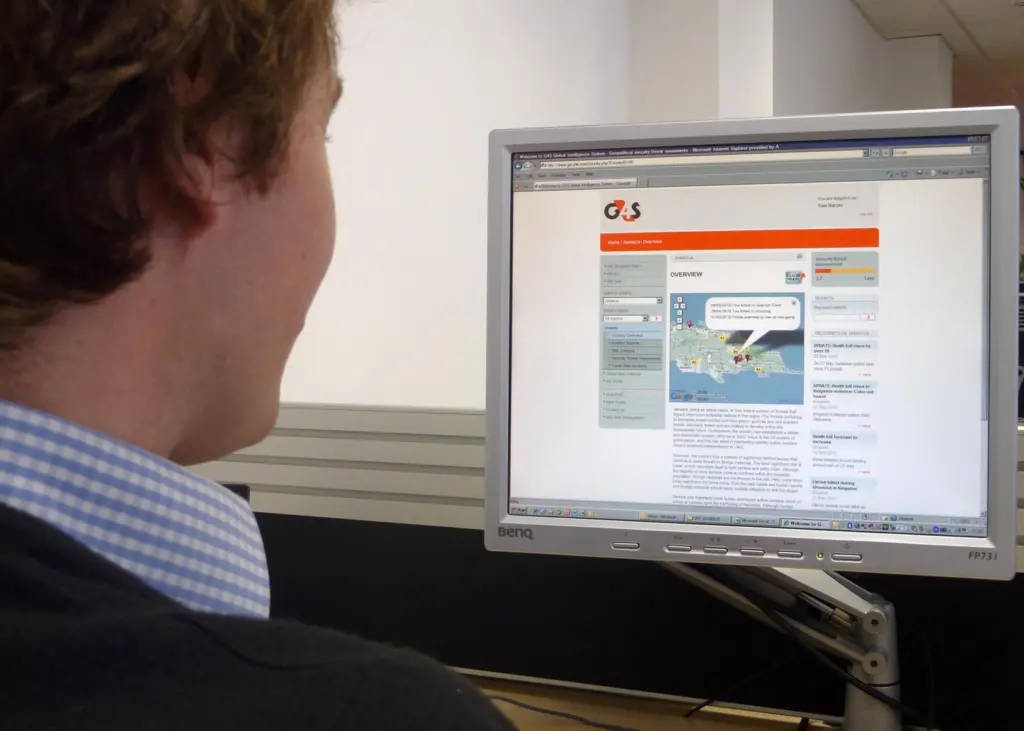
For example, in my current role, I am able to utilise some of the very latest technology which provides bespoke risk analysis for ports and other operations. It takes into account the geographic location, political environment and a host of other factors, providing the end user with tailored, specific security insights from which they can make informed strategic and tactical decisions about the current and future operation of their business.
The development of such products cannot be achieved through one single service provider. GIS (Global Intelligence Systems), part of G4S, and the people behind the product have worked closely with key strategic partners internally and externally to create a system that not only gives day to day micro detail on risk, but also supports its customers with a broader macro analysis where required.
Management information tools such as these are rapidly becoming a key component in the efficient, effective and safe operation of a business. They are the future of smart security provision at ports across the globe.
David Fairnie is director, Ports Solutions for G4S. For more information go to www.g4s.com.