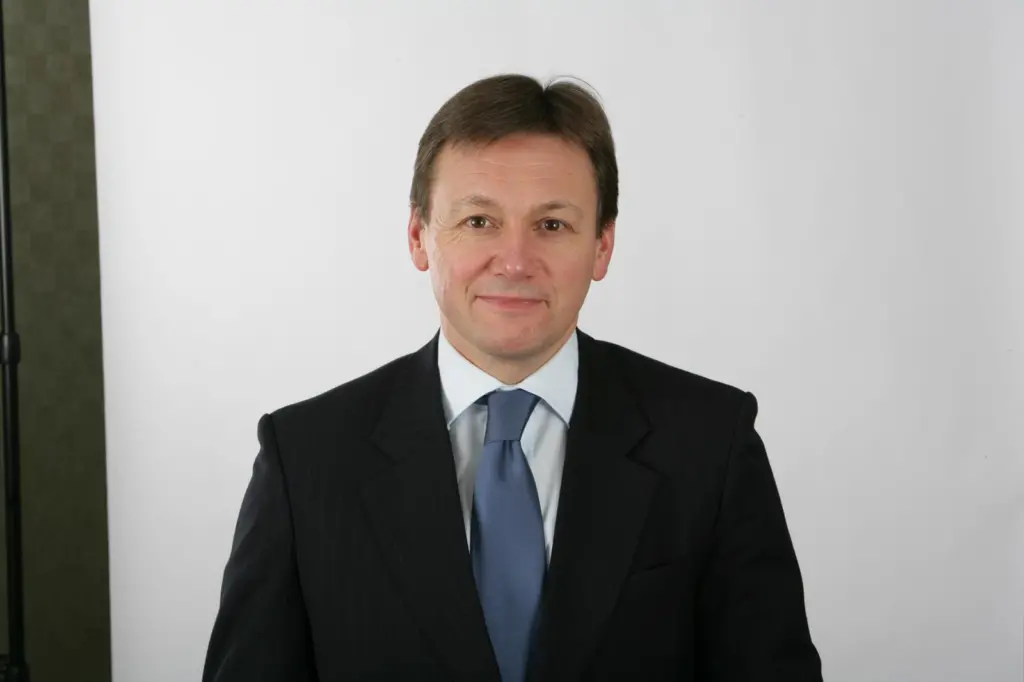
Charles Hammond, CEO of Forth Ports, celebrates 25 years in the ports industry this year. He also completes his four-year stint as chairman of the UK Major Ports Group in November – handing over to Port of Bristol CEO Simon Bird.
Ask him about the key issues facing the industry, and the phrase ‘what goes around, comes around’ comes to mind. Mr Hammond joined the industry in 1989, the pivotal year in which the National Dock Labour Scheme was abolished.
The scheme had been introduced in 1947, to put a stop to the uncertainties of casual labour by giving dockers the right to minimum work, holidays, sick pay and pensions. However, it ended up as a restrictive ‘job for life’ system, with the ports covered by the NDLS losing business to others in the UK and Europe.
“The scheme really grew up to protect workers because competition between ports was so intense that nobody could be sure where cargo was going at the drop of a hat – and because of that, people didn’t know whether they would be employed from one day to the next,” says Mr Hammond. “When the NDLS stopped, the industry had a bit of stability.
“Today, container shipping and the ports themselves have never been more competitive. The problem is, if it gets too competitive, might we see a return to those days when people can’t count on their employment in some of these major container handling facilities?”
He would certainly not be advocating a new dock labour scheme and is clearly a champion of efficiency and productivity – but, he says: “There has to be a balance between competition and continuity.”
That, he says, largely depends on the good old ‘level playing field’ in terms of transparent, realistic investment. “When people invest in port facilities and infrastructure, they should invest in response to market demand and so that a proper rate of commercial return can be made – whether public sector, UK or foreign finance, that money being invested should be transparent and have its own cost of capital.
“Infrastructure investment should be made for the best economic return, not for the best political return. But it goes beyond the fixation with public sector investment – whether ports are publicly or privately owned, ultimately the source of capital for investment should come from sources that require a return. By logic you would therefore invest in facilities that deliver a return because of market demand.”
The issue that has dominated the agenda throughout Charles Hammond’s chairmanship is European regulation. For the third time of asking, a Port Services Directive is on the agenda. “We are lobbying very hard against this. Having had the European elections, we now find the Italian presidency trying to accelerate this measure through the Commission, despite the fact that many of the parties haven’t been given enough time to scrutinise the details.
“We have explained our concerns to the new minister of transport. It is a bad piece of legislation, it is a burden, and it will harm investment in UK ports.”
The issue of too much interference from regulation in Europe is one that unites all ten CEOs around the UKMPG table, says Mr Hammond. “In the UK ports sector, productivity is up and investment is up, and it is continuing to create jobs and support the economy – so why would you interfere in that process?
“The concept of setting up committees to second guess customers’ commercial contracts is not only inefficient – it is absolutely crazy.”
The UKMPG has asked government ministers and the various House of Commons and House of Lords select committees to slow down the process for consultation, he says. “First of all, it is undemocratic and requires proper scrutiny. It is being rushed through, it isn’t supported and it will potentially damage UK business. It is the third time of asking on this legislation; in most democratic processes, you accept defeat and move on.
“The great irony is that ports are amazing trading vehicles which benefit the economies they serve. The EU was set up to enhance trade – now it is hindering it.”
The upcoming Sulphur Emission Control Areas (SECAs) covering the Baltic Sea, North Sea and English Channel are ‘another great example of a badly thought-out piece of European legislation’, says Mr Hammond.
He has written to the Scottish government expressing his concerns in particular about the future of the freight ferry service between Rosyth and Zeebrugge. The additional costs of using low-sulphur fuel from January will have a much greater impact on the longer Scottish route than its rivals further south, he says.
“On the longer routes, operators will have to impose much bigger surcharges on their customers. Customers will look at that and say ‘we’re not paying this’, and will drive further south to pick up less expensive crossings. So you will out more traffic back on the roads.
“Marine is still the better form of transport environmentally, despite the emissions concerns, compared to road transport. We should be cutting road miles, not artificially increasing them. This is a very bad, retrograde step and the danger is that we lose the Rosyth service.”
There are, he says, people in Europe who think up policy initiatives in isolation and don’t think about the effects. “They have no practical experience and deliver legislation that doesn’t make any sense.”
Forth Ports, headquartered in Edinburgh, owns and operates seven ports in Scotland – Grangemouth, Dundee, Leith, Rosyth, Methil, Burntisland and Kirkcaldy – and the Port of Tilbury on the Thames.
Charles Hammond holds his private views, of course, but stayed out of the political debate over Scottish independence, ahead of the referendum. Now, he says of the result: “It is business as usual for Forth Ports and, throughout our ports in Scotland and at Tilbury on the Thames, we plan to play an important role in the continued growth of the whole UK economy. I would look for unity now among the people of Scotland and our own workforce both north and south of the border as we continue to provide an excellent service to our customers and support key industries in the UK.”
Petrochemicals and portcentric
Key areas in Scotland’s economy are food and drink (especially whisky), oil and gas, and petrochemicals – and these are the drivers behind recent investments and developments at Forth Ports’ seven Scottish facilities.
At Grangemouth, an important announcement has been INEOS’s project to build a new import terminal to store and process ethane from shale gas imported from the US.
Meanwhile, Forth Ports is developing more and more portcentric warehousing proposals at the port, particularly for the drinks industry, says Charles Hammond. “It is all about getting exports to market efficiently,” he says.
The group’s facilities continue to support North Sea oil and gas projects and investments, providing berths, bases and fabrication facilities for major energy companies. This includes Bredero Shaw’s pipecoating plant at Leith, which has been winning major new contracts.
North Sea supplies may be dwindling, but the ports are also on standby to benefit from decommissioning work. Dundee Decommissioning is a company formed by Robertson Metal Recycling, to specialise in marine/oil rig decommissioning and recycling.
The new company will operate from a purpose-built facility in the Dundee dock area.
“We have our first decommissioning base in Dundee and are beginning to build the supply chain for decommissioning and recycling,” says Mr Hammond. “We have created the site and invested in the hardstanding and offices.
“A huge number of people are likely to be involved in North Sea decommissioning work from 2015 onwards. We are well positioned in the supply chain and expect to see that work at both Leith and Dundee.
“In addition, we will probably start to see components and assembly for renewables when that finally takes off.”
Forth Ports has one facility south of the border – the Port of Tilbury, which is a major container port but also handles ro-ro, new vehicles, paper and forest products, grain, cars, recyclables, waste, bulks and general cargo.
A long-term partnership with recycling company SITA UK has recently been announced. Forth Ports has sold Nordic Recycling to SITA – the agreement will lead to the creation of a major recycling and resource management hub at Tilbury.
Work is also progressing on Tilbury’s 70-acre London Distribution Park, a site which is earmarked for more than 940,000 sq ft of distribution facilities and is planned to play a major role in Tilbury’s portcentric operations.