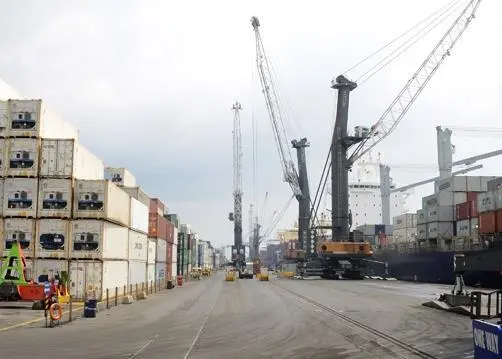
The Bill is particularly seen as a route to solving problems associated with the high cost of using Nigerian container and other marine terminals.
It contains provisions for a fully fledged Independent Commercial Port Regulator – a role that the Nigerian Cargo Shippers Association has stepped into on an interim basis with the Nigerian Ports Authority continuing in its role as Technical Regulator. The proposed new Commercial Regulator will have the power to regulate proposed pricing measures by the terminals as well as handle the many commercial disputes that arise from the daily interactions of the providers and users of terminal and shipping services.
The NGO Maritime Industry Advocacy (MAIN) speaking earlier this year described the delay in the passage of the bill as a, “deliberate attempt by the National Assembly to stunt the growth of the Nigerian maritime industry”. Sesan Onileimo, executive director, MAIN, further noted: “It is sad that more than four years after the Bill was given a public hearing, it is still in the hallowed chambers, obviously counted as unimportant.”
No-one has come out and said corrupt practices but there are those that think this is the case.
An internal fight between politicians is also not helping matters. Speaking at an auction for over-time cargo held in the capital city of Abuja Transport Engr. Nebolisa Emordi, permanent secretary of the Federal Minister of Transport, said: “The Federal Executive will soon submit a Bill to the National Assembly which seeks to repeal the Nigerian Ports Authority Act of 1999 and enact the Nigerian Ports and Harbours Act. This Act envisages the provision of ownership, management operation, development and control of ports and harbours, makes the Ports and Harbour Authority the technical regulator and promotes private participation.”
This announcement, however, drew the wrath of Hon. Ifeanyi Ugwuanyi, chairman, House Committee on Marine Transport, who said: “Why is the executive producing another Ports and Harbours Bill when we already have one here at the National Assembly? Are you people,” he continued, “not aware that there’s a Ports and Harbours Bill here sponsored by the Deputy Speaker and co-sponsored by me and which has passed the reading in the House?” And he queried, “Is it your own Bill that the Senate will approve or the one sent from the House to the Senate?
Practical perspective
From a practical perspective typical problems that clearing agents and importers raise in conjunction with terminal operators are:
- The time taken to position containers for examination by Customs. The point is made that if it takes three or four days to do this then demurrage has to be paid for these days – N12,000 per day ($72). It is reported that terminal operators often cite lack of equipment as the reason for the delay but clearing agents and importers see this as a deliberate tactic to make more money.
- The requirement to pay for machine damage incurred while handling containers. If machine damage is sustained during the handling process then the importer is charged for the damage.
And similarly problems regularly experienced with shipping companies are:
- The practice of making daily deductions from container deposits made by clearing agents and not stopping these until containers are returned to them, and
- Penalising clearing agents/importers if a shipping company server goes down meaning that consignments can’t be cleared. Clearing agents/importers end up paying for the number of extra days containers are held on the terminal.
The incentives to introduce a new Ports and Harbours Bill are plain to see but, for what some see as dubious reasons, progress is slow.