
This comes after the Australian Competition and Consumer Commission (ACCC) raised concerns over the AUS$6bn port lease.
The Essential Services Commission (ESC) will carry out a periodical review, while the Port Leaseholder will also be required to offer a market standard rent review mechanism with dispute resolution to any new tenants or renewing tenants.
Tim Pallas, treasurer, Victorian Government, said: “We have listened to and sought to positively address the matters discussed with the ACCC, and the measures announced will provide even more protection for competitive outcomes.”
“This Government believes that maximising the use of the Port of Melbourne is the best way to keep port costs down over time, which will be good news for the Victorian economy,” he added.
Now, the Victorian Government is working to provide a framework around the lease that ensures strong competition and better outcomes. These measures are on top of those already announced which include the lease not including any rights to develop a second port, retaining the ESC as the economic regulator with a substantially strengthened economic regulatory regime and introducing non-discriminatory pricing rules for the shared channel to the Port of Geelong.
In addition, a CPI price cap on port charges will be added for a minimum of 15 years, while prices on loaded international container export charges have been frozen and will be gradually reduced over the next four years to end up 22% lower than equivalent import charges by 2020.
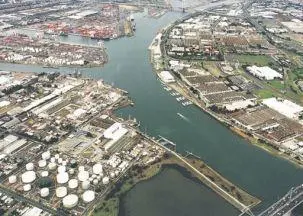
Melbourne is Australia’s largest container port, handling 2.5 million teu, with a throughput of 35 million tonnes in 2014.
Webb Dock is currently being redeveloped as part of the AUS$1.6bn port capacity project, which will see a third international container terminal added as well as an automotive terminal and pre-delivery inspection hub. The expansion is set to be complete by 2017.