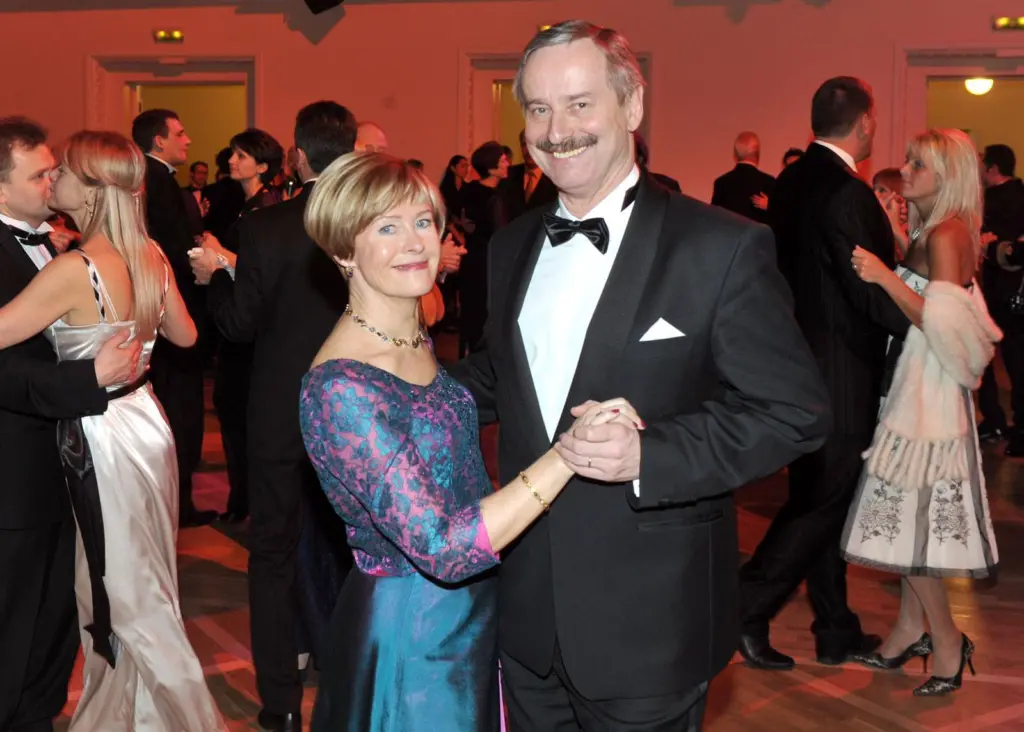
Mr Kallas was appointed vice president of the European Commission in charge of transport in February 2010. From October 2004 until February 2010 he served as vice president responsible for administration, audit and anti fraud. In May 2004, he was appointed as the first Estonian member of the European Commission, working in the field of economic and monetary affairs.
1. How would you define a green port?
In terms of EU transport policy, a green port is a port that succeeds in balancing environmental challenges with economic demands.
On a more personal basis, I would define a green port as a port where the people planning it and working on it feel committed to minimise environmental impacts and preserve the natural resources for the future generations. A green port requires the support of a proud port community, making the port a bit ‘greener’ every day, in every way.
2. How rational is it to address the contribution of a global industry to a global environmental issue through regional measures in Europe?
Global environmental issues always have local consequences. Closing our eyes to very threatening prospects – for example, the consequences of climate change – is not an option. Many industries are turning environmental constraints into competitive advantages. The EcoPorts’ initiative goes into that direction. I know that there are some good, ‘successful stories’ in that regard.
3. How realistic is it for Europe to pursue an ambitious greenhouse gas emissions policy in economically difficult times? What is the impact of the Polish decision to say no to the European climate roadmap?
The council, including the representative of Poland, made it clear a number of times that mitigating climate change is crucial, and that Europe is ready and fully committed to deliver on its appropriate share in global emission reduction effort. What is important is to undertake this mitigation action in a smart way: by focusing first on ‘win-win’ solutions where our investments pay off in terms of reduced fuel cost or strengthened innovation and competitiveness.The commission will continue the dialogue with Poland emphasising that the low carbon economy roadmap is a sensible strategy and we will continue to take into account specific national circumstances as we have done successfully in the climate and energy package.
4. The European Parliament has called for a Europe-wide Sulphur Emission Control Area (SECA). How realistic is this and when could it be achieved? What about the intermediate solution of extending the current SECA norm to all European territorial waters?
The concept of Sulphur Emission Control Areas (SECAs) has been established by the International Maritime Organisation. The extension of SECAs to other zones in European waters, especially in the Mediterranean sea, would yield considerable health benefits, based on the Commission’s assessment. However, any formal extension of SECAs would require that member states introduce such a request to the IMO, possibly together with the concerned neighbouring countries. Any attempt to extend SECAs without a matching IMO designation would appear to make a comprehensive enforcement of the SECA standards (in particular towards non-EU ships) difficult to secure. An introduction of norms for low sulphur fuels limited to the territorial waters of all member states of the EU could be an intermediate option, but would require further examination.
5. How do you see the efforts of ports to self regulate through initiatives such as EcoPorts and the ESPO Green Guide that is introducing a common approach to responsible action through the five ‘E’s: Exemplify, Enable, Encourage, Engage and Enforce.
· Exemplify: Ports setting the good example towards the wider port community by fully managing their own externalities
· Enable: Provide appropriate infrastructural or operational conditions in order to facilitate port users towards improving their environmental performance
· Encourage: Provide incentives to port users in order to trigger improved environmental performance
· Engage: Engage with port users and/or competent authorities (public-private partnerships) in sharing knowledge and skills towards joint projects targeting environmental improvement in the port area and the logistic chain
· Enforce: Regulate behaviour of port users and ensure compliance
I welcome initiatives such as EcoPorts and the ESPO Green Guide. The five ‘E’s summarise exactly the objectives that I would like to promote for all ports in Europe. However, the problem with self-regulation is that, often, it results in uneven level playing field: responsible ports that take the lead and bear the extra costs and ports that just do not assign the same priority to environmental performance. I have no problem building up the new policy for seaports on the EcoPorts and Green Guide principles, provided that we ensure the last ‘E’ of the list, enforcement, for both ports and port users.
6. What new measures with regards to the safety of passenger ships does the Commission envisage after the Costa Concordia disaster?
The Commission’s work to revise the passenger ship safety legislation has been ongoing since 2010 and should result in a number of proposals at the end of this year. As an element of continuous safety improvement, the Commission considers it appropriate to review issues such as evacuation concepts and procedures, safety drills and bridge team procedures including selection, training and assessment of officers and crew.
The Commission intends to follow a three-pronged approach on passenger ship safety as a commensurate way to foster the safety of passenger ships on domestic and international voyages. This approach includes: updating and/or amending existing EU legislation and (co)-sponsoring submissions for international standards setting at the IMO, continue enforcing and implementing existing rules and draw any lessons from best practices and, promoting voluntary commitments of the industry. The action strands dealing with the setting of rules and standards should take into account relevant results from research and technological developments.
These three strands of action support a policy that is safety conscious, immediate in terms of voluntary commitments and enforcement measures but also measured in terms of legislative action, and takes into consideration the circumstances and the results of the accident investigation following the Costa Concordia casualty.
7. How does the commissioner see the development of a new policy for seaports? What lessons can be learnt from the previous ‘ports packages’ and what would be the priorities?
The proposal to review the EU ports policy is part of the EU2020 strategy for growth and jobs. Five years after the last communication, the purpose of the review is to take account of the situation in the port sector and to examine what measures would be required at EU level to support a thriving EU economy. The Commission’s intention is not to repeat the ‘ports packages’ of the past. The ‘port packages’ of the early 2000’s were intended for a different economic reality. Since then, many EU member states have adopted important reforms on their port sectors. It is important to take account of past developments, but I am decidedly a forward-looking person.
The EU needs, firstly, to ensure adequate performance of the EU port system, for example, ports in all maritime façades, for the competitiveness of European industries in world markets and for the intra-EU exchanges. In terms of volume (tonne/kilometres), ports handle 90% of the EU international freight exchanges and 40% of the internal market exchanges. About 400 million passengers use EU ports per year! Secondly, we want to attract investment and creating jobs in ports and port related industries. Thirdly, we want to look after the contribution of ports to the successful implementation of the Trans-European Transport Networks (TEN-T) and EU Connecting Facility. As transport commissioner, I am promoting the full integration of ports into the European transport corridors (TEN-T) that will shape the European logistic system in 2030 to 2050. A very important part is about investments in connecting infrastructures.
8. What can the Commission do to prevent the new policy framework on Trans-European Transport Networks (TEN-T) becoming an amalgamation of national shopping lists? What methodology does it have in mind to assess the EU added value of projects, especially in terms of sustainability and efficiency?
According to the proposal of the Commission, the future TEN-T consists of a dense ‘comprehensive network’, overlaid by a ‘core network’ of the strategically most important nodes and links, on which the ‘Connecting Europe Facility’; will focus funding and financing. To avoid the core network from becoming an amalgamation of national shopping lists, applying a uniform and rational methodology, which combines, in a balanced way, a geographical approach with transport planning elements is essential. This was our guiding line during preparation of the proposal.
It is mandatory to subject each project to a socio-economic cost benefit analysis, where its efficiency and sustainability has to be proved in each case. Selection processes and co-funding rates will favour border crossing projects, intermodality and interoperability, the European added value of which is evident.
9. Why has the Commission not used the opportunity of the TEN-T review to propose measures that aim at achieving a better integration of transport and environmental policy objectives, by acknowledging that projects will be given the ‘common interest’ status and will fulfil the ‘Imperative Reasons of Overriding Public Interest’ (IROPI or similar) criteria?
‘Common interest’ and ‘Imperative Reasons of Overriding Public Interest’ are formulated and decided at two different levels: the Commission defines in its proposal for the new TEN-T guidelines the projects of common interest, while the member states have to find the Imperative Reasons of Overriding Public Interest during the completion of a socio-economic analysis or an environmental impact analysis.
During the TEN-T review process the Commission carried out a detailed analysis on the compliance of the future TEN-T comprehensive network with the SEA Directive and its result was positive and has been published on our website.
10. The German government is proposing a ‘maut’ style levy on international rivers such as the Rhine. What is the opinion of the Commission, given its policy to introduce infrastructure charging in all modes of transport in the longer term and how would such a levy match with international conventions such as the Mannheim Convention?
The Mannheim Convention does not allow the levy of charges, including the internalisation of external costs, on navigation on the Rhine. Any revision of these rules will have to go through international negotiations. As announced in the White Paper on Transport, the Commission will examine in the context of its charging and pricing policy also the application of internalisation of charges on all inland waterways on EU territory, including the Rhine.
11. In the Transport White paper, you stated that curbing mobility is not an option. This implies that we work on efficiency. What is the role of policy in this? How can we achieve a more efficient and at the same time more sustainable transport network without giving in on transport needs?
The White Paper has identified a long list of measures that are specifically aimed to improve the overall efficiency of our transport system. The proposed revision TEN-T guidelines are a perfect example; by investing in multimodal transhipment facilities, we will be able to handle more goods with less impact on the environment. In other words, they are about efficiency.
12. How come women are not interested in working in the transport sector?
The proportion of women working in transport is indeed much lower than in the average of the economy: just over 18% against 45%. The transport average is pushed up by the air transport sector where working women’s presence at 41% almost reaches the economy average. We lack specific information on ports although the proportion of women working there seems to be low, even marginal. These proportions are quite insufficient taking into account that the transport sector is ageing and it is older (29% of workers over their 50’s) than the average of the economy (27%). If skill shortages over the next years are to be avoided, a higher female presence will be certainly needed to help replacing the retiring baby boom cohorts.
In most transport sectors the ‘mobile jobs’, such as drivers or pilots, are occupied by men. Women keep apart from them due to the pressing need they have to preserve a work-life balance suitable to carry out their – still unfairly shared – family responsibilities. Although port workers are not ‘mobile’ they may also work in some cases at asocial hours or weekdays. Traditionally port jobs were also physically demanding. Although automation has changed this, the strong cultural inertia in the male dominated transport (and ports) professions cannot be easily changed.
The Commission fully understands the importance of gender issues. However, due to subsidiarity towards member states and towards the social partners the EU can only raise awareness, promote dialogue and steer its horizontal training policies (e.g. through the European Social Fund) to redress this inconvenient situation. The transport White Paper initiatives to improve working conditions in the different modes of transport will also help to attract women to the transport sector.
Personal questions
1. How did you get into this sector?
I was very pleased when the transport portfolio was allocated to me by the president of the Commission in 2009. I came to the job knowing that the transport industry is fundamental for the European economy as it employs around 10 million people, 4.5% of total employment in the EU! After more than two years in office now, I am even happier about the possibilities to influence the future of transport in Europe.
2. Do you regret some things in your career?
No, I do not regret anything. And I believe that if you never take chances in your life, you might miss out on some of the best things in life!
3. What is your favourite pastime?
I play tennis and like to cycle with my wife. Reading is definitely a passion of mine, especially about history. And going to the opera is something I enjoy very much – we have an annual ticket to the Paris Opera where we have seen some wonderful pieces over the past years.
4. What do you still want to accomplish before you retire?
I still have many goals to achieve before the end of my mandate, but my main goal is to take down barriers on the transport market. Removing barriers and facilitating smooth functioning of the shipping industry is therefore something we aim for as well.
Our focus currently is also very much on the completion of the Trans-European Transport Network supported by financial instruments like CEF. Similarly, the Single European Sky must be completed and aviation must be better integrated with other forms of transport – to name just a few projects I want to accomplish.