Don’t talk Hamburg down, warned Senator Frank Horch when the port’s 2015 figures were released earlier this year. “Anybody familiar with the port business will realise that the Port of Hamburg’s success cannot be measured solely in teu. Its success is composed of many elements,” said Mr Horch. “What makes the Port of Hamburg strong is its character as a universal port. The Port of Hamburg is actually one of the largest and most varied industrial zones in Germany.”
He was responding to figures that showed Hamburg’s throughput fell by 5.4% last year, to 137.8m tonnes, including a 9.3% fall in containers to 8.8m teu.
Axel Mattern, executive board member at Port of Hamburg Marketing, says: “We have a very big proportion of transhipment cargo in Hamburg and of course suffered dramatically due to the Russian crisis and due to the slight dropdown of Chinese cargo.
“For Hamburg is it always the case that we calculate transhipment twice – i.e. coming in from China and going out again. Of the losses, almost 100% came from transhipment and we had no losses on the hinterland side.
“Of course transhipment is very nice for statistics, counting double, but the interesting cargo for us is the cargo which is staying in Hamburg and going into the hinterland. We are confident that we are on the right track.”
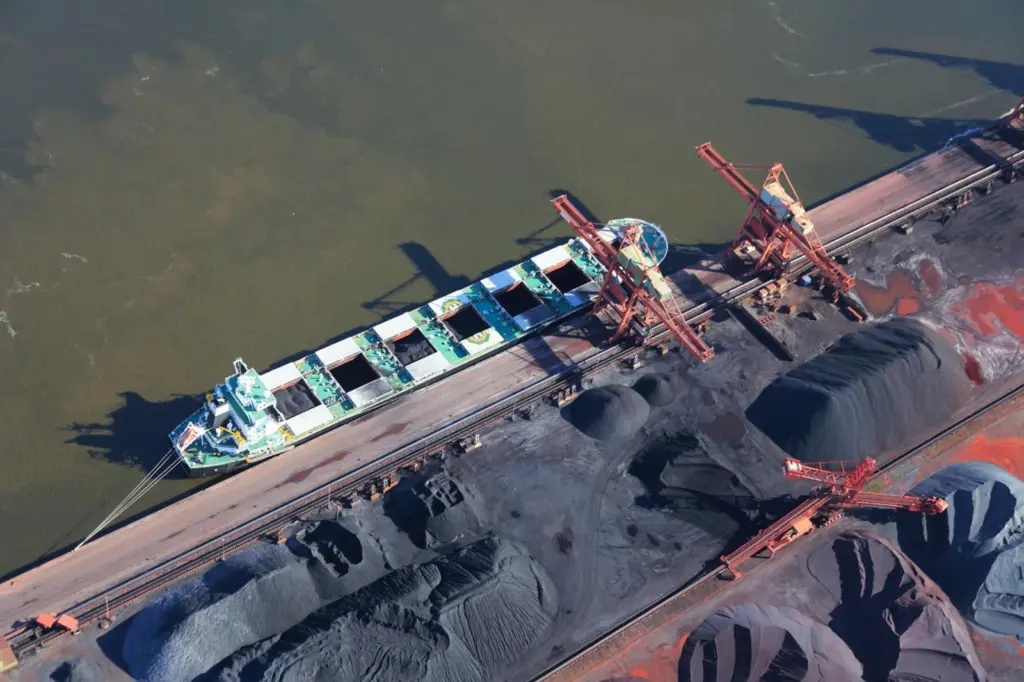
In non-containerised sectors, bulk cargoes were up 5.8% to 45.5m tonnes, including a 27% increase in coal imports to 7.7m tonnes and 29% increase in grain exports at 4.2m tonnes.
Hinterland focus
Across all cargoes, Hamburg is concentrating on hinterland connectivity, says Mr Mattern. Rail now exceeds trucking as the most important mode of transport to and from the port, taking a 45.3% share of the modal split. “We are very well connected by rail into the main market but we are working to optimise it further. We are active in a lot of small projects around infrastructure, and trying to optimise rail track routes in order to get more cargo on to rail.”
Hamburg’s second largest market is North Rhine-Westphalia, ‘which you would think is a typical market for Rotterdam/Antwerp”, says Mr Mattern. The port is working closely with Deutsche Bahn to upgrade rail connections to this region, with the potential to shift 180,000 teu a year from road to rail.
On the east side, 75% of cargo going into the hinterland is already on rail. “We are very active on increasing river barging to the east via the Elbe,” he says. “So there is a lot of potential there as well.
“Terminal operators are upgrading their facilities, as they have to, due to the development of ship sizes but hinterland connections are the biggest headache and the main focus for the whole port community. That’s particularly in view of the large ships where you might get 10,000 teu-11,000 teu on one ship call. That is causing a lot of transportation issues and challenges. But we are deeply confident that hinterland connectivity is the solution for the future of the port.”
Meanwhile, the long-awaited dredging of the Elbe is now tantalising close to reality, with a final court decision expected by the end of this year or early 2017.
“We are 99% confident the decision will be positive,” says Mr Mattern. “We certainly need this deepening. Not in order to get big ships in – that is possible now – but the question is the number of big ships and flexibility.”
In 2015, the number of ultra-large containerships calling into Hamburg increased by 27.6% to 647.
“In the present situation, the big ships are not allowed to pass each other on the river, so when one is coming inward, a ship heading outwards has to wait. Deepening of the channel – and widening, which is even more important – will allow ships to pass each other. This is not only for containerships but also for bulk carriers and others.”
Dredging of the channel would also allow ultra-large containerships to carry up to 1,800 more loaded containers than at present.
Assuming the dredging is approved, a three-month consultation period would follow, prior to work starting. The deepening would take six months and the creation of ‘passing boxes’ would take another year. But the effect of a ‘yes’ decision would be instant, says Mr Mattern: “If they decide yes, we will have some positive psychology.”