![GreenPort[PortStrategy]](https://www.portstrategy.com/greenport/wp-content/uploads/sites/4/2026/09/GreenPortPortStrategy.svg)

EXCLUSIVE: Green MOU to hasten low-carbon solutions
PORT-CARRIER partnership to promote green initiatives has attained a new high with Singapore port operator PSA International joining forces with Taiwan container carrier Yang Ming, writes Ramadas Rao.
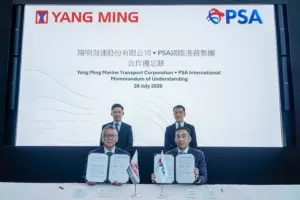
While PSA offers low-carbon terminal operations, Yang Ming brings to the table green fuel navigation initiatives. Both parties signed a memorandum of understanding in July to jointly accelerate low-carbon solutions across the maritime supply chain.
“As no single company can achieve supply chain decarbonisation alone, we are pleased to partner with PSA to provide sea-land joint carbon inset package,” Kevin Lee, President of Yang Ming Marine Transport Corporation stated explaining the reasons for such a tie-up.
“By combining our maritime fuel initiatives with PSA’s electrified terminal capabilities, we offer global clients an adaptable and verifiable approach to mitigate transparent emissions and fulfil their sustainability objectives,” Lee added.
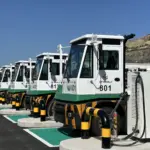
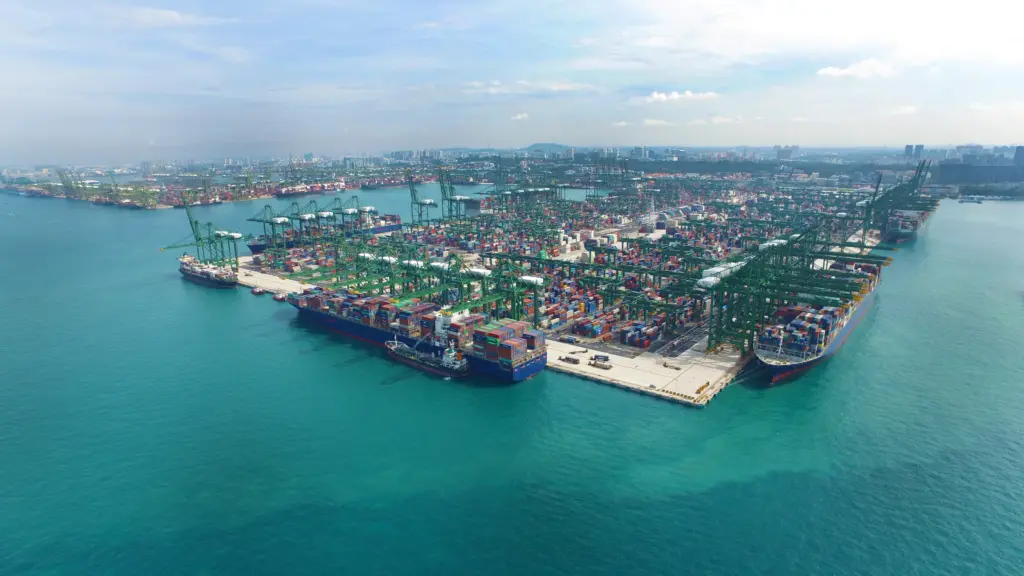
About 80% of the cranes deployed at PSA Singapore comprises electric or hybrid variants while transport fleet includes electric prime movers and automated guided vehicles powered by electricity. Electrification is said to have considerably reduced emissions associated with container handling.
As part of its commitment to achieve Net-Zero emissions by 2050, PSA Singapore is advancing several other decarbonisation pathways that support Singapore’s Green Plan 2030 that targets, transport, energy and supply chains.
Towards the goal of Net-Zero emissions by 2050, PSA is evaluating economic viability and scalability of hydrogen-powered and other low-carbon fuel options complementing existing LNG and electric prime mover fleet. Efforts to tap solar power are also on to reduce electricity-related emissions. Singapore’s Green Plan includes quadrupling solar deployment to 2GWp by 2030.
Other initiatives in Singapore comprise using green concrete and other low-carbon building materials into new civil infrastructure projects including Tuas Port and PSA Supply Chain Hub @ Tuas.
Billed as the world’s largest fully automated terminal, Tuas Port will be provided with a well-integrated and energy-efficient ecosystem. Full completion may take 15 years, but PSCH is expected to be ready next year. It is slated to serve as a next-generation logistics hub within the Free Trade Zone with sustainability and operational efficiency as core parameters.
PSA Singapore has also been facilitating green bunkering for container vessels in Singapore.
For its part, container line Yang Ming claims to have reduced carbon intensity by as much as 63.32% compared with 2008 levels. The carrier’s EcoSea+ transport service integrates low-carbon navigation capabilities to help customers reduce their Scope 3 transport emissions. The partnership with PSA is aimed at expanding the impact of these sustainability actions beyond the ocean.
PSA facilitates this objective. The Singapore port operator has developed a Node to Network strategy or N2N as it is called that seeks to optimise cargo flows across the global supply chain ecosystem through forging partnerships. The tie-up with Yang Ming illustrates the N2N framework as both parties will explore the development of low-carbon solutions across the maritime supply chain. This is aimed at providing greater transparency to cargo owners and more effective pathways to reduce end-to-end emissions.
Another significant outcome of the partnership between Yang Ming and PSA is that it will allow for emission reductions across both maritime and landside operations to be quantified, verified and converted into carbon insets. These insets can be booked by the customer, who can subsequently claim the associated emissions reduction in their own carbon accounting as their own Scope 3 emission reduction.
To prevent double counting and maintain the integrity of claims, emissions reductions are only allocated and claimed once. The reductions are externally verified by classification societies and listed on an independent platform and registry to support issuance, management and allocation of certificates.
PSA International Group CEO, Ong Kim Pong is excited over the possibilities that the MOU offers to cut emissions. “We are excited to partner Yang Ming on the decarbonisation of global supply chains and support the transition towards a more sustainable global economy,” he observed.
Related Articles
 ENERGY & TECHNOLOGY GREENPORT
 ENERGY & TECHNOLOGY GREENPORT
 INSIGHT & OPINION GREENPORT