


Decarbonisation investment
To coincide with COP26 in Glasgow, one UK port has made a major investment in new equipment to help decarbonise its operations.
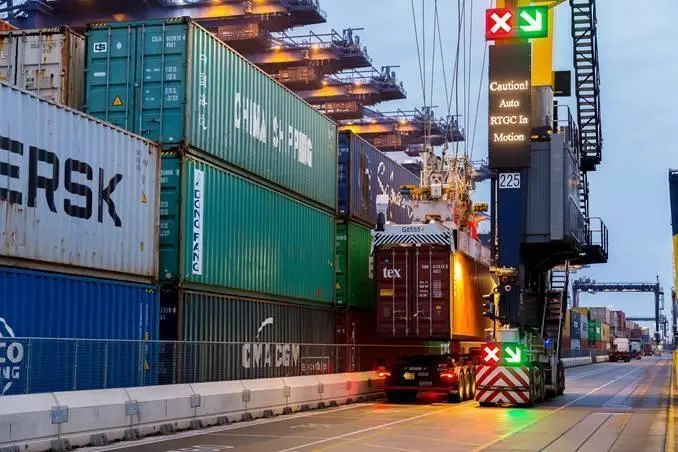
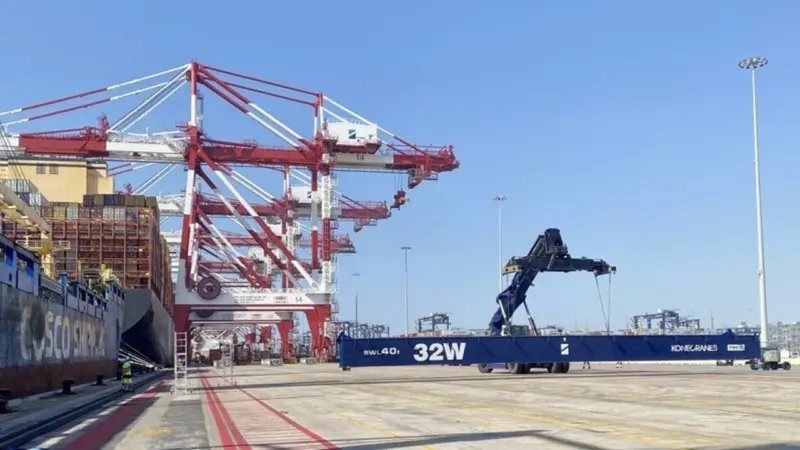
The Port of Felixstowe has placed orders for 48 battery-powered terminal tractors and 17 zero-emission remote controlled Electric Rubber-Tyred Gantry cranes (ReARTGs).
“Climate change is one of the greatest challenges of our time and Hutchison Ports is committed to playing its part by minimising the impact of port operations on the environment,” said Clemence Cheng, managing director Hutchison Ports Europe and joint chair of Hutchison Ports Group Sustainability Committee.
“Promoting a culture of technological innovation and adoption of alternative fuels is a key strand of our strategy. This investment takes us another step nearer to our goal.”
Green impact
The new two-wheel drive tractor units, to be supplied by Shanghai Zhenhua Heavy Industries Co Ltd (ZPMC), will be the first electric tractors at the UK’s largest container port. They will be delivered to the port by ZPMC, which is working with their partner Shacman to develop the battery-powered tractor units.
The ReARTGs, which will be fitted with the latest semi-automation technology, will be supplied by Konecranes Finland.
Chris Lewis, chief executive officer at the Port of Felixstowe, said: “This order represents the latest part of our plan to reduce the environmental impact of our operations. In total, replacing 48 diesel-powered tractor units and 17 conventional RTGs with new electrical equipment will save 6,662 tonnes of CO2 and 59.38 tonnes of NOx emissions every year.”
Mr Lewis added that the port has reduced its carbon footprint by 30% since 2015. That has been achieved through a range of measures including the first phase of its programme to phase out diesel-powered yard cranes.
These latest acquisitions will help drive further substantial reductions in the future and help the port to reach its target of a further 20% reduction over the next five years.
To support use of the new equipment the port will be upgrading its High Voltage (HV) electrical power distribution network and installing new electrical infrastructure to support the ReARTGs and ten charging stations for the battery-powered terminal tractors.
Related Articles
 EQUIPMENT