




Future fuel trucks
A clean trucking company pans to launch 21 zero-emission commercial vehicles by the end of 2023 bringing new options to the market.
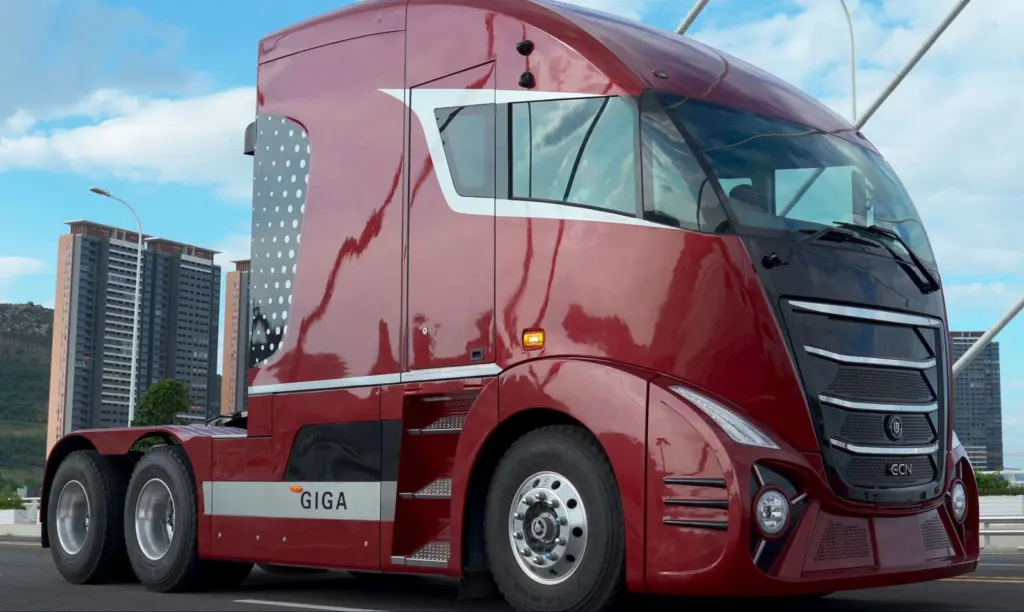
The Giga Carbon Neutrality (GCN) new fleet, unveiled to coincide with transportation negotiation day at COP26, includes battery-electric and hydrogen fuel-cell powered trucks.
GCN’s portfolio is configurable to a wide range of commercial use cases and includes a tractor unit, buses and last-mile logistics vehicles. The company’s first prototype hydrogen-fueled tractor unit is currently undergoing advanced road and usability trials in China.
“We are thrilled to give the world its first look at the future of zero-emission commercial transportation,” said Marty Wade, CEO at Giga Carbon Neutrality.
“GCN is enabling a carbon-neutral future for some of the world’s most energy-intensive industries, with clean energy vehicles, new technologies and a fueling ecosystem to make running clean, reliable vehicle fleets easy for commercial transportation companies.”
Market offering
GCN designs its vehicles at a state-of-the-art research and development centre located in Hangzhou, China. The company has developed its own proprietary hydrogen fuel-cell technology and said it will source batteries from leading manufacturers initially.
The GCN Hydrogen Tractor is a 44-tonne hydrogen fuel-cell truck with a top speed of 90 kph and 580 km range before refueling. Streamlined to minimise wind-resistance, the ‘heavy truck’ features an ergonomic cab design and a range of intelligent safety systems such as driver fatigue warning systems as standard. A prototype of this vehicle is already on the road in China.
Its eight tonne battery-electric truck meanwhile, the GCN Electric Logistics Vehicle, has been created to support last-mile logistics in urban and rural areas. GCN’s logistics truck has a spacious loading area, can be configured to customer needs and can cover 250 km on a single charge.
The GCN vehicles are manufactured using lightweight stainless steel and composite materials to improve safety and deliver reductions in weight and energy consumption of at least 10%. The bodies of GCN vehicles are designed to last for 20 years.
Mr Wade said that GCN is working with public and private sector partners to provide clean energy storage, charging and refueling infrastructure, as well as specialist financing to support the adoption of its zero-emission commercial vehicles globally.
Several GCN vehicles are available to order immediately, with delivery times of between three and 12 months. The company’s initial range includes:
GCN’S portfolio includes battery-electric and hydrogen fuel cell vehicles, clean energy storage, charging and refueling infrastructure and specialist financing to support the transition to zero-emission vehicles.
Related Articles
 ENERGY & TECHNOLOGY GREENPORT
 ENERGY & TECHNOLOGY GREENPORT
 PRODUCTS & SERVICES GREENPORT