

There are plans to operate an innovative zero-emission coastal container feeder along the Norwegian coastline
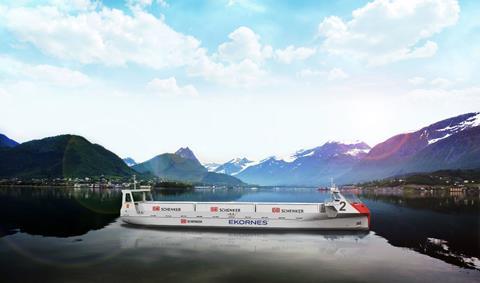
DB Schenker said its fully electric vessel, which will run between Ekornes’ own port at Ikornnes and the Port of Ålesund in Norway, includes a unique design making it the vessel first of its kind in the world.
“We are delighted to further reinforce an already strong relationship with our customer Ekornes. This unique project will mark another important step towards greener supply chains and pays into our overall sustainability agenda in ocean freight. We are ambitiously taking the lead here with our cooperation partners,” said Knut Eriksmoen, CEO Norway, DB Schenker.
Future feeder
DB Schenker has signed the prestudy agreement with its cooperation partners, the furniture giant Ekornes, vessel designer Naval Dynamics, Kongsberg and Massterly.
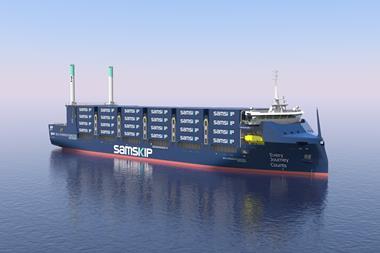
The new autonomous and electric, short-sea container feeder leverages the Naval Dynamics’ NDS AutoBarge 250 concept and the end aim is to replace the traditional feeder vessels utilised along this stretch of the Norwegian coastline.
DB Schenker’s new vessel will complete the 43km (23NM) voyage within three hours at a speed of 7.7 knots. It measures in at 50 metres long and can carry 300 deadweight tonnes of cargo.
The aim is to run the vessel un-crewed but supervised from Massterly’s Remote Operation Center (ROC) which is staffed with certified navigators and naval engineers.
Roger Lunde, CEO, Ekornes AS, said: “With this landmark project, we will meet our sustainability targets by using the most innovative technology available. Using the autonomous electric container feeder for direct pick-ups of our Stressless products from our own quay at Ikornnes means that our total carbon footprint will be reduced significantly. We will also gain better control over, and a greater flexibility of, our own logistics.”
The benefits of the new vessel will be numerous, including zero emissions, faster and more efficient transport and reduced traffic on roads.
Leading the way to climate neutrality, the parties’ joint interest is to unveil this pioneering, vessel in Norway and to take the next crucial steps forward by receiving approval from the Norwegian Maritime Authority and possibly secure governmental incentives for the sustainability and technology aspects.