


Green energy development plan
South Africa’s State-owned port operator has unveiled an ambitious renewable energy procurement plan seen as a major shot in the arm for global efforts to decarbonise the maritime sector.
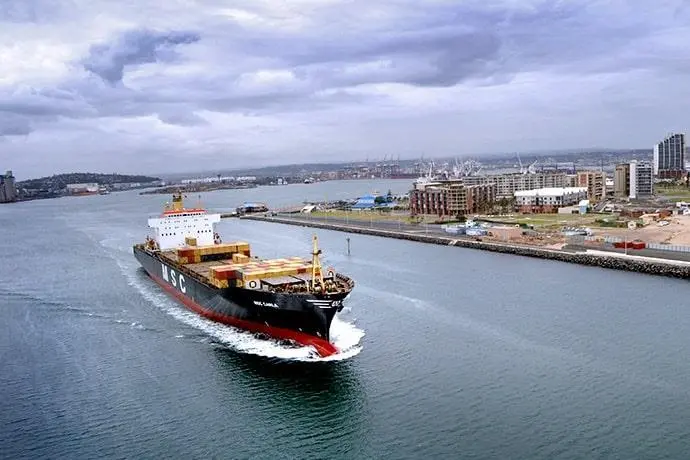
Transnet National Ports Authority (TNPA)’s plan has been designed around the private sector development of a renewable energy supply programme covering all the company’s eight commercial ports.
The move was triggered by findings of a recent internal audit that confirmed the advantages of shifting to green energy sources such as stabilising the port operator’s energy supply and operational costs, as well as substantially reducing greenhouse gas emissions from its ports.
Project proposals
TNPA has invited private sector renewable power developers to submit project proposals on how the green power plan can be sustainably produced at all the eight commercial seaports.
The preliminary programme was recently unveiled after company issued Request for Information (RFI) for the renewable energy project, which among other things, requests potential project participants to submit suggestions on the suitable renewable energy technology that can be deployed at the ports of Port Elizabeth, Ngqura, East London, Mossel Bay, Saldanha, Cape Town, Durban, and Richards Bay.
“The introduction of renewable energy at our ports is significantly underpinned by our corporate environmental responsibility and is a good step towards limiting contributions towards global warming,” says Jarryd Introna, TNPA’s project manager.
Initially, TNPA wants to use the responses to the RFI to gain “a better understanding of the renewable energy market, particularly for wind and solar and considers the incorporation of other renewable energy sources such as hybrids of hydroelectric power, ocean energy, biomass and geothermal.”
The green energy plan by TNPA sits well with South Africa’s 2019, Integrated Resource Plan (IRP) that outlines the country’s preferred energy mix up until 2030. The plan includes allocations for additional renewable energy of up to 20,400MW. The Minister for Mineral Resources and Energy later in 2020 issued a determination for the procurement of a further 11,813 MW of renewable energy between 2022 and 2027 including 6,800 MW for wind and solar.
Prior to TNPA issuing the RFI for its renewable energy plan, the National Energy Regulator of South Africa (Nersa) had confirmed registering more than 500MW of private renewable power generation projects by mid-2022 with a pipeline of over 6000 MW of projects at various stages of development. The Department of Energy has, too, recently released request for proposal for the sixth round of bidding under South Africa’s Renewable Independent Power Producer Programme.
TNPA’s green energy plan could see the company procure between 50 and 80 MW of renewable energy power generation capacity.
“As we respond to our ports authority role of delivering reliable electrical energy for our port operators and tenants, we are committed to doing so in a manner that is financially prudent, does not harm the environment and has a developmental impact,” says Mr Introna.
In addition to the planned procuring of renewable energy projects, TNPA is also carrying out other activities to mitigate effects of climate change such as “engaging port users and relevant stakeholders to develop integrated business continuity plans.”
It wants to share and optimise resources and co-ordinate efforts as well as commissioning an independent port risk and vulnerability assessment to quantify dangers associated with climate change and develop mitigating action plans.
In June 2022, TNPA announced an ambitious plan to inject ZAR9.1 billion (US$506 million) into infrastructure development over a seven year period particularly at the ports of East London, Port Elizabeth and Ngqura.
Although the investment targets the expansion and modernisation of the port infrastructure and operations, there are expectation such a plan would as well address issues of around energy consumption and emissions arising from TNPA’s overall port operations and probably devise ways of averting related environmental degradation.
Related Articles
 REGULATION & POLICY GREENPORT
 PROJECTS & INITIATIVES GREENPORT
 ALTERNATIVE FUELS GREENPORT