![GreenPort[PortStrategy]](https://www.portstrategy.com/greenport/wp-content/uploads/sites/4/2026/09/GreenPortPortStrategy.svg)


EXCLUSIVE: Biofuels focus for NZ fuel terminal
A terminal adjacent to a New Zealand port could become the site of a biofuels refinery, if plans to explore a development take root.
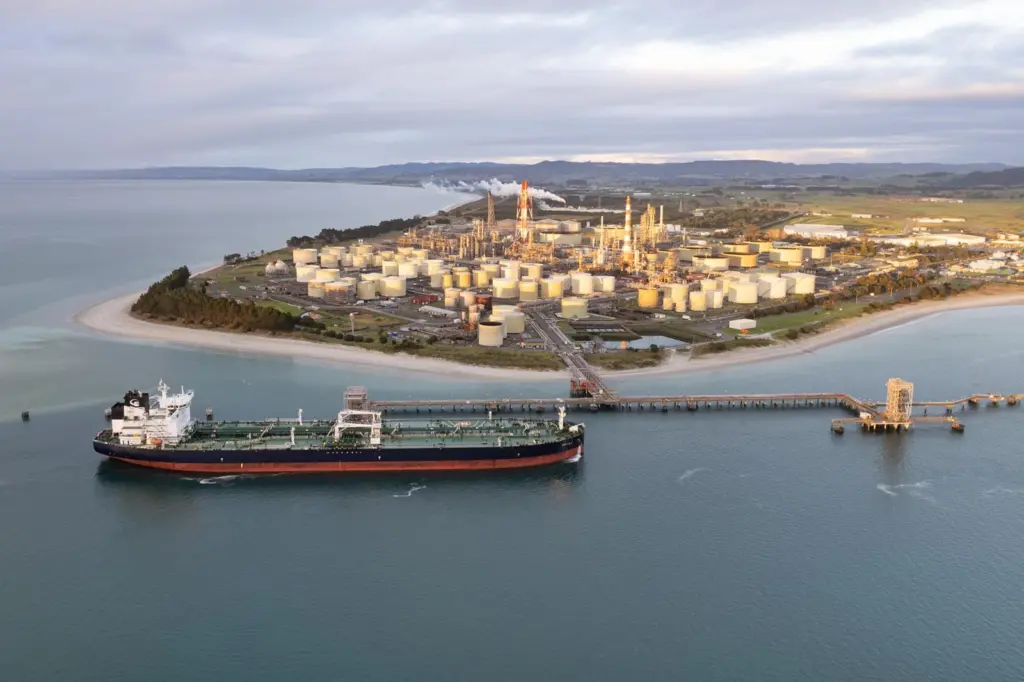
Channel Infrastructure NZ, which owns the oil import terminal at Marsden Point, next to Northport in northern-most New Zealand, would potentially develop a biorefinery under a conditional project development agreement with Seadra Energy Inc.
Seadra is partnering in a consortium with airline Qantas, Renova Inc, Kent Plc and the ANZ Bank. Should it proceed, the proposed biorefinery could become an anchor tenant for Channel’s Marsden Point energy precinct.
Fuel transition
Marsden Point was previously an oil refinery but was closed in 2022 due to the costs of refining being uncompetitive with overseas refineries. Channel Infrastructure then decommissioned some plant and focused on becoming an import terminal.
The company entered into an option agreement with Seadra to purchase certain decommissioned assets for US$33.87 million.
That option was due to expire on 30 September 2024, but Seadra informed Channel that following further investigation, including alternatives that involved the complexity and cost of deconstructing and moving assets offshore. It now considers that leaving the assets at Marsden Point and using them for a biorefinery is their preferred option.
Seandra noted: “Given the world class infrastructure available at Channel’s facilities and having identified multiple markets for the biofuels produced, the economics for a domestic advanced biorefinery made the most sense for the consortium.”
Qantas says that sustainable aviation fuel (SAF) will be critical to decarbonising the aviation industry and has set a 10% SAF target for 2030. The airline is investing in the development of SAF production including early investment in the development of the biorefinery at Marsden Point.
Should the development agreement become unconditional, the biorefinery would use some of Channel’s decommissioned refinery assets (which would be refurbished and reconfigured), existing tanks and jetties. The site has about 20 hectares of land available.
The proposed biorefinery being located on the Marsden Point site would not impact on a separate footprint for a previously-proposed e-sustainable aviation fuel project that remains on the table.
Future potential
Channel Infrastructure CEO Rob Buchanan says that attracting another potential international future fuels project to Marsden Point is further validation of the unique strategic nature of the site.
“While there can be no guarantee that these projects will ultimately proceed, the fact that we have been able to attract two potential projects of this calibre is testament to the attractiveness of our Marsden Point site for the production of lower-carbon fuels and the inherent value of our land.
“Should the Marsden Point biorefinery project proceed, it would create value for shareholders through the sale of decommissioned assets and revenue from long-term contracts for the use of our land, and other infrastructure, by the biorefinery.”
The proposed biorefinery is one example of many opportunities Channel sees to develop Marsden Point as an energy precinct over the long term.
Channel and Seadra are to progress the project to a final investment decision by the second half of 2025. If it proceeds, several key commercial elements have already been agreed in principle, including Channel selling Seadra the hydrocracking assets and decommissioned plant; Channel leasing land to Seadra; Channel making available additional tanks, jetty facilities and other infrastructure at Marsden Point for annual fees to be agreed between the parties; and Seadra becoming responsible for the ownership, construction and operation of the biorefinery.
The final investment decision to proceed with the Marsden Point biorefinery project will be subject to entry into final binding agreements.
Fuel supply
Meanwhile, another New Zealand port sees potential in supplying visiting ships with alternative fuels. The contracted bunker barge Kokako arrived in Wellington Harbour in September 2023 with the intention being to supply marine biofuels to Cook Strait ferries, shipping lines and cruise vessels.
The barge is now in service at CentrePort, providing traditional fuels to visiting vessels, but it will be able to provide marine biofuels in future to customers that want it. CentrePort also has Very Low Sulphur Fuel Oil (VLSFO) available for supply, which has fewer particulates and a reduced environmental impact.
Fuel company BP is behind the provision of marine biofuels to Wellington and has put in place an agreement with StraitNZ, the operators of the Bluebridge Cook Strait Ferries which connect New Zealand’s North and South Islands.
CentrePort chief executive Anthony Delaney says this is a major shift in alternative fuel sources becoming available for StraitNZ and other shipping lines from Wellington.
“This is a first for the Capital and represents a positive opportunity for CentrePort, making us an even more attractive destination for current and future customers. It also aligns with our energy journey, where we’re doing more to focus on lowering emissions in the supply chain,” he said.
“That focus includes improvements like installing shore power at King’s Wharf to reduce ferry emissions and the Seaview energy project, which is working to future-proof Seaview Wharf and make it fit for both alternative fuels and the different types of ships that will use them.”
StraitNZ CEO Shane McMahon echoed Mr Delaney’s comments: “The opportunity to source biofuels to power Bluebridge’s Cook Strait Ferries is exciting progress on our journey towards a more sustainable offering for our Cook Strait services.”
Mr Delaney says CentrePort, like StraitNZ, is actively investing in a shift to lower emissions across its operations.
“We’re putting our effort behind what we’re saying. We’ve already invested in a move to 100% electric container internal movement vehicles, LED lighting, removing diesel-fuelled mobile plant and committing to a trial of some of New Zealand’s first 100% hydrogen powered trucks. And that’s just a start. Like BP, we’re investing now and taking action.”
Mr Delaney says he is keen to see where these energy initiatives may lead and how they will shape the future of the port.
Related Articles
 ALTERNATIVE FUELS GREENPORT
 ALTERNATIVE FUELS GREENPORT
 ALTERNATIVE FUELS GREENPORT