![GreenPort[PortStrategy]](https://www.portstrategy.com/greenport/wp-content/uploads/sites/4/2026/09/GreenPortPortStrategy.svg)



Lack of enablement for green fuels
New research launched at COP27 urges governments to invest now or risk missing the boat on green fuel shipping opportunities.
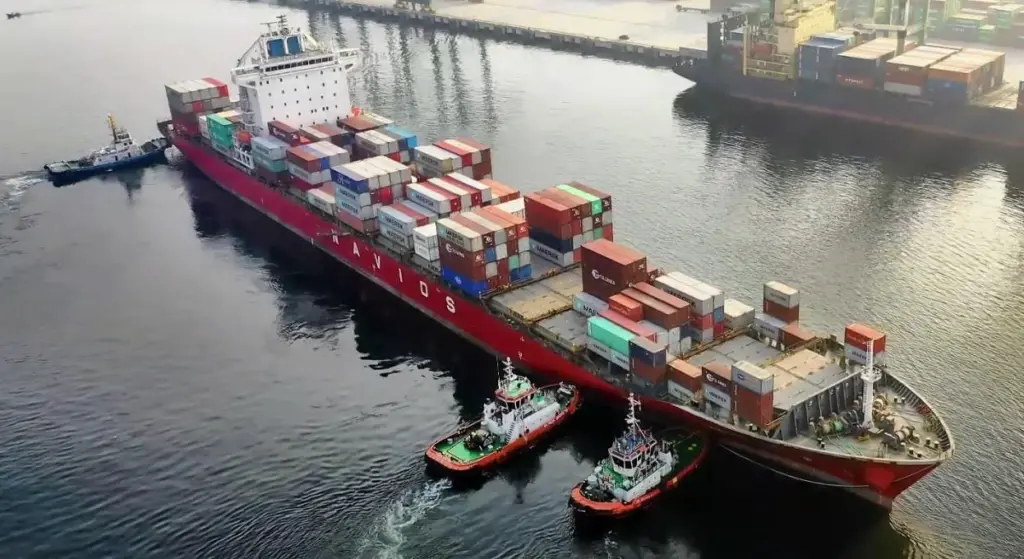
A new report by the Tyndall Centre at the University of Manchester reveals that a lack of enabling policies by governments, including price guarantees, is causing investment in shipping infrastructure needed to support the global energy transition to be held back.
“New green fuels are essential to meet the Paris climate goals and there is a pivotal role for the shipping sector in transporting them. But production of green fuels must be scaled up – there is a yawning gap between current plans and what is needed to meet the Paris goals,” said Professor Alice Larkin, report co-author.
Government backing
The report authors of Shipping’s Role in the Global Energy Transition, undertaken for the International Chamber of Shipping (ICS), identify growth prospects in low-carbon hydrogen and sustainable bioenergy as essential to meet the Paris Climate Agreement’s goals.
They say that shipments of ammonia and bioenergy could grow to the same levels as shipping of gas and coal today.
But to fulfil this, 20 new large ammonia carriers must be built every year to meet potential demand. At the moment though, there is weak policy support with only 4% of current commitments actually being funded.
The world needs 50-150 million tonnes of low-carbon hydrogen by 2030, but there is a major gap between this and what is planned to date. Already-announced projects will only produce 24 million tonnes by 2030, according to the International Energy Authority.
Guy Platten, secretary general of the ICS, said: “The shipping industry knows it has a huge part to play in global decarbonisation in the coming decades, transporting the new green fuels the world’s economy needs. But for us to invest, governments need far stronger policies to de-risk green hydrogen production.”
“National Hydrogen strategies must include an explicit focus on supporting the transport infrastructure needed for both imports and exports. Industry is ready to respond but we urgently need stronger market signals and infrastructure investment to make this a reality.”
Researchers at the Tyndall Centre are calling for stronger government policies to give low-carbon hydrogen producers, shippers and consumers the confidence they need to invest.
The report suggests several potential considerations for government policy to increase their effectiveness at enabling investment. These include introducing mandates for increasing percentages of green hydrogen, creating ‘production credits’ for the production of hydrogen, or providing guaranteed markets and prices for producers and consumers. Such measures are already being trialled in the USA, Germany and India.
Related Articles
 ALTERNATIVE FUELS GREENPORT
 ALTERNATIVE FUELS GREENPORT
 ALTERNATIVE FUELS GREENPORT