



The push to scale sustainable marine fuels
The Rotterdam to Singapore Green and Digital Shipping Corridor has issued a report outlining barriers and solutions to scale investment in sustainable marine fuels and port bunkering.
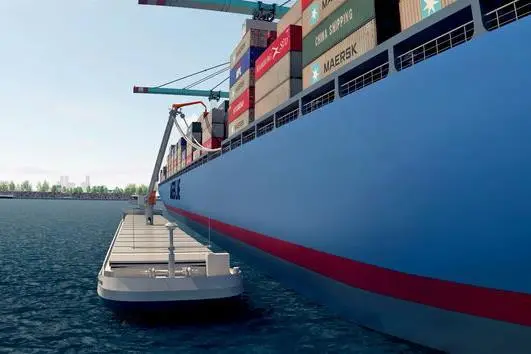
The publication details how regulatory uncertainty, weak demand signals and high capital requirements are slowing projects, threatening progress toward a viable green shipping corridor linking Europe and Asia.
“Investments and therefore sustainable fuel production will not materialise without coordinated dialogue and decisive action by policymakers, financiers and fuel suppliers,” the report states, calling for aligned regulation, risk-sharing and long-term demand commitments.
Chicken and egg
The report said that despite rising pressure to decarbonise, capital deployment into sustainable marine fuels remains insufficient.
It identifies a persistent chicken-and-egg dynamic: Limited production capacity keeps prices high and uncertain, dampening offtake and delaying Final Investment Decisions (FID).
Analysis of the value chain, including a case study of a green ammonia project supplying Rotterdam for port bunkering, shows that 80 to 85% of total fuel costs stem from production, with transport, storage and bunkering representing a smaller share.
Facilities require €0.5 to 1 billion upfront and up to 15 years to deliver, exposing investors to regulatory and market risk. With financing accounting for up to half of overall costs, unresolved uncertainty directly inflates prices or stalls projects.
The report states that the corridor initiative positions itself as a catalyst to overcome these barriers by coordinating stakeholders across policy, finance and supply.
By supporting regulatory clarity, demand aggregation and structured risk allocation, the partners aim to unlock capital and accelerate deployment of sustainable marine fuels, enabling a commercially viable green shipping corridor and future-ready port bunkering infrastructure.
Related Articles
 ALTERNATIVE FUELS GREENPORT
 ALTERNATIVE FUELS GREENPORT
 ENERGY & TECHNOLOGY GREENPORT