![GreenPort[PortStrategy]](https://www.portstrategy.com/greenport/wp-content/uploads/sites/4/2026/09/GreenPortPortStrategy.svg)

EXCLUSIVE: Boosting port performance with electrification
Porto Itapoá, one of Brazil’s most dynamic and fastest-growing container terminals, is redefining what it means to be a modern port.
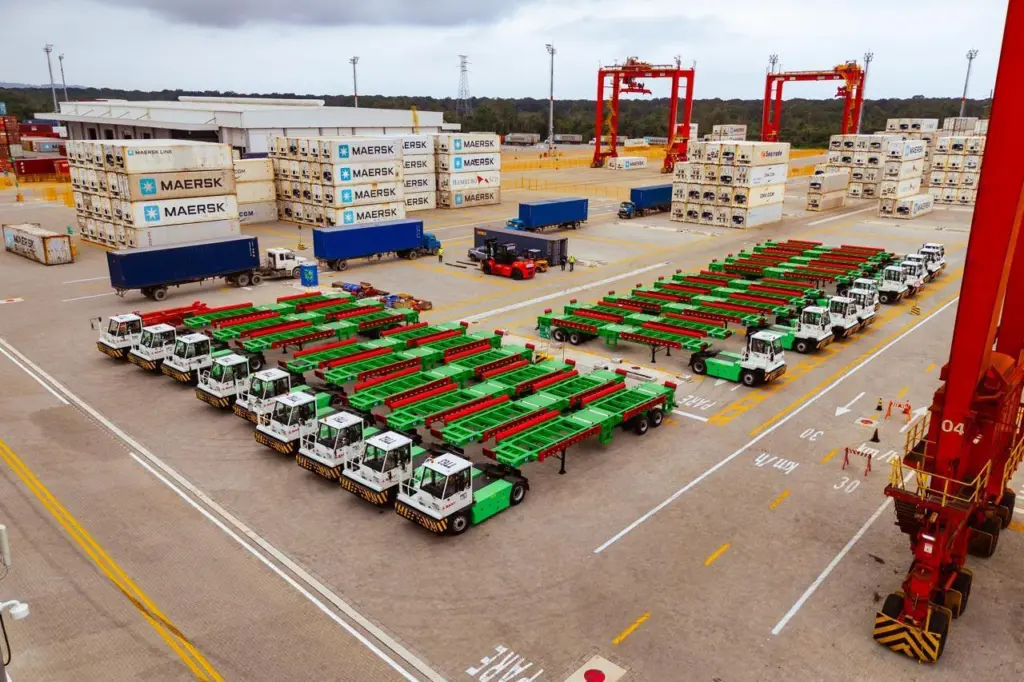
By embracing a comprehensive port electrification strategy, the terminal has dramatically improved port performance, cut emissions and carved out a leadership role in sustainable maritime logistics.
Located in Babitonga Bay, Porto Itapoá already benefits from natural deepwater access and calm seas, but it’s the port’s visionary investments in electric port equipment and advanced automation that make it unique. The transition to cleaner, smarter and more efficient operations forms the backbone of its development.
“We have always believed that performance and sustainability go hand-in-hand,” says Ricardo Arten, CEO of Porto Itapoá.
“Electrification is not just a green choice, it’s a smart one for long-term operational efficiency and competitiveness.”
Electrifying equipment
Porto Itapoá’s bold equipment strategy is anchored in its adoption of electric and hybrid port equipment, positioning it at the cutting edge of operational technology in Latin America.
The port was the first in South America to implement ten ZPMC remote-controlled hybrid rubber-tyred gantry (RTG) cranes, which consume three times less fuel than traditional diesel models.
In 2024, the port introduced 20 Sany electric terminal tractors. In 2025, it expanded its electric port equipment fleet even further by adding seven more electric terminal tractors, three electric empty container handlers and one electric reach stacker.
This made Porto Itapoá the first port in Brazil to operate with a full range of zero-emission terminal handling equipment.
“These changes are a fundamental part of our vision for decarbonisation,” explains Mr Arten.
“We’re not just swapping engines; we’re rethinking how ports operate from the ground up.”
This electrified equipment is powered by certified renewable energy sources. To support it, the terminal has also invested in high-capacity charging infrastructure ensuring that performance scales along with sustainability.
Performance boost
Porto Itapoá’s forward-thinking approach has already delivered tangible results.
In 2024 alone, the terminal avoided the consumption of more than 1.18 million litres of diesel fuel. That’s over 4,000 tonnes of greenhouse gases kept out of the atmosphere, highlighting how electric port equipment directly contributes to both environmental and operational goals.
The switch to electric handling equipment hasn’t just lowered emissions at the port, it has increased uptime and reduced maintenance costs, thanks to the simpler mechanical nature of electric drivetrains.
This, in turn, has amplified port performance by allowing for more predictable and efficient cargo handling.
“We’ve seen improvements in nearly every KPI,” Mr Arten confirms.
“Electric vehicles are quieter, cleaner, and cheaper to run. That means better conditions for workers, fewer breakdowns and faster turnaround times.”
Porto Itapoá is also using cutting-edge Optical Character Recognition (OCR) systems for container and truck identification, enhancing automation and reducing friction in logistics flows.
These digital tools, combined with clean energy solutions, have helped set a new benchmark for port efficiency in Brazil.
Scaling up
In the first quarter of 2025, Porto Itapoá became the second-largest container terminal in Brazil, handling over 202,000 containers – a 37% increase over the same period in 2024. That’s more than three times the national average growth rate of 10%.
This growth is no accident. It stems from a long-term strategy that integrates technology, sustainability and scalability into a single framework.
Every investment, from dredging and terminal expansion to electric port equipment, supports the port’s mission of becoming the most efficient terminal in South America.
“We are designing a port for the future,” says Mr Arten.
“And the future demands zero emissions, full digital integration and 24/7 efficiency.”
By aligning its operations with international decarbonisation frameworks, including the IMO’s Net Zero strategy, he says Porto Itapoá is positioning itself as both a national leader and a global innovator.
Governance and certification
Sustainability at Porto Itapoá isn’t a marketing campaign, it’s embedded into the port’s DNA.
The terminal’s electricity supply is 100% sourced from certified renewable energy, as confirmed by I-REC certifications for 2024 and 2025. It has also earned the prestigious Gold Seal from Brazil’s GHG Protocol Program, based on a comprehensive and verified greenhouse gas inventory.
Looking ahead, Porto Itapoá plans to further enhance energy efficiency and emissions tracking using advanced data analytics. It is also expanding its circular economy initiatives and investing in workforce development to build long-term resilience.
“Our governance model is grounded in transparency and stakeholder engagement,” Mr Arten notes.
“We know that true sustainability requires systems thinking and that’s how we approach every project – be it a new container handler or a new employee training program.”
Thinking holistically
For other ports seeking to replicate Itapoá’s success, Mr Arten offers a clear message: performance, sustainability and efficiency are not separate goals, they are deeply interconnected.
“We advise port operators to start by listening to workers, to communities and to nature,” he says.
“From there, build solutions that are inclusive and forward-thinking. Collaborate across sectors, bring academia and government into the fold and commit to real change.”
Porto Itapoá’s journey shows that investment in port electrification pays off, not just in emission reductions, but in real improvements in port performance and competitiveness.
As the world races toward a low-carbon future, Itapoá isn’t just keeping up, it’s doing its best to lead.
By investing in electric port equipment, automating its operations and anchoring everything in clean energy, Porto Itapoá is showing that the ports of tomorrow don’t have to compromise between growth and responsibility. They can achieve both and do so with speed, precision and purpose.
This strategy has placed Itapoá firmly on the map as a global example of how port electrification can transform terminal operations for the better.
A paradigm shift
Porto Itapoá’s electrification strategy also offers critical insights into the broader transformation happening across the global shipping industry.
As climate policies tighten and stakeholders demand more sustainable practices, ports are under increasing pressure to decarbonise. By acting early and decisively, Itapoá has placed itself ahead of regulatory curves and market expectations.
Mr Rosa Jr, says that the economic case for port electrification is also becoming increasingly clear. While the upfront costs of electric port equipment can be higher, the long-term savings in fuel, maintenance and downtime make a compelling business argument.
Porto Itapoá’s model is showing that sustainability and profitability can and should coexist in modern port operations.
“What we’re seeing is a paradigm shift,” Mr Arten explains.
“Sustainability is no longer a secondary concern or a CSR checkbox. It’s central to our performance metrics and our long-term competitiveness.”
Beyond operations, the electrification of Porto Itapoá has had a notable impact on its workforce.
The port has implemented extensive training programs to upskill employees, ensuring that staff are proficient in handling new electric systems and safety protocols. These efforts have improved employee satisfaction and created a culture of innovation and pride among workers.
In addition to internal training, Porto Itapoá is engaging with educational institutions and research centres to foster knowledge exchange and develop the next generation of port professionals. These collaborations help ensure a steady pipeline of talent capable of supporting the port’s technologically advanced and sustainable infrastructure.
“We view our people as critical to our success,” says Mr Arten.
“Technology can only take you so far without skilled and motivated individuals behind it. That’s why we invest just as much in human capital as we do in electric equipment.”
Related Articles
 ENERGY & TECHNOLOGY GREENPORT
 PROJECTS & INITIATIVES GREENPORT
 ALTERNATIVE FUELS GREENPORT