![GreenPort[PortStrategy]](https://www.portstrategy.com/greenport/wp-content/uploads/sites/4/2026/09/GreenPortPortStrategy.svg)



BREXIT: SHORT-SEA SHUFFLE
Felicity Landon identifies and analyses the premier changes and opportunities highlighted during the recent Coastlink webinar: ‘Short Sea Shipping – adapting the supply chain in a post-Brexit era’.
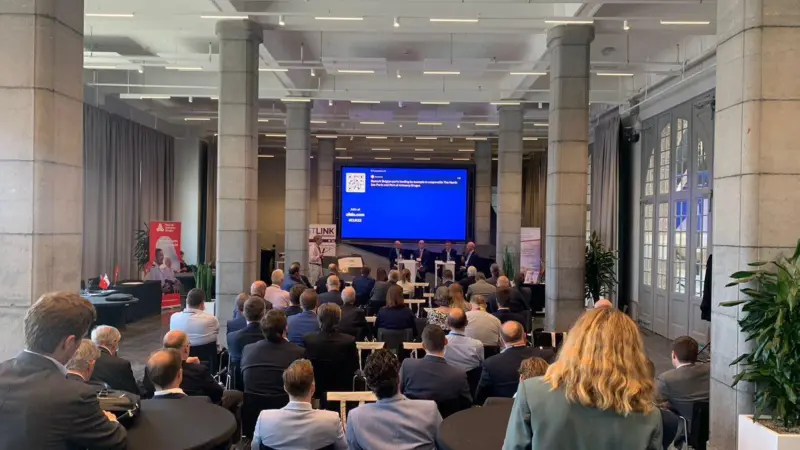
The overall message from the recent Coastlink webinar was a simple one, namely; the shipping, ports and logistics industry will always fi nd a way, whatever the challenges. The broad-based belief was also expressed, loud and clear, that the future is bright for short-sea shipping with a renaissance underway in the post-Brexit era.
As moderator Nick Lambert, Director of NLA International, said: “This is a fabulously timed event. Shipping is very firmly in the news at the moment, often being beaten with a big stick over emissions and the aftermath of Brexit. We have seen interruptions to our logistics supply chain as a result of Brexit and other wider global factors.”
What more could you ask for than a very large container ship getting stuck in the Suez Canal, he suggested. “This brought to life the significance of our global supply chains and made the general public aware of how important our global logistics supply chains are, and how clever and professional the people are who operate them,” he said.
“The UK and our coastal partners around northwest Europe are right in the front leading some of these activities, driving down emissions, bringing in better regulations, getting everyone to use short-sea shipping, finding better ways of routing stuff around the globe.”
ECONOMIC CONSEQUENCES
The economic consequences of Brexit are still developing, said Alex Veitch, General Manager – Public Policy at Logistics UK. He said that apart from the pre-Christmas queues of trucks due to stockpiling and COVID-19 restrictions, HGVs have ‘by and large been flowing well’, although there were, of course, certain sectors such as seafood experiencing difficulties.
“But not queues. Why? Due to the monumental effort by our members, by all companies in the supply chain and by predominantly exporters into the EU and their partners to get ready for the rules by January 1, 2021. However, that does not tell the whole story of what has happened to trade, and how this will drive logistics.”
There is a big argument about how full the trucks are, he said. While the decline in exports in January was ‘historic, absolutely extraordinary’, UK Office for National Statistics (ONS) figures for February were more encouraging, suggesting a recovery of British exports to the EU. Another indicator, he said, is shipping – and when the Department for Transport releases its first-quarter data, “That will show a very detailed level, what type of shipping has been affected, what the flow through the ports has been during that quarter.”
Early evidence shows a doubling of volumes on direct roro sailings between Republic of Ireland ports and mainland Europe and a decline in landbridge movements through the UK, said Veitch. It was too soon to say with clarity whether there was a sustained modal shift, he said: “But if the Ireland experience is anything to go by, there will be some long-lasting changes in the types of sailings, due to Brexit and the introduction of these controls on the border.”
THINGS WILL GET STICKY AGAIN
Notably, he warned that ‘things will get sticky again’ in January and March 2022, when the UK introduces the full set of import controls and admin’ requirements, including safety and security declarations and phytosanitary checks. “Without sufficient planning and advance notice, there will be a bumpy road.”
However, he did have some praise for a ‘fresh, invigorated [UK] Customs department’. “They have even discovered YouTube! They are working very hard to authorise companies to become trusted traders; there are a lot of ways to make it easier to move goods.
“The vision we want to see is where almost all the admin is done in the background – upstream compliance, sort it out in the background, so Customs/border matters are all about intelligence.”
Alan Platt, CEO of the John Good Group, described his ‘experiences at the coalface’, and the ‘rollercoaster ride in 2020 that culminated in Brexit’. He said: “During 2020, there was a high level of unpreparedness. We were bombarded with TV campaigns about being prepared – but what was missing was what we should be preparing for. There was confusion and a lack of understanding around some of the more general requirements and processes.”
Towards the end of 2020 the mood was of ‘grave concern in many camps’ of getting it wrong, and the associated legal implications of mis-declaring of cargo, he said. Brexit has created a huge administrative burden as paperwork is required at both ends, said Platt.
“Around 150,000 UK exporters had never previously ventured outside the EU bloc, which highlighted the challenge. Brexit has done nothing to help the labour market, either – we have seen many EU nationals return home, and that is emphasised even more when the pound is weak. “We already have a driver shortage. The situation has made businesses re-evaluate their supply chains. They recognise the vulnerabilities and need to de-risk wherever possible.”
SHORT-SEA SHIPPING CAPITALISES
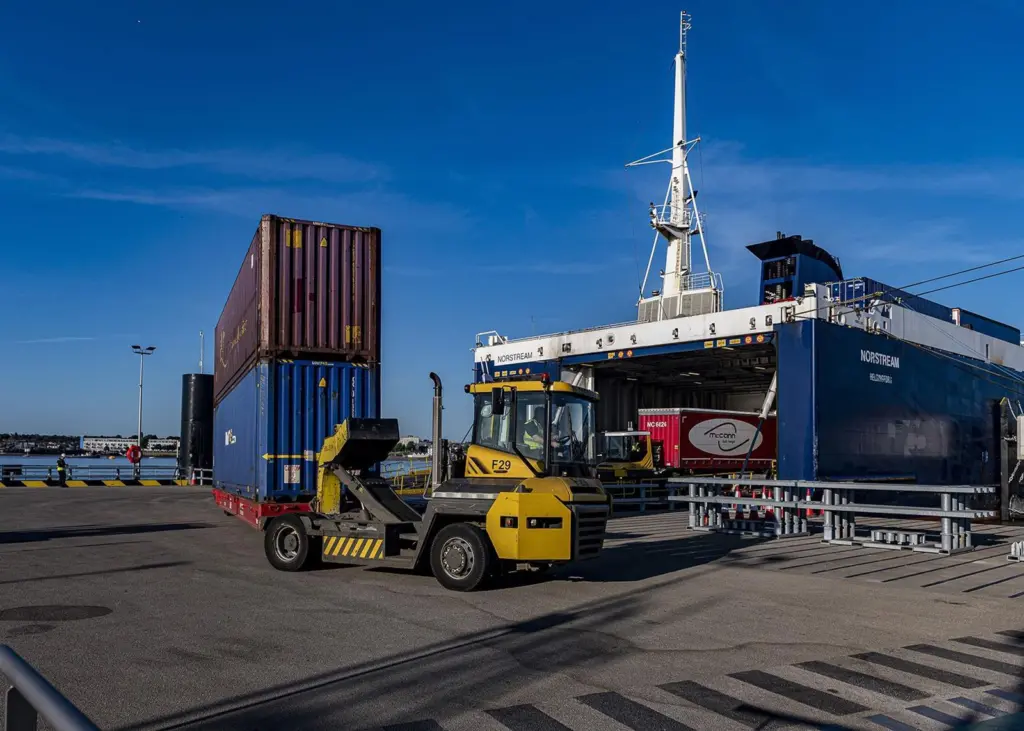
All of this has played into the hands of short-sea shipping, he said, as companies have moved from just-in-time to just-in-case models, with increased stock now being held in UK warehouses, and a demand for much more resilience in the supply chain.
Among the striking developments, he listed a 20 per cent increase in unaccompanied ro-ro volumes on the Tilbury-Zeebrugge service together with a general shift of cross-Channel freight to unaccompanied, and an increase in European road freight costs leading to an uplift in short-sea container volumes.
Short-sea container shipping can drive reliability into the supply chain, he said, and among other potential opportunities he listed enhanced visibility through digitalisation, new routes, expansion of existing services and additional connections, new markets, less regulation and domestic trade.
What has been happening on the Irish Sea crossing has been a particular point of conversation in the Brexit debate, said Stephen Carr, Group Commercial Director at Peel Ports. “What used to be quite balanced (Northern Ireland/ Republic) at roughly 50-50, is now 60-40 in favour of Northern Ireland,” he said. “Freight is like water – it will find the path of least resistance. The evidence is that traffic is shifting towards the Northern Ireland corridor.”
His analysis – taking account of pre-Christmas stockpiling, a shift of traffic to direct routes into the Republic, etc. – suggested that the market sizes are very similar. “There is anecdotal evidence that trade has moved away from the traditional Channel and Tunnel routes,” he said, pointing to new services such as Sheerness-Calais, Immingham-Cuxhaven and Iberia-Liverpool. “All the unaccompanied routes have seen growth; there is some early evidence of a shift to unaccompanied (ro-ro) traffic and new short-sea lo-lo routes.”
He also highlighted what’s been happening in the deepsea container sector, with the marked differential in prices between deepsea containers landed in Europe and in the UK. “Since November, even to this week, there has been a differential of at least US$1,000 for a 40-ft container. For the first time in more than a decade, this provides an impetus for short-sea to connect to the UK.”
All regional ports had seen a boost in volume over the past few months, driven by this differential, he said. “For the first time, feeder services can compete with deepsea routes into the UK. The market opportunities in the short-sea market have never been as good as they are now.”
Net-zero will drive shipping diversification
Justin Atkin, UK and Ireland representative for the Port of Antwerp, said that alongside the shortage of truck drivers, a longer-term wider challenge is going to be increased pressure on shippers to provide sustainable supply chains achieving reduced emissions. Short-sea is not just about containers but also about coastal volumes and breakbulks, he added. “Short-sea,” he underlined, “has a very strong future.”
The current market situation is supporting and favouring regional ports and better use of short-sea shipping, said Stephen Carr, Group Commercial Director, Peel Ports. “It is not just about resilience, although that is the big driver – it can help with supply chain emissions as well,” he said. “We have long argued that the use of regional ports maximises the use of marine and minimises the use of road transport.” He predicted: “Our drive towards Net Zero and a Net Zero economy will have a far bigger effect on the diversification of shipping routes than either Brexit or COVID-19.”
There was also positivity from Alan Platt, CEO of the John Good Group, who said: “We see very much that short-sea shipping, certainly over the next five years, has got a really bright future. We can see the resurgence, the uptick in short-sea, and I genuinely believe that will continue for the next few years.”
In the short-sea world, the future is bright, agreed Alex Veitch, General Manager – Public Policy, Logistics UK, who predicted growth and new routes. “If you are in the business of short-sea, you really can’t go far wrong.”
Related Articles
 COASTLINK GREENPORT
 COASTLINK GREENPORT