![GreenPort[PortStrategy]](https://www.portstrategy.com/greenport/wp-content/uploads/sites/4/2026/09/GreenPortPortStrategy.svg)


Baltimore pursues 3P project in advance of Panama Canal expansion
The Port of Baltimores first steps into a public-privatepartnership project are at the heart of its long term strategy.Felicity Landon reports
The east coast US port of Baltimore is readying itself for 2014. It is already the country’s number one port for ro-ro, as well as for forest products imports and vehicle exports, and James White, executive director of the Maryland Port Administration (MPA), says: “We are pretty proud of how much Baltimore handles in ro-ro and of the port’s commanding share of the US import/export market. We have a great location that reduces inland transportation for automotive and machinery manufacturers.”
Baltimore also hovers around the 13th to 15th spot in the US league of top container ports; 612,847 teu passed through Baltimore in calendar year 2008. Volumes have slowed by about 10% in the past 12 months – a good performance compared with many others, points out Mr White.
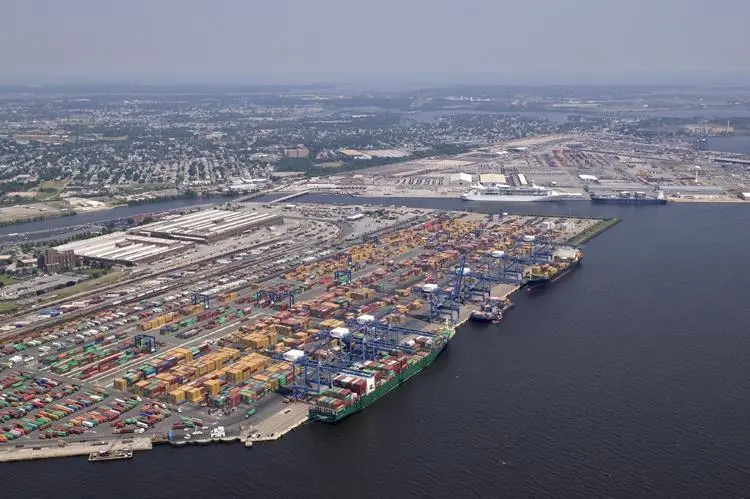
The vast majority of these boxes go through the Seagirt Marine Terminal, and it is here that the port administration is moving forward with plans for a public-private partnership (P3) agreement that would fund the £80m construction of a 1,300 foot quay with depth alongside of 50 feet and equipped with four ship-to-shore cranes – a development directly aimed at attracting containerships transiting the larger canal.
“Today we are one of only two ports on the east coast that has a 50 foot channel,” says Mr White. “However, while we have deep water up to the berth, we don’t have a 50-foot berth. Our limiting factor is 45 foot. There are a lot of ports on the east coast that would like 45 foot – but for us, it is relatively simple to get to 50 foot alongside.”
An expanded Panama Canal will become “very important” for Baltimore, he says, and the port is determined to make the most of the opportunities.
“The limitation of the canal today and the inability of the bigger ships to transit the canal has hurt us in the past. We are very anxious that this project gets done so that we can start enjoying some of the Far East services coming through the Panama Canal and discharging here locally, as well as exports. We are pretty excited about it.”
The Baltimore region has the third biggest population group in the US, says Mr White, “and the goods have to come to us”.
He puts the cost of moving a container by rail from US west to east coast at US$2,000. If the larger containerships came through the canal to Baltimore, the inland haulage leg would average out at just $200 a move.
In June, the MPA announced that Ceres Terminals/Alinda Capital Partners and Ports America Group/Highstar Capital had both qualified to submit bids to enter a possible public-private partnership (3P) agreement.
Within such a deal, the successful bidder would take over the existing land, cranes and equipment at Seagirt and move ahead with the new development. It would be required to pay a sum for the existing assets, pay for ongoing use of the land, and pass on to the MPA a share of the incremental increase in volumes.
“We are looking for a minimum of 30 years [agreement] but we would probably go as high as 50 years,” says Mr White.
Seagirt today has three berths and seven ship-to-shore cranes and is operated by Ports America. Mr White describes it as “a very well run facility”, achieving 38 container moves per hour per crane and turning round trucks in less than 30 minutes, or less than an hour for double moves.
The biggest customer is Mediterranean Shipping Co, which has brought in 6,800 teu ships and recently added a new service through Suez from Asia, calling at Baltimore. “MSC have been pushing us for a while to go deeper than our 45 feet of water at the three existing berths,” he says.
The MPA has completed the design work for a berth which would initially accommodate vessels up to 10,000, and could go up to 14,000 teu.
After further negotiations, a 3P decision is expected by the end of 2009 – but Mr White emphasises: “If we get the bids back and we don’t think it is the right thing for the state, we still have the opportunity to reject [the project].”
Related Articles
 CONTAINER & CARGO HANDLING
 CONTAINER & CARGO HANDLING