![GreenPort[PortStrategy]](https://www.portstrategy.com/greenport/wp-content/uploads/sites/4/2026/09/GreenPortPortStrategy.svg)
Beyond Maasvlakte 2
Rotterdam takes the long term view on investment as Felicity Landon finds out
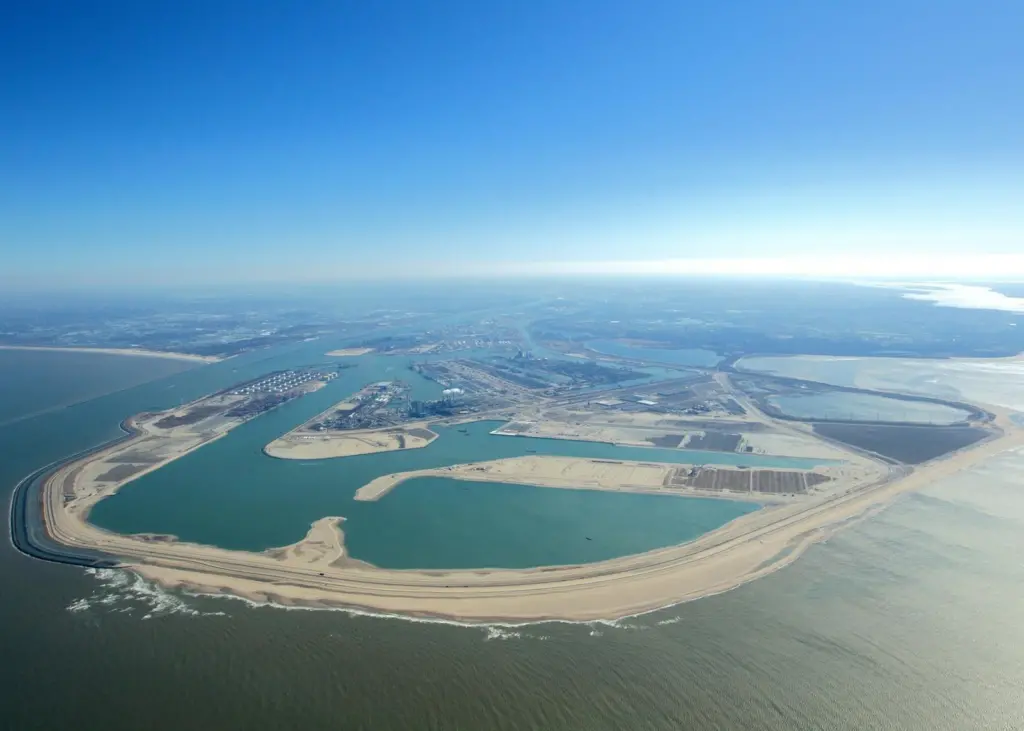
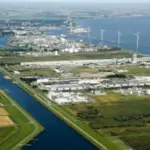
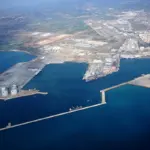
Maasvlakte 2, Rotterdam’s deepwater expansion, is rapidly taking shape and continues to grab the headlines in terms of port coverage.
In April, PUMA, the joint venture of contractors Boskalis and Van Oord, delivered the first phase to the port authority; Maasvlakte 2 has created 700 hectares of new industrial sites, 11 kms of seawall, 3.5 kms of quay wall, 24 kms of roads, 14 kms of rail and 560 hectares of port basin.
Now it’s a race to the finish, as APM Terminals Maasvlakte II and DP World’s Rotterdam World Gateway deepwater container terminals are both due to open for business in autumn 2014.
A major turning point in the development is the Yangtzehaven cut-through this spring; this will enable APMT to receive its first ship, which will itself deliver the first gantry cranes for the terminal. Shipped in knock-down form, they will be assembled onsite.
“Construction of the Maasvlakte 2 terminals is on schedule,” says Port of Rotterdam press officer Minco van Heezen. However, he is keen to emphasise Rotterdam’s strength in terms of its diversity.
“We are known for our gradual development, and for focusing on long-term steady growth, and we are reaping the benefits of that policy,” he says. “We don’t exclude certain products. We are a total, complete port with full service and we continue on that path even if it is sometimes difficult.”
Biomass dearth
And that policy does mean ups and downs. At the time of writing, the port had handled no biomass at all in 2013 – compared with 700,000 tonnes in 2012. “That has to do with Dutch subsidies, which stopped as from January 1,” says Mr van Heezen. “Dutch politicians are not very clear on green energy, so the market is waiting and waiting.”
Two biomass-coal power plants being built on Maasvlakte 1 are almost ready and should start operations this year, he says. They are expected to use some biomass – their design dictates that – but the proportion burned is expected to be lower and the operators have indicated they can source this on the spot market, rather than requiring any long-term contracts.
Despite this, Rotterdam is still pursuing its plans for a large dedicated biomass handling terminal. “The uncertainty over subsidies is having its impact; everyone is sitting on their hands,” says Mr van Heezen. “But these two new plants will have to use some biomass. There is at least one coal plant being converted to biomass in Belgium that could give some market demand. And we are putting some hope in the British market too – even though the [subsidy] situation isn’t ideal in the UK, at least the government policy is clearer and more generous than in Belgium or the Netherlands.”
Rotterdam is aiming to develop a hub role in biomass, handling imports and redistributing into Europe, he adds. “We will still develop our plans for biomass. We take the long-term approach – in general the course is clear and we stick to it and, most important, we keep investing.
“We hope to have the effect of redistributing biomass as we have in the first three months, for example, with iron ore. Iron ore throughput has developed rather well, given the crisis in the steel industry, as has coking coal. So we are now taking advantage of the concentration of these commodities in Rotterdam and redistributing them on the continent. So in a difficult market, we are quite happy with the way things are going.”
Elsewhere in the port, a major investment is being proposed for a Russian crude oil terminal; contracts have been signed for the land lease, but final decisions have yet to be confirmed.
Rotterdam also has international ambitions. In the Omani port of Sohar, it has agreements with the Sohar Industrial Port Company and Sohar International Development Company in which it is investing in developments and also in the deployment of staff. Twelve Port of Rotterdam staff are working in Sohar, where major developments have included a SU$250m bulk terminal for Brazilian mining group Vale.
Rotterdam has set a target of five port participations by 2015 and has signed an MoU with authorities at Porto Central in Brazil for a joint venture greenfield port development.
“It is our goal to base this on the Sohar model in which we have an important role in the management company on a 50-50 basis,” says Mr van Heezen. “We will be looking to have a number of people based there and starting with investing. Rather than just selling our expertise in a report, we took the decision we wanted to be involved in the management.”
Related Articles
 CONTAINER & CARGO HANDLING
 CONTAINER & CARGO HANDLING