![GreenPort[PortStrategy]](https://www.portstrategy.com/greenport/wp-content/uploads/sites/4/2026/09/GreenPortPortStrategy.svg)


Black future
Washington and Oregon ports travel new and old roads to viability. Martin Rushmere reports
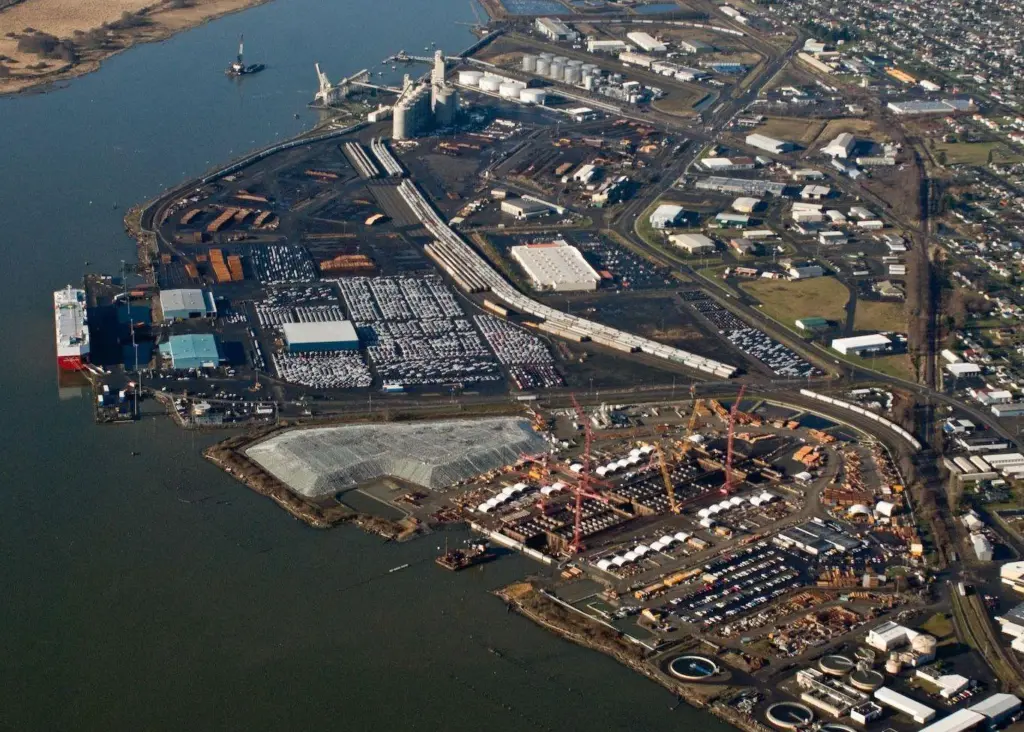
For a peek into the future destiny of smaller ports on the West Coast, which get their economic viability from breakbulk, Grays Harbor is a good example.
Marketing itself as Washington’s only deep water port on the Pacific Coast, the mixed breakbulk and recreational boating port is jumping into the hydraulic fracturing (fracking) frenzy and is considering projects to develop crude oil export facilities.
The crude oil would arrive by rail (CBR) and then be transferred to storage tanks for ultimate loading aboard vessels and barges. Three companies have submitted proposals, Westway Terminal Company: Imperium Terminal Services and Grays Harbor Rail Terminal (a subsidiary of US Development).
The port is eyeing Terminals 1 and 3 for use and says there will be 100-150 vessel calls a year if all three projects operate at capacity. The Terminal 3 berth depth is between 38 and 40 feet, and needs yearly maintenance. The length is 183 metres. Terminal 1 berth depth of is 41 feet, and has a length of 480 feet.
US Development has been given an option to lease Terminal 3 and says it has scaled down its plans to get the project moving faster, reducing the number of unit trains from two a day to one every other day, serving a 50,000 barrel per day facility. The company wants to build between six and eight bulk liquid storage tanks and hopes to start shipments in the first quarter of 2015. Total cost will be about $60m.
Traffic surged at Grays Harbor in 2012, increasing 50% to 1.8m tonnes.
A proposed coal terminal for the port was abandoned in 2012 when the developer said that it had sold the site to another company. The likely reason was growing public opposition to coal and years of legal and local authority wrangles. The buyer was probably one of the crude oil facility proposers.
Opposition from environmental groups is likely to be as vociferous as for the coal terminal. An eco-activist coalition, Citizens for a Clean Harbor, says oil terminals will be “catastrophic” for the area and is calling for a series of public meetings.
The long view
Meanwhile, the Port of Longview faced opposition from a different direction, the unionised dockworkers, at its EGT grain terminal. This has largely been settled through direct negotiations with individual units of the union rather than governing union management.
The terminal is now in its first full year of operation and the port says it exported 4.6m tonnes in 2012 and has a capacity of 8m tonnes.
“The port has seen a surge in log export volumes within the last few years and we expect the trend to continue strongly through 2013. Last year alone, 30 log vessels were loaded for Asia,” says the port.
Overall, through February, the port recorded 30% of 2012’s total vessel volume.
The new grain terminal EGT, accepted its first vessel for cargo in February 2012 and has welcomed a steady stream of vessels ever since. The facility, which has an annual throughput capacity of 8m metric tons, exported 4.7m metric tons of cargo in 2012.
An indication of how the smaller West Coast ports are viewed as an investment assessment is given by Moody’s rating agency towards Longview. The agency awarded Baa1 for $6m in revenue bonds.
“The rating primarily reflects the port’s improving financial performance, its position as a competitive marine terminal, recently weakened debt service coverage levels that are expected to improve significantly over the near-term, and satisfactory legal provisions.
Moody’s listed the port’s strengths as operating revenue trends benefiting from recent completion of a new grain terminal; access to marine and ground transportation bolsters the port’s competitive position; sizable banked property tax levy capacity more than sufficient to cover annual GOLT (general obligation limited tax) debt service.
Challenges included potential volatility for export markets, particularly in Asia and a concentrated customer base for operating revenues.
To increase its ratings, Moody’s highlights persistently stronger debt service coverage levels; diversification of the port’s operating activities; and/or economic recovery that bolsters the port’s marine terminal activities.
On the flipside, declines in debt service coverage levels, economic volatility that pressures the port’s net operating revenues, a trend of substantial tax base declines, or additional debt issuance that significantly leverages net revenues could all decrease the rating.
Related Articles
 CONTAINER & CARGO HANDLING
 CONTAINER & CARGO HANDLING