![GreenPort[PortStrategy]](https://www.portstrategy.com/greenport/wp-content/uploads/sites/4/2026/09/GreenPortPortStrategy.svg)


BOX TRADES: THE NEW REALITY?
At the moment the only way is up in the container sector, but what’s driving this and how long for? Analyst Andrew Penfold identifies the building blocks of this new reality and what’s next.
Following the sharp contraction in global container demand at the outset of the COVID-19 crisis last year demand has bounced back, but why are freight rates so high and who is paying for all this?
It is certainly the case that container demand has recovered in most arterial trades, with secondary trades also recording very strong growth. However, in terms of TEU shipped, although there has been a recovery, volumes remain at around the levels anticipated for 2020 and 2021 pre-pandemic.
At the same time massive capacity increases continue – especially in the largest vessel ranges. Nominal capacity has increased rapidly from the nadir of ‘Round One Covid’. In early May weekly capacity between Asia and North America was around 0.57m TEU, the highest ever and around 45 per cent up in a year.
For Asia Europe, the corresponding figures were 0.42m TEU and an upturn of 25 per cent. Although recovery has been strong, these capacity increases are enormous. Simultaneously, ocean freight rates have gone through the roof.
Although the position varies on a trade-lane basis the useful Shanghai Containerized Freight Index (SCFI) has reached over 3000 and seems set to remain high at least until the final quarter of 2021. This represents a threefold increase over pre-pandemic levels.
Contract freight rates China to US West Coast are running at around US$5000 for a forty-foot box, with much higher rates for one-off and lower volume shipments – assuming capacity can be found.
The situation is parallel on the Asia-North Europe trades. This overheating has passed though into all aspects of the trades – with renewed ordering for all major container vessel classes, large scale container orders and renewed interest in terminal expansion. Is this the new reality?
WHAT IS REALLY GOING ON?
Problems in the supply chain were already emerging before the disruption engendered by the pandemic. One of the factors was the rapid deployment of the largest classes of container vessels. The peaking impact of these vessels on container terminals is well known, but the ability of ports to respond has been mixed.
At the loading end the availability of modern capacity and flexible working arrangements limited the difficulties, but in the major import zones the position has been mixed. The major European terminals have generally coped with the upsizing of vessels with this seen largely as the next step in an established process.
There have been IT issues and uncertainties, but with a relatively smooth flow of demand these were seen as (broadly) manageable. The disruption in demand from COVID-19 and the sudden recovery – linked with one-off issues like the blocking of the Suez Canal is now placing critical pressure on the supply chain.
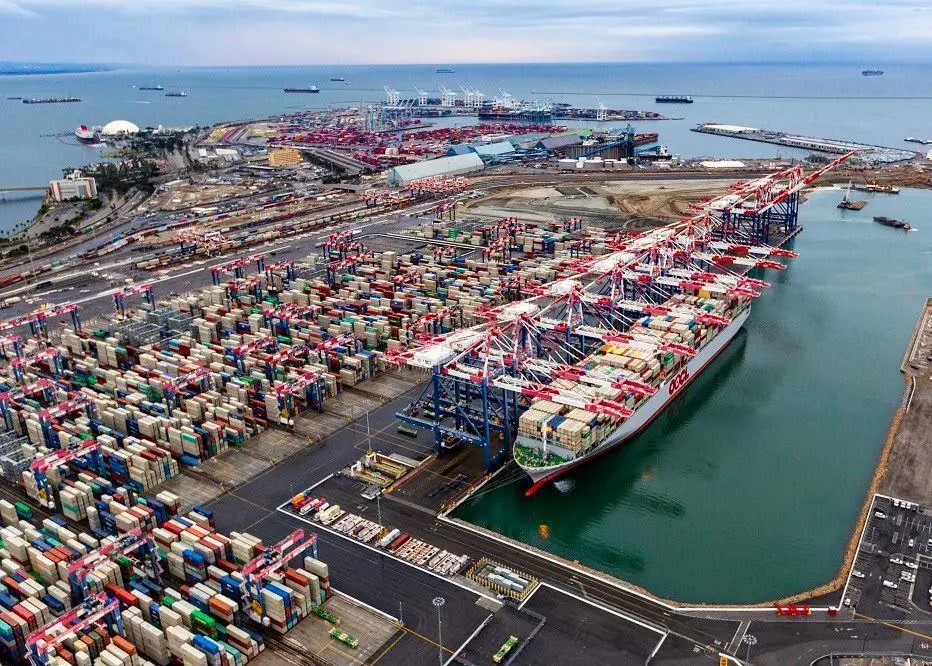
The situation on the US West Coast has been much more problematic. In early March, the number of vessels wating to unload at San Pedro terminals was around 40, with an average wait of 7.5 days to berth. This was caused by the sudden demand bounce following the contractions of 2020. Although not the largest vessels currently deployed, the size of these units was up to around 16,000TEU.
The terminals in Los Angeles and Long Beach are not really used to these sizes of vessels. There are both physical and operational factors limiting the speed of turnaround, with the largest vessels limited to certain terminals and USA work practices limiting the cost-effectiveness of 24/7 working. These difficulties in turn spread into the intermodal sector, with very strong demand and port delays effectively increasing the turnaround times for the chain between the ports and the US Midwest.
Great steps have been taken to increase capacity within established limits in San Pedro, and the number of vessels waiting to berth had fallen to around 20 in early May. This was also due to the diversion of vessels to Pacific Northwest ports, Canada’s Pacific Gateway and via Panama to the East Coast.
What has happened here is that there has been a supply side disruption with port delays and other logistics issues effectively removing a large part of capacity from the container trades. At the global level, trade-lane specific issues rapidly spill over into the global supply/demand balance, with alliances rapidly redeploying capacity between trades.
ONE-OFF ISSUES
As if is this wasn’t enough, the stranding of the mv Ever Given in the Suez Canal further distorted the supply side of the shipping equation. Although this only saw a six-day closure, the impact was far greater, with many lines diverting Asia-Europe flows via the Cape and a general increased level of uncertainty in the trades.
The impact is still playing out, with North European terminals struggling to cope with a surge in demand super-imposed on a COVID-19 recovery bounce. Once again, it will be the lack of spare capacity in the port sector that will be the focus of concerns.
The uncertainty associated with the second wave of COVID-19 in Europe is also complicating matters. A further economic hit seems certain in the third quarter in the EU as lockdowns continue and the prospects for quarter three are unclear.
The southern EU economies will see further contraction as the tourist sector remains effectively closed. Identifying demand and planning a rational transport response is more than problematic in this situation.
CUI BONO?
There are a lot of industry interests that are doing very well out of all this and really have little incentive to change things. Container lines are seeing profits at almost unprecedented levels with the major trades being a sellers’ market.
The cyclical nature of the shipping business has always placed great pressure on lines and the current freight market boom follows on from many years of poor performance and weak returns. Indeed, only state-backed lines have been able to take a long view of the container market – at least since the Global Financial Crisis of 2008.
You can’t blame the lines for taking advantage of this opportunity, although it will be interesting to see how many past mistakes will be repeated. Already we are seeing a surge in newbuildings based on current conditions, although it’s far from clear what the market will look like when these orders reach tidewater in two years’ time.
Container manufacturers have also done well with friction in the supply chain generating more demand for containers. Large orders have been placed at higher prices in this sector. Although suffering acute reputational damage, container terminals are also doing well with surging demand and – it is reported in some cases – increased price pressures.
The terminals need to invest and have been stressing for some time the tension between the high costs of new berths and equipment and negative price pressures from their customers. The current situation offers a way to square this circle.
WHO IS PAYING?
So, the current position might seem positive for shipping lines and even port operators? The bill for all of this will, of course end up with the consumer as large shippers and forwarders pass these increased costs onto them where possible.
For consumer goods the transport costs are a very small part of the price paid for the product and a large part of this increase will be effectively invisible to the consumer. However, in the end these inefficiencies will exert a negative drag on the major economies with this further undermining moves to recover from the crisis. We are also facing an inflationary wave and these inefficiencies will also push this higher.
The vulnerability of the global trading system has been highlighted first by the demand contraction that resulted directly from the COVID-19 disruption and more importantly by the failure of the logistics chain to cope with uncertainties and then recovery. When combined with other more political factors this will further accelerate near-shoring pressures.
IS THIS THE NEW REALITY?
It looks as if the current situation will be temporary. As terminal congestion is eased, and additional shipping capacity is introduced it is likely that a new equilibrium will be achieved. This will require increased investment in boxes and container shipping and also further modernisation of the terminal sector.
Already we can see the signs of the next downturn. The massive ordering of new tonnage will prove difficult to justify when demand returns to more established growth rates – assuming economic recovery can be sustained. As terminal efficiency improves this will eliminate the supply side distortion that has generated the market conditions of the first half of 2020-2021.
At the moment, terminal congestion is the key to all this. There is no mystery to increasing productivity from a technical viewpoint. It’s more a question of modernising working methods to cope with larger vessels.
Digitalisation also holds great promise. The system has solved similar problems in the past and will do so again. However, current overheating may well be replaced by a severe hangover.
Related Articles
 CONTAINER & CARGO HANDLING
 CONTAINER & CARGO HANDLING