![GreenPort[PortStrategy]](https://www.portstrategy.com/greenport/wp-content/uploads/sites/4/2026/09/GreenPortPortStrategy.svg)



“EVERY MAN IS AN ISLAND”
What a turnaround! Coronavirus has driven us away from the idea of ‘no-man is an island’ in completely the opposite direction. Physical contact is quite rightly frowned upon, the ethos now is isolation and lock down (as depicted in comic terms on our front cover)! The knock-on consequences of COVID-19 are large scale and far reaching for the shipping and ports sector as highlighted below.
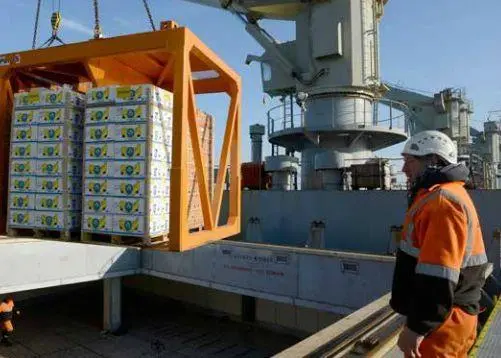
PS’s front cover illustration highlights the irony and frustration involved in Covid-19 – vessels turned away, bucket loads of void sailings, congestion at import gateways and a general disruption across the ports and shipping sector.
The following article highlights some of the more prominent impacts felt today and the opinions and views expressed as a result. The majority of impacts felt pose questions about ‘what next’ and from a macro point of view – the big questions – the preceding article, The Post Covid-19 New World, raises some interesting thoughts.
Other views and immediate responses are included below where the opinions of various market analysts are reported as well as shipping developments.
MARKET ANALYSIS
Drewry
Global Demand: At the beginning of April market analyst Drewry concluded: “It is too early to say precisely how Covid-19 will impact the container shipping world and how it will measure against the container market’s nadir of 2009 due to the uncertainty surrounding the virus.” Drewry sees this as only being possible when three key questions are answered, namely:
Will the virus spread with the same force in every geographical region?
When will the virus be contained so that normal social and economic activity can be resumed?
Will government rescue measures be sufficient to prevent a permanent scarring of the global economy?
Against this background Drewry presents three possible demand scenarios with the base one seen as most likely. Drewry’s base forecast foresees a demand collapse over the first nine months with recovery from 4Q20.
This, it says, will necessitate strong capacity management by the shipping lines and cost-cutting by measures such as re-routing some Asia-Europe voyages via the Cape of Good Hope thereby saving on Suez Canal fees.
Maritime Strategies
Volume Falls: Maritime Strategies International (MSI) forecasts in the March edition of its outlook forecast a turgid time for container shipping. It states: “There seems little doubt that containerised trade will shrink in 2020, with near-term rates of decline potentially approximating – or even exceeding those seen during the financial crisis.”
MSI estimates falls in traffic volume in March – May compared to 2019 will comprise the following: 17.8% on Asia-Europe trade, 15% on trans-Pacific and 13% on the trans-Pacific US East Coast route.
It further considers that “…no trade will escape the impact of Covid-19” and that “Regional trades will come under severe pressure, owing to economic contraction, disrupted supply chains and reduced transshipment cargoes.”
The total volume drops in March – May estimated for Asia – Middle East trade, Asia – Latin America, Atlantic westbound traffic, intra-Europe and intra- Asia are put at 12%, 10%, 8% and 5% respectively compared to 2019.
Ocean Insight
Asian Shipping Lanes: Ocean Insights (OI) reports a 23% reduction in container vessel capacity in Asian trades between mid-January and mid-March this year.
It additionally estimates a seven per cent reduction in container vessel capacity on a global basis – from a peak in midJanuary of 16.8m TEU capacity to a level of 15.5m TEU capacity.
OI further points out that blank sailings have played a major part in these capacity cuts with nearly 400 likely to be implemented in the period mid-March to the end of April.
UNCTAD Centrality:
UNCTAD, like Drewry, considers it too early to gauge the full impact of COVID-19 – it does note, however, that over recent weeks there have been significant changes in the operational behaviour of container shipping and it uses the measure of scheduled TEU and vessel calls in China to highlight this – both deployed capacity and vessel calls can be seen to have dropped significantly (Figure 2).
UNCTAD highlights the centrality of China to the movement of goods around the world as a direct determinant of the high number of blank sailings but also acknowledges that there are other trade routes where this phenomenon is manifest.
THE OIL MARKET
Oil Price: The US Energy Information Administration (EIA) forecasts that crude oil prices will average US$33.00 a barrel for 2020 and US$46 a barrel for 2021 – a far cry from the average of US$64 a barrel in 2019.
There is now a glut of oil worldwide – on land and at sea stored in vessels – with the latter responsible for a hearty spike in daily charter rates for VLCCs and other tankers.
Overall, the EIA predicts that 2020 demand will be 95.5 million b/d, 5.2% lower than in 2019, which represents the largest drop since the EIA began keeping records.
The EIA has also come up with some numbers for pricing over the longer term. It sees that, by 2025 Brent crude will rise to US$79/b. By 2030, EIA expects demand will drive oil prices to US$98/b.
By 2040, prices will be US$146/b, again quoted in 2019 dollars. At this stage, cheap oil sources will have been exhausted, necessitating significant added cost to extract oil. By 2050, oil prices are put at $214/b!
As a measure of the glut of oil now prevalent and the associated boom in storage requirement at the end of April there were approaching 30 oil tankers sitting off the coast of southern California waiting to offload their cargo. These tankers accounted for more than 20 million barrels of crude.
SHIPPING
Carrier Loss Estimate: Copenhagen- based Consultancy Sea Intelligence estimates that the Covid-19 triggered drop in demand in the container shipping sector and associated wave of blank sailings could result in a collective loss of US$23 billion for container shipping lines.
As evidence of the severe cuts being made to sailings it points out that at the beginning of April cuts were in prospect for the next four week period that represented 29 – 34% of capacity.
Cape of Good Hope Option Taken: CMA CGM is one of a number of lines seeking to reduce costs via routing select vessels in Asia – Europe – Asia trade via the Cape of Good Hope. The route chosen by CMA CGM is in excess of 3000 nautical miles longer than the Suez Canal option.
The journey typically takes five days longer than the three week Suez route. With Suez tolls in the region of US$400,000 to US$500,000 per transit and the added fuel bill for a Cape transit in the order of US$200,00O the savings to be made are clear.
ESPO Call: The European Sea Ports Organisation (ESPO) has made a case to the European Union that proposes:
- European ports, stakeholders and port customers must, as required, be the recipients must of EU and national relief measures.
- More flexibility regarding infrastructure projects that are delayed due to national lockdown measures – flexibility on deadlines is one major point made plus the need for improved guidance on aproject by project basis.
- Passenger ports, subject to big drops in activity, must be given special consideration. The need is identified for initiatives aimed at restoring trust in the health and safety and sustainability of passenger and cruise shipping.
Newbuilding Slippage: As of the end of March the new container vessel order book showed 48 Ultra Large Container Vessels (ULCS) on order but with delivery days for a number of these vessels expected of up three months as a result of Covid-19.
The 26 vessels due for delivery this year will all be effected. The order book as of the end of March for ULCSs represents a TEU capacity of 1,099,676TEU with deliveries going through to 2024. Interestingly, presently only two ULCSs are scheduled to be commissioned in 2021 i.e. against this original timetable.
KEY INFO’ SOURCES COVID-19
British Ports Association: https://www.britishports.org.uk/coronavirus
IAPH: http://www.iaphworldports.org/news/7351
IMO: http://www.imo.org/en/MediaCentre/HotTopics/Pages/Coronavirus.aspx (with links to other sources)
UK Government: https://www.gov.uk/government/publications/covid-19-shipping-and-sea-ports-guidance
UNCTAD: https://tft.unctad.org/ports-covid-19/
World Ports: https://sustainableworldports.org/world-ports-covid19-information-portal/
Related Articles
 CONTAINER & CARGO HANDLING
 CONTAINER & CARGO HANDLING