




EXCLUSIVE: Electrifying ports: The critical next step
In this article, Carolyn Newsham, financing partner to Siemens GB&I, Siemens Financial Services UK, explores the urgent need to electrify ports, the challenges to overcome and the financing solutions available to accelerate the transition.
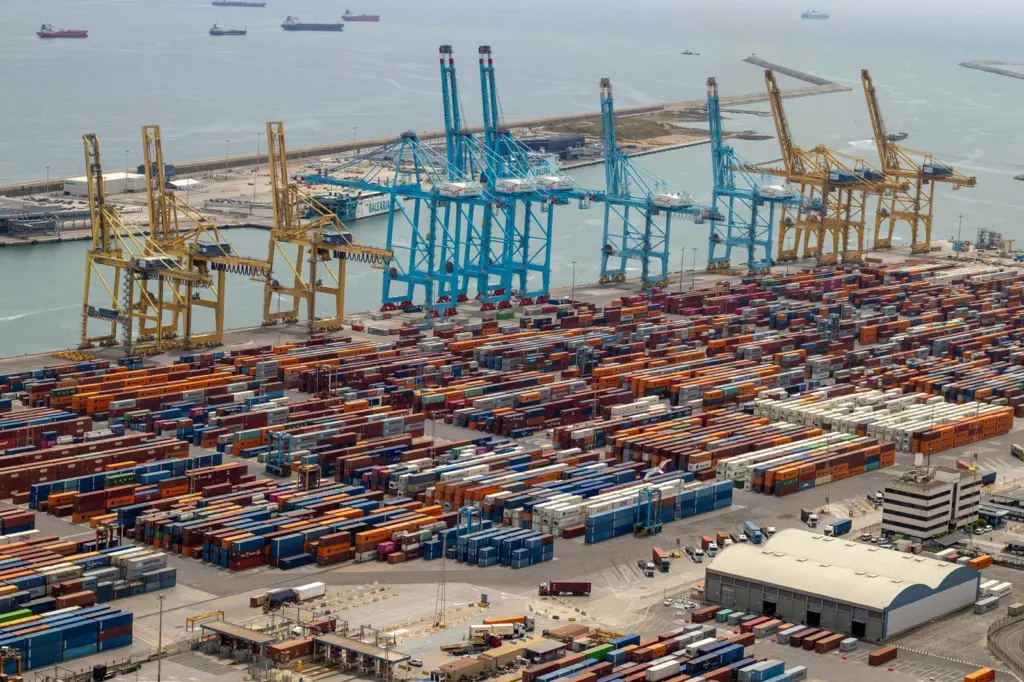
Maritime decarbonisation is a climate imperative. Shipping emissions have jumped by more than 90% since 1990, making up over 10% of transport’s carbon footprint and 3% of all global emissions. Without taking action in ports, decarbonising the wider sector will be nearly impossible.
In the UK, progress is already under way. In 2022, domestic and international shipping emissions fell to 7.9% of the national total – 30% lower than in 1990.
But momentum must accelerate. In March 2025, the UK government release a maritime decarbonisation strategy, outlining a staged approach: A 30% reduction in greenhouse gas emissions by 2030, an 80% cut by 2040 (against 2008 levels) and full decarbonisation by 2050 – achieving the International Maritime Organisation’s (IMO) targets.
Why decarbonising ports begins with electrification
A major source of port-related emissions comes from vessels at berth, which typically run on fossil fuels while docked. These emissions account for half of the UK’s domestic maritime greenhouse gases (inland waterways apart) according to the government’s strategy document.
And the environmental impact isn’t limited to carbon. Port communities are also exposed to harmful pollutants such as fine particulate matter, nitrogen oxides and sulphur oxides, which pose risks to locals’ public health.viii
Electrification offers a solution. If ships can plug into clean shore power while docked, ports can dramatically cut emissions, improve air quality and reduce noise pollution. It’s also a matter of regulatory foresight; by the late 2020s or early 2030s, new rules could mandate zero or near-zero emissions from ships at berth.
Beyond environmental benefits, electrification can lower long-term energy costs, enhance energy resilience, and enable early adopters to capitalise on future technological advances.
Where do things stand?
Some ports are already leading the way with innovative solutions.
In Portsmouth, UK, the Sea Change project brings together marine specialists, academics and technology SMEs to enable visiting cruise ships and ferries to plug into green electricity while docked. By switching off their engines and using shore power instead, these vessels could save over 20,000 metric tonnes of CO2 annually from 2027.
But widespread transformation will require significant infrastructure upgrades. This includes, for instance, transitioning diesel-powered cranes and cargo-handling equipment to electric or hybrid systems – powered via batteries, hydrogen fuel cells, or direct connection to the grid and renewable sources (such as solar photovoltaic technology).
Top challenges are inadequate port infrastructure, high retrofitting costs and complex regulatory requirements, according to the UK Chamber of Shipping.
A survey from the British Ports Association adds that capital costs are a major obstacle — particularly the expense of installing shore power infrastructure and upgrading local distribution networks.
Energy network capacity is another concern, with upgrades often requiring significant investment. Add to this high electricity prices and low demand from shipping operators and the barriers to electrification become even clearer.
Port of Kiel a case study
The Port of Kiel is a perfect illustration of challenges that ports frequently face and what the city achieved by investing in clean technology solutions.
Powered by diesel generators, ferries and cruise ships – that have burdened many ports’ local residents for too long with their noise and vibration – keep polluting local air quality and the planet. In Kiel, authorities said enough was enough.
As a key hub for ferries to Norway, Sweden, and the Baltic and a departure point for over 2.4 million passengers annually, the city launched a bold initiative: Enabling ships to plug into the local power grid while in port. By drawing electricity from renewable sources such as solar and wind, ships can now shut down their diesel engines, reducing CO₂ emissions by around 12,000 metric tonnes a year – equivalent to taking 2,600 passenger vehicles off the road.
How does it work? The port’s new onshore power system is designed to manage a lot of power, enough to supply enormous ships – comparable in size to a small town.
It overcomes the technical challenge of differing voltages and frequencies between shore and ship networks using advanced power electronics and with simplicity, speed, and flexibility. Siemens’ SIHARBOR shore connection – via a cable management system – makes this possible: Berthed vessels can connect rapidly, synchronise their systems automatically, and receive a continuous, reliable flow of clean energy.
Kiel’s project isn’t just a local upgrade. It’s a glimpse into the future of sustainable shipping, showing how ports can reduce environmental impact without slowing down maritime operations.
Finance is critical
Public funding alone won’t cover the cost of the net-zero transition. It’s estimated that between GB£50 to 60 billion needs to be invested each year in new infrastructure to meet the 2050 target, with the bulk of that funding expected to come from private finance.
In fact, the National Wealth Fund (NWF) is targeting a public-to-private investment ratio of 1:3. This could unlock more than GB£70 billion of private investment into the UK’s clean energy and growth industries. Private finance options are crucial since they enable businesses to act now.
Sources of finance include: Specialist private finance providers, public-private partnerships, National Wealth Fund (NWF) and green bonds and sustainability-linked loans.
Marine financing structures are one example. They allow ports to immediately invest and seize opportunities without capital expense, spreading repayments over an agreed period to accommodate cash flow requirements. And once paid off, the benefits are lasting: lower energy costs for years to come.
Specialist providers (such as Siemens Financial Services) make these models accessible, helping more operators invest in electrification and renewable energy projects. Combined with government incentives, specialist financing contributes to a robust business case to reduce carbon emissions, at pace.
A number of forward-thinking ports are already using these tools to lead the transition – setting an example for operators across the UK and Europe.
Related Articles
 ENERGY & TECHNOLOGY GREENPORT
 ENERGY & TECHNOLOGY GREENPORT
 ENERGY & TECHNOLOGY GREENPORT