![GreenPort[PortStrategy]](https://www.portstrategy.com/greenport/wp-content/uploads/sites/4/2026/09/GreenPortPortStrategy.svg)


EXCLUSIVE: Will Europe’s ports have to queue for grid?
If ports were to have a wish list for Christmas last December, I think that quite some ports would have had grid connection and grid capacity high on their list.
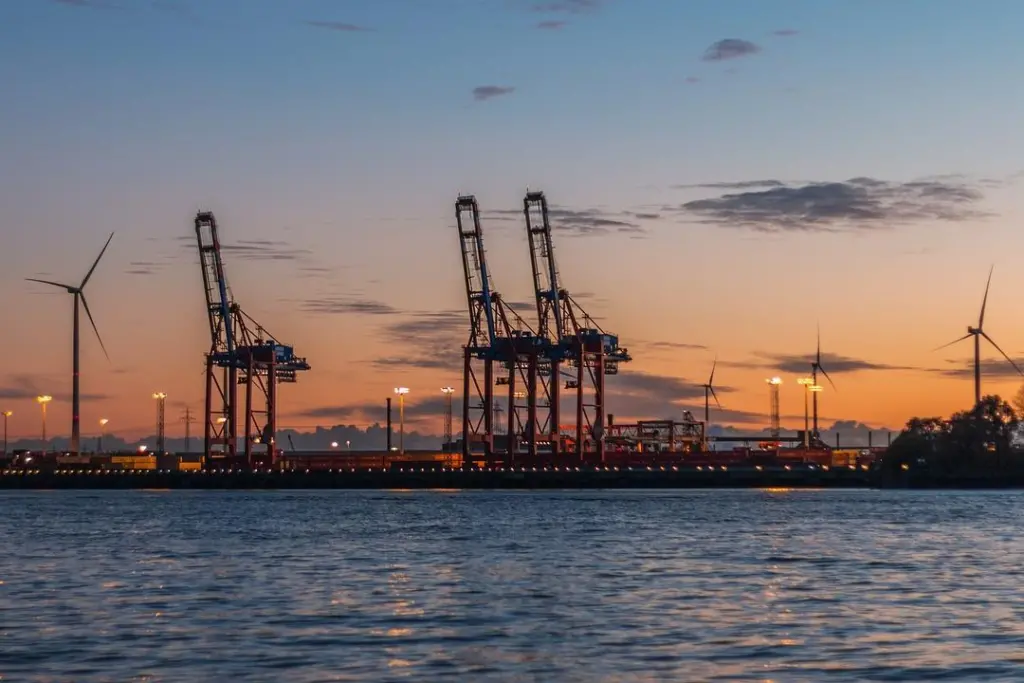
There is an urgent demand for sufficient grid capacity to face the quickly raising needs for electricity in ports.
As we all know, all TEN-T ports having a minimum number of vessel calls have to be ready to offer onshore power supply to container, ferry and cruise vessels by 2030.
This is in itself already multiplying the need for electricity in most ports by three or four times. But this is only one reason – be it a major one – ports will need access to additional grid capacity.
The ongoing electrification of machinery and transport in and around the port, the progressing electrification of terminal operations, the electricity needs that will accompany the development of clean energy production in some of the ports and last but not least the overall increasing electricity needs of the industries and companies located in the port makes investments in and access to extra grid capacity urgent.
Sufficient grid is key for port areas to be able to play their role in delivering the energy transition, complying with the EU legal obligations and – not less important – stepping up Europe’s homegrown energy needs and as such Europe’s energy resilience.
An EU package
That is also why all our attention has been going to the EU grids package which has been released on 10 December 2025.
The “package” consists of different elements, including a proposal to revise the TEN-E Regulation and a proposal to review the Directive to accelerate permit-granting procedures for energy infrastructure projects.
The acceleration of permits is an interesting and quite ambitious proposal in its objectives. It looks at the different aspects of permitting, introduces tacit approval if no decision has been made within the given deadline, and from a ports perspective, says Member States should presume that Onshore Power Supply projects are of overriding public interest which automatically leads to easier permitting.
This proposal still needs to be negotiated in the Parliament and Council and once agreed, Member States have two years to implement these principles. This means roughly speaking, that an enforcement of these rules will only be possible as from 2029. Considering that the OPS deployment in ports is due by 2030, ports will not be able to benefit from this faster track permitting for realising these investments.
Next to the two legislative proposals and maybe one of the more important pillars of the package, is the Commission “notice” giving “guidance” on efficient and timely grid connections.
While this 29-pager is not legislative and cannot be enforced in its current status, it tackles one of the main issues ports are currently facing: The difficulty to get a timely connection to the electricity grid and the already existing delays in getting the connection, which might amongst others prevent certain OPS infrastructure or other important projects in ports to be used to its full potential in the near future.
Toolbox of measures
The guidance provides a toolbox of measures for Member States and all parties concerned to prevent, optimise and tackle lengthy connection queues. It aims to address the root causes of the problem, which are following the Commission’s paper threefold.
First, there is the inadequate planning. Building extra grid infrastructure takes 4 to 10 years whereas for the port to construct the connection to the grid, this can be done in 2 to 3 years. Given this mismatch it is important for grid operators, when deciding on network development, to look at future needs and forecasts instead of basing themselves on existing requests. If not, they will always come too late.
A second problem seems to be the lack of transparency over where the grid connection would be feasible within the timeframe the market wants it for their connection as well as a lack of incentives to stimulate users towards areas where there is – or soon will be – sufficient grid capacity. These lead to requests being placed in already congested areas, which requires then greater investment and thus higher electricity system costs.
The third identified driver of what is called the connection queue is the existence of speculative connection requests, non-maturing applications as well as the way the requests are being managed. Since so far “first come, first serve” is the main approach being taken by the grid providers, some applicants seem to reserve capacity at a very premature stage of the project which afterwards is not being materialised. These speculative requests can easily block the access for more viable requests coming later. For this reason, one of the recommendations of the Commission is for grid operators to get the mandate from the Regulators to work towards a “first ready, first serve” principle.
Another way – maybe still politically more difficult – to decide in case of scarcity of capacity is to introduce a priority scheme for certain users. Whereas the Electricity Directive obliges Member States and Regulatory Bodies to give non-discriminatory access to grids, it does not prevent the authorities to develop a framework that prioritises certain users as long as this is being done in a non-discriminatory and transparent way. Since the connection queue problem is quite recent, not many member states have been issuing such priority schemes yet. Netherlands is one of the only ones already testing this.
Will it work?
Will this EU grids package solve the problems ports are having?
We should definitely be embracing the package since it puts quite successfully the finger on a series of problems that need to be tackled without further due. But it remains to be seen if the tools provided for in the guidance will be implemented by the Member States.
The lack of mandatory framework or detail on the level of readiness expected in the application of the “first ready first serve” or the absence of common criteria for prioritisation might lead to a patchwork of systems and an unlevel playing field between member states
In ESPO we are now assessing these proposals with our members and see where we could make suggestions for improvement or call for some additional initiatives.
Ports and port areas being considered more and more as critical and strategic nodes and hubs of energy and resilience, it is without saying that a place-based policy which would prioritise the requests from a “port area” would probably be our favourite scenario, but we are not yet there. Moreover, the priority queue risks to be long as well.
Related Articles
 ENERGY & TECHNOLOGY GREENPORT
 ALTERNATIVE FUELS GREENPORT
 ENERGY & TECHNOLOGY GREENPORT