![GreenPort[PortStrategy]](https://www.portstrategy.com/greenport/wp-content/uploads/sites/4/2026/09/GreenPortPortStrategy.svg)



Nigeria primed for port electrification
Nigeria has a prime opportunity to lead in port electrification and modernise its port infrastructure, that’s according to a new white paper by APM Terminals and Systemiq.
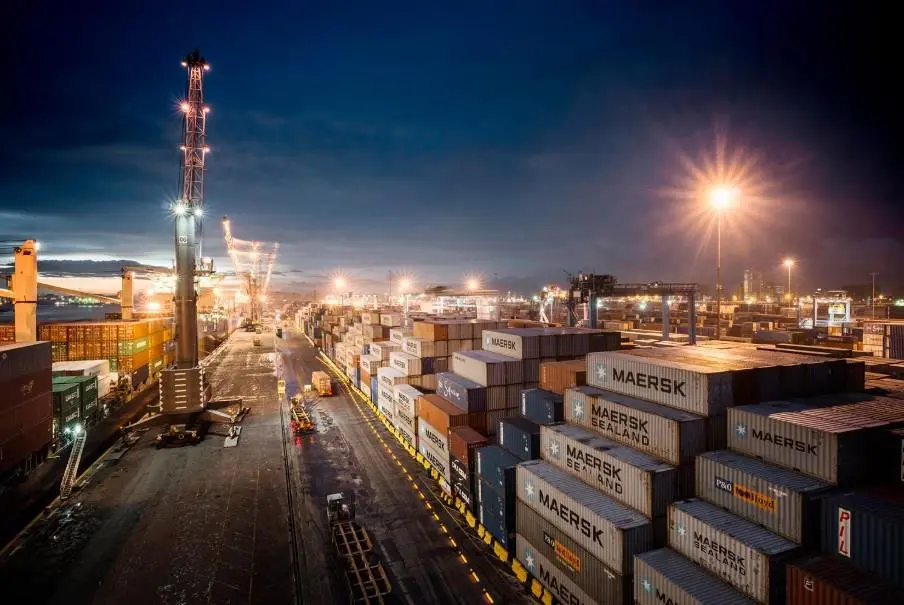
Presented at the Decarbonising Infrastructure in Nigeria Summit in Abuja, the study outlines how Nigeria can leapfrog fossil-fuel dependency through targeted port investment, electrified port equipment, and robust public-private partnerships.
“Our findings clearly show that the time to act is now,” said Eveline Speelman, partner at Systemiq.
“Electrification aligns with upcoming investment cycles and can drive progress on key national priorities.”
Transformative shift
This study proposes a transformative shift by 2030 – mobilising up to $830 million in port investment, creating skilled jobs, reducing emissions by 390 ktCO2e and improving public health.
The timing, the study highlights, is ideal, with nearly 60% of Nigeria’s container terminal concessions now nearing renewal.
Global momentum supports this strategy. Over 40 ports worldwide, including in Jordan, Brazil, and India, are already investing in low-emission port infrastructure, electric trucking corridors and digital logistics systems.
Frederik Klinke, CEO of APM Terminals Nigeria, emphasised the broader value of electrification.
“Containerised trade is a vital backbone of economic development in Nigeria. Electrification improves operations, reduces pollution and benefits local communities,” he said.
APM Terminals, which operates in Lagos (Apapa), Onne and Kano, sees this as a chance to set Nigeria apart as a continental leader in sustainable port operations.
The white paper provides a clear, actionable framework to transition from pilot projects to full-scale implementation.
Related Articles
 ENERGY & TECHNOLOGY GREENPORT
 ALTERNATIVE FUELS GREENPORT
 ENERGY & TECHNOLOGY GREENPORT