![GreenPort[PortStrategy]](https://www.portstrategy.com/greenport/wp-content/uploads/sites/4/2026/09/GreenPortPortStrategy.svg)


Onshore power needs proper planning: Don’t rush in
As European ports scramble to meet ambitious shore power mandates, we are warning that the rush to install onshore power supply (OPS) infrastructure could create more problems than it solves without proper planning, writes Harry Palmer, risk assessment manager at TT Club.
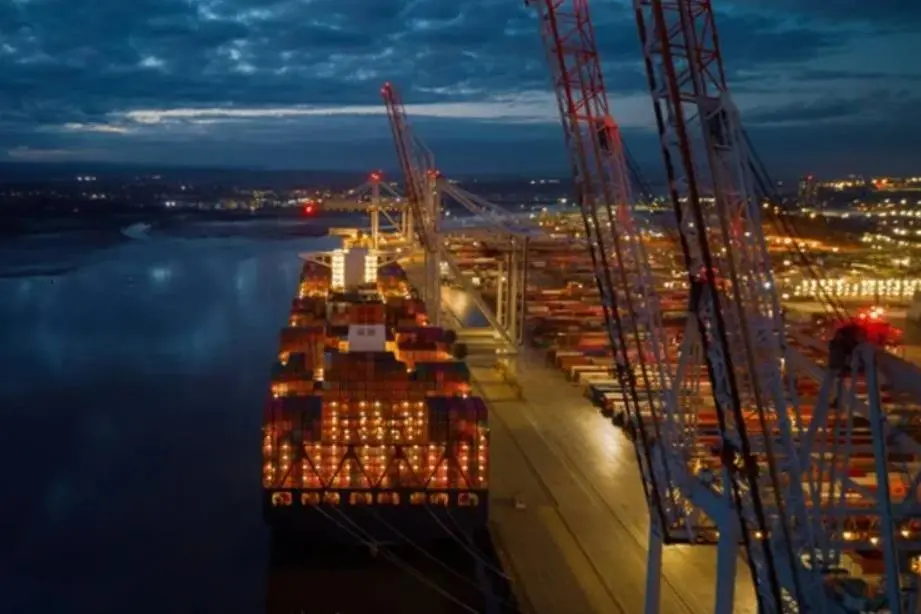
The seemingly simple switch to OPS promises dramatic reductions in port emissions and air pollution, but the reality of implementing this technology at scale is far more complex than meets the eye.
Implementation gap
The European Union’s Regulation 2023/1804 has set clear deadlines that are focusing minds across the continent. From 2030, all seagoing container and passenger ships larger than 5000GT calling at Trans-European Transport Network (TEN-T) core ports must use shore power.
By 2035, this requirement extends to any EU port equipped with OPS infrastructure, regardless of whether it’s on the TEN-T network.
These mandates represent a fundamental shift in how ports operate, yet the industry is dramatically behind schedule. By mid-2025, only about 20% of required OPS connections in Europe had been installed or contracted.
The situation varies significantly by sector: Cruise terminals have achieved roughly 38% of their target installations, whilst container terminals lag at just 11%.
The disparity between cruise and container terminals reflects different operational realities. Cruise ships typically spend longer periods in port with highly predictable schedules, making shore power more economically attractive. Crucially, cruise ships often run the same routes year after year, allowing them to establish shore power arrangements with their regular ports of call.
Container ships, by contrast, have more variable schedules and diverse routing patterns, complicating both the business case and the technical implementation.
For shore power to be worthwhile for container operations, ships would need compatible infrastructure at all ports along their route – a far more complex coordination challenge than the relatively stable cruise ship networks.
This implementation gap raises serious questions about whether the industry can realistically meet the 2030 deadline without compromising on safety, reliability, or financial sustainability.
The numbers suggest that a massive acceleration in installation rates will be required over the next five years – a prospect that concerns risk management professionals who worry about corners being cut in the rush to comply.
Investment is beginning to flow. Italy has committed €700 million specifically for OPS projects, whilst the Netherlands and the UK have each pledged several hundred million euros. Germany, France, and Spain have also announced substantial funding packages, recognising that individual ports cannot shoulder the entire financial burden alone. These financial commitments signal that governments recognise both the urgency and the scale of the challenge.
Challenges ahead
The technical challenges are substantial – ports must supply far higher levels of steady power to multiple ships simultaneously, requiring massive grid upgrades and large transformers. Each ship type may require different voltage standards and specialised connectors. A container ship’s power requirements differ significantly from those of a cruise ship, and the infrastructure must accommodate this variety.
International standards provide some guidance – the ISO/IEC/IEEE 80005 series establishes requirements for high-voltage shore connection systems – but significant variations remain. European ships typically operate on 50 Hz frequency, whilst some ships, particularly those built for American routes, are designed for 60 Hz power. Voltage requirements can range from 6.6 kV to 11 kV, and in some cases up to 20 kV.
The electrical load from even a single large ship can be equivalent to powering thousands of homes. A large container ship might require 5-10 megawatts whilst at berth, whilst a modern cruise ship can demand 20 megawatts or more. When multiple ships connect simultaneously at a busy port, the demand on the local grid becomes enormous.
Installing shore power infrastructure requires solving numerous practical problems. Cable management systems must handle heavy, high-voltage cables safely whilst accommodating tidal variations that can create significant vertical movement between ship and shore. Connection points must be positioned precisely to align with ships of different sizes and configurations.
In addition, transformer stations need to be located close to berths to minimise voltage drop and cable costs, but this places large, expensive electrical equipment in harsh marine environments subject to salt spray, humidity, and potential flooding.
The physical footprint of shore power installations can be substantial, competing for valuable quayside space with other port operations.
Risk management
From a risk management perspective, the rapid rollout of OPS creates several concerns that extend well beyond the technical challenges of installation. Electrical systems operating at the power levels required for shore power present inherent safety risks, with high-voltage connections in marine environments creating hazards that demand careful management protocols and robust protection systems.
The connection and disconnection procedures exemplify this complexity. Far from being a simple plug-and-play operation, connecting a ship to shore power involves multiple interdependent steps that must be performed in precise sequence to ensure safety. This necessitates the implementation of permit-to-work systems similar to those used in other high-risk industrial operations, ensuring proper authorisation and verification occurs at each critical stage of the process.
Liability questions remain partially unresolved. If an incident occurs during shore power connection – whether a safety event, equipment damage, or operational disruption -establishing responsibility between the port, the ship, the equipment manufacturer, and potentially the grid operator is likely to be complex.
There’s also the question of grid reliability. What happens when shore power fails whilst multiple ships are connected? Do ships have procedures to quickly restart their auxiliary engines? How do ports manage the transition during power outages or equipment failures? The risk of a “black ship” scenario – where a ship loses all power suddenly – is real. Ship systems that have been shut down may not restart immediately, potentially leaving the ship without essential services.
Furthermore, the financial risks remain substantial. The business case for shore power has historically been challenging, with high upfront costs and uncertain returns on investment. Whilst regulatory mandates may force adoption, ports need sustainable operational models that don’t simply shift the financial burden without creating viable revenue streams.
Pricing structures for shore power vary widely. Some ports charge based on consumption, others impose flat fees, and some are still developing their commercial models. Without clear, standardised pricing that makes economic sense for shipping lines, utilisation rates may remain disappointing even after infrastructure is installed.
Whilst shore power’s environmental benefits are significant – eliminating auxiliary engine emissions whilst ships are at berth – the overall sustainability picture depends heavily on the source of the electricity. Shore power supplied by coal-fired power plants provides limited emissions reduction compared to modern, efficient marine engines running on low-sulphur fuel or LNG.
The European grid is increasingly powered by renewable sources, improving the environmental credentials of shore power. However, the emissions profile varies significantly by region and by time of day. True sustainability accounting requires considering the full lifecycle emissions, including the manufacturing and installation of shore power infrastructure.
The path forward
TT Club’s advice is clear: Port authorities, owners, terminal operators, and their technical and risk management teams must begin detailed assessments immediately. This includes comprehensive technical evaluations, financial modelling, and safety assessments. Critically, all relevant stakeholders – from grid operators to shipping lines, from local authorities to environmental agencies – must be involved early in the planning process.
Successful implementation requires a coordinated approach across multiple dimensions. Technical planning must address not just the immediate installation requirements but long-term maintenance, upgrade pathways, and compatibility with evolving ship designs. Financial models need to ensure sustainable cost recovery without making shore power prohibitively expensive for users. Safety management must be embedded from the design phase forward, with robust protocols, comprehensive training, and clear lines of responsibility.
Stakeholder engagement should bring together all parties who will be affected by or involved in shore power operations. This includes not just port authorities and shipping lines but also grid operators, local communities concerned about grid reliability, environmental groups, regulators, and the workforce that will operate and maintain the systems.
The transition to shore power represents one of the most significant infrastructure challenges the maritime industry has faced in decades. Success will require more than meeting installation deadlines; it demands a coordinated, carefully planned approach that addresses technical, financial, safety, and operational considerations in an integrated manner.
As the 2030 deadline approaches, the message is clear: cold ironing is coming, but rushing to plug in without proper preparation could leave ports, shipping lines, and the broader logistics industry facing risks that undermine the very sustainability goals these regulations aim to achieve. The industry has five years to get this right – not much time for infrastructure projects of this magnitude, but enough if stakeholders act decisively and collaboratively now.
The ports and shipping lines that treat shore power as a comprehensive transformation project rather than a simple compliance exercise will be best positioned not just to meet regulatory requirements but to gain operational advantages and contribute meaningfully to maritime decarbonisation.
Related Articles
 ENERGY & TECHNOLOGY GREENPORT
 ALTERNATIVE FUELS GREENPORT
 ENERGY & TECHNOLOGY GREENPORT